
August 30 2025, 11:25
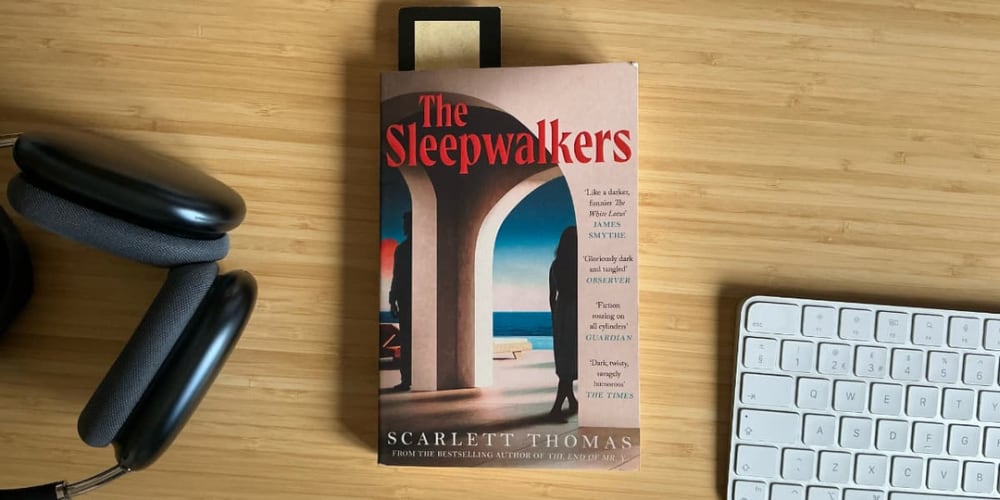
The Sleepwalkers
~ 80,000 words. Letters, transcriptions, lists (epistolary!). Evelyn and Richard.
A newly married couple, Evelyn and Richard, are gifted a honeymoon by the groom’s mother at Villa Rosa, an exclusive hotel on a Greek island. We know this because Evelyn tells us in a letter she has written to Richard, which takes up the first third of the novel. The flamboyance and anger in her voice is both attractive and off-putting, and not knowing the structure, I almost put the book down. Fortunately, it’s cleverer than that, and we get a similarly long letter from Richard, as well as short notes from other characters, lists of photographs, and so on. We come to realise the novel is a collection of documents that is also referenced in the story.
It’s a dark comedy, but the themes were darker than I expected, including incest, rape and human trafficking, wrapped in a mystery told in queasily light voices. The thriller-ish final act tying a variety of loose ends (but not all) was quite jarring and uninvolving. It could be I am especially sensitive to this sort of ending because it’s something I tend to do and don’t like in my own stories. It highlights how hard it is to strike a tonal balance that works.
There’s lots to admire. The voices of Evelyn, Richard and the handful of supporting characters are distinct and believable. I’m curious if Thomas knew the whole story before she started writing it, because the way she drops details in about the complex plot is expert. Her descriptions of the island, the hotel and its inhabitants are great.
There’s a fun smuttiness in Evelyn's manner, but there’s nothing funny about the themes. These are the characters voices, and they are privileged, a bit disgusting, very unlucky, abused themselves, and so on, so who am I to say that isn’t how it might be for them? I don’t have to like them. They are who they are. But the story is highlighting the plight of trafficked people, and I wonder if my queasiness is because the upper middle class mystery, as dark as it is, perhaps isn't strong enough to carry the weight of the themes.
August 29 2025, 20:23
Summer’s end
I’ve started watching the Met Office YouTube channel, perhaps because I know autumn is coming and I want to prepare for it, or it could be because the more unpredictable weather represents my return to work, big new projects, my daughter starting A-levels, and a new phase in my life.
The summer has been a fascinating experiment in broadening my creative horizons. I don’t want to cede the ground I’ve won to more mundane 9-to-5 pressures. It might be unwise, it might not, but I’m going to try to continue with the writing, reading, guitar practice and swimming lessons in September. I’m not going to take on my usual film challenge in October, which I would be preparing for now. This is a concession.
Amie McNee’s book, We Need Your Art, was a valuable jolt of reason and a reminder that procrastination is fear beneath the surface, and while there have been many valid reasons not to prioritise writing over the last few years, none of them are in play now. She proposes restarting the habit of creating every day by setting the bar so low that it would be embarrassing not to accomplish it. For me, that’s 100 words a day, and I write more, but 100 words is my target. It’s working. I’ve gone back to the beginning of the novel and I’m making it into a functional first draft. In parallel, I’m reading novels (short ones, to keep me motivated) for the fun of it, but also to research structure and voice.
Writing regularly again is a big deal. It’s ironic that doing more diverse projects, not fewer, was the key to unlocking the writing. Guitar and piano use a different part of my brain. Understanding my biology to improve my hip pain is a practical science. Swimming is a physical skill. I think learning fresh skills reminded my of my abilities and potency. I’m a learner by nature. Always have been.
August 27 2025, 20:05
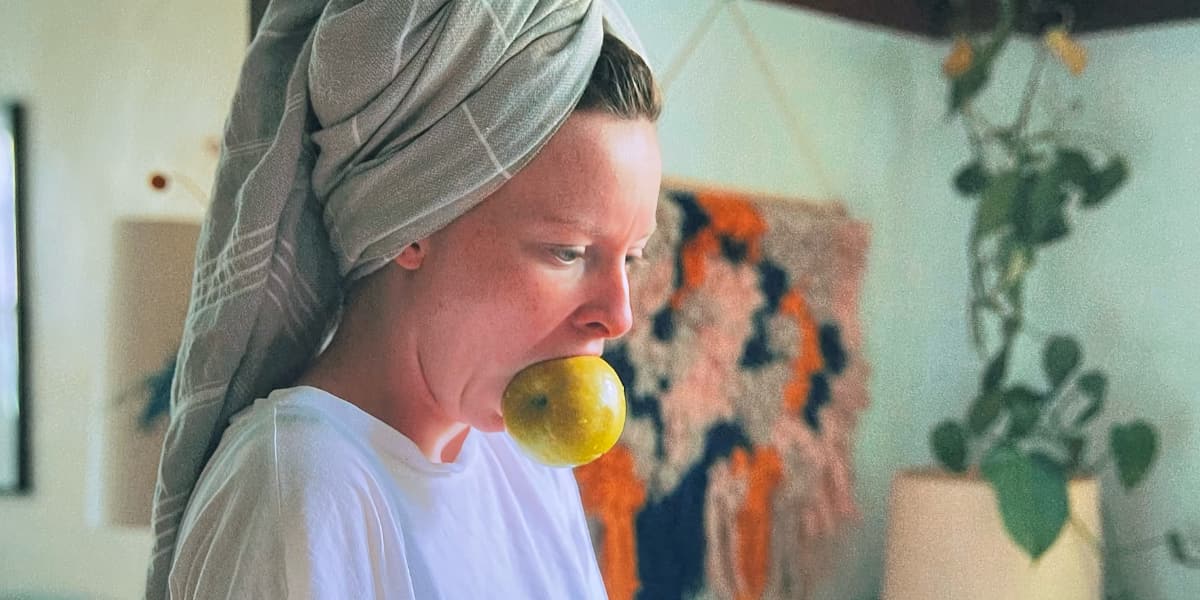
Matt and Mara
Mara, a married creative writing professor, is surprised when Matt, a very close friend from her past that she no longer hears from, shows up at one of her lectures. They pick up their relationship while Matt is in town, leading to Matt driving Mara to a literary conference where the nature of their relationship is called into question.
This is an interesting counterpoint to In the Mood for Love where the almost-lovers strike out on different paths. Here, Mara and Matt are coming back together. Mara is married with a child, and Matt is perpetually single. Mara clearly loves her musician husband, but she doesn’t like music, and Matt offers conversation about literature and a playfulness with language that she can’t get in her marriage.
Mara has an idea for a collection of poems about a woman unconsciously acting out desires she’s unaware of, but is struggling to begin. Matt seems to be a successful and known novelist who is deliberately controversial to attract his audience. He’s extroverted, brash, slightly obnoxious, whereas Mara is unsure, introvert, and shy. Their opposite energies seem to be the source of their joy in each other’s company, and Matt is a catalyst to Mara’s hidden desires.
The camera is always close to both characters’ faces which allows us to follow every movement of an eyebrow and each mouth twitch as they hang out with each other in routine parts of their day. It isn’t clear if they were lovers in the past, or why they drifted apart, but for a brief time we observe them come alive in each other's company.
August 25 2025, 18:38
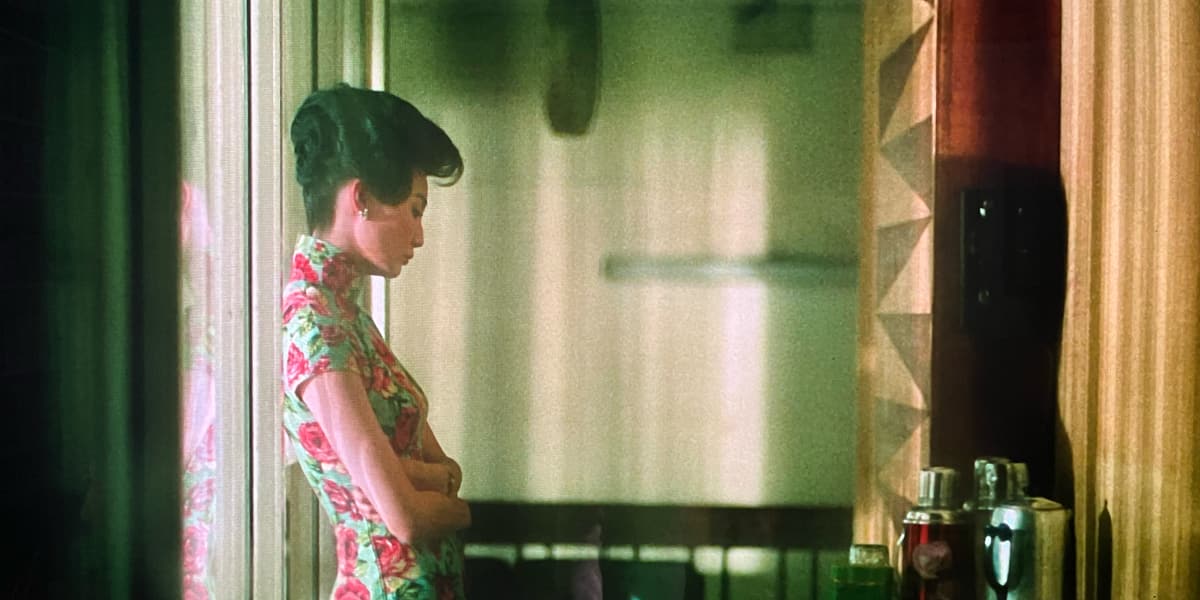
In the Mood for Love
In 1962 Hong Kong, two working couples, the Chans and the Chows, move in to neighbouring apartments in a house run by Mrs Suen. Both Mr Chow and Mrs Chan suspect their spouses are having an affair, and they begin their own relationship to work out what they should do next.
The opening act plays out through short scenes that drift together as time passes. We hear the voices, and see the backs of the heads, of the treacherous partners, but the camera cares about the wronged duo, who are luminous in every frame. The film is only ninety minutes long, and not a shot is wasted, with many like pieces of art in their own right.
Sometimes the strings will kick in, everything slows down, and either Mr Chow or Mrs Chan will glance at the other, or sadly smoke a cigarette, and we feel their longing in our bones. It’s a film about the loneliness of marriages that aren’t working. Mr Chow encourages Mrs Chan to help him write his serial, and the pair start a fruitful creative partnership in a rented room that’s spiced with romantic love, but the housekeeper, Mrs Suen, tightens the clamp of social norms on the burgeoning couple.
It’s a devastating film in the best way. I saw this in a cinema off Leicester Square when I moved to London in 2000, but I was too young to understand the depth of feeling in what was being shown on screen. I didn’t remember the final scenes in Cambodia at all, and I didn’t know Maggie Cheung played the heroine until the opening credits, which was a lovely unexpected link back to Irma Vep. Both Cheung and Tony Leung are sensational. This is one of my favourite discoveries of the year so far.
August 24 2025, 17:56
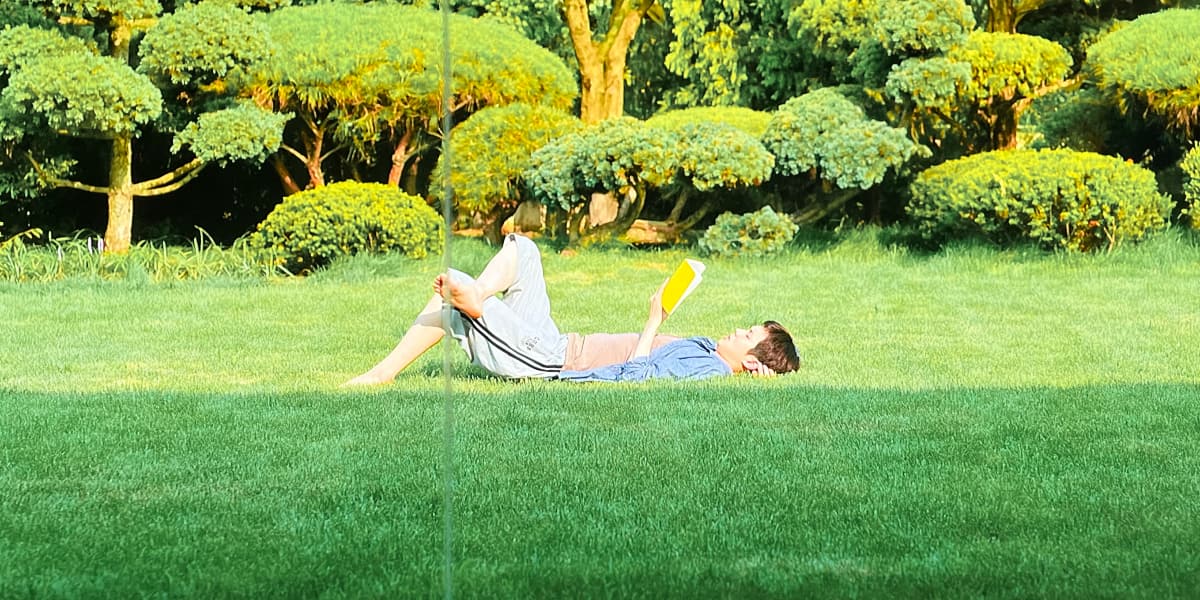
Parasite
A family friend grants Ki-woo an opportunity to teach English to the daughter of a rich businessman, Mr Park. Ki-woo’s family is struggling to make ends meet, and they live in a basement flat in the poorest part of town. Once he’s secured the teaching job, Ki-woo and his family manipulate the Parks into hiring Ki-woo’s sister, father and mother, replacing all the existing staff. But the modernist house contains unexpected secrets, and their parasitic peace doesn’t last long.
I didn’t see this when it came out, and I can see why it won the main Oscars in 2020—it’s a masterpiece, and a rare hit film that takes a sledgehammer to the ideals of capitalism. The Park family live in a secluded house built by a famous architect in an exclusive part of Seoul high in the hills. When a storm sweeps through Seoul, the water flows downwards and floods the poor neighbourhoods with sewerage, and the rich don't even notice. Every relationship is transactional to the Park adults, although the younger children are shown as more innocent.
The Kim children are as corrupt as their parents, but no matter how hard they try, they can’t lift their family out of poverty. They are fighting a losing battle when they play by the rules. It’s hard not to cheer for them when they break rules to even the scales.
It all falls apart when they fail to show mercy to others in the same class as them. Once the workers stop helping each other, the rich win. The beautifully stark concrete house has a basement, and in the architect's paranoia, a basement far below that that’s more like a bunker. There are metaphors galore in this film. The wealth stone given to the Kims at the start of the story is one of the film’s best ironies.
August 18 2025, 20:11
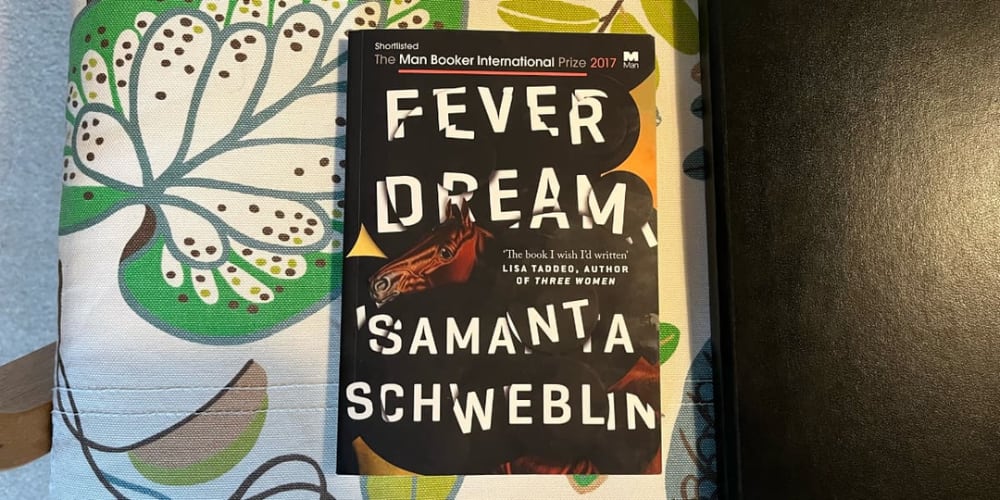
Fever Dream
~ 25,000 words. First person, Amanda, in conversation with another, David.
An even shorter book than Fatale, Fever Dream is a conversation between Amanda, a mother on holiday in a rural part of Argentina with her young daughter, Nina, and David, troubled son of their neighbour, Carla. In the opening, they talk about worms in the body, and we realise Amanda is in hospital and that David is peppering her with very direct questions about how she got there. He says that her memories are important to everyone, but doesn’t elaborate, and so we are launched into a recounting of a harrowing couple of days in the lives of the four characters, with David leading Amanda on in a disturbingly knowing way.
Amanda is dying, and the fate of her daughter is uncertain. We don’t know if David is real or in her mind. David’s urgency, Amanda’s anxiety about her daughter’s wellbeing, and the ambiguous details that she recalls all add to a remarkably effective sense of increasing dread. I read this in an afternoon on my February writing retreat. It was in the library, the cover was intriguing, it was appealingly short, and I had a couple of hours—I am not exaggerating when I say that I could not stop reading it. I had to know what happened next, even as it ruined my afternoon because it was so intense.
I wanted to read it again to understand how it had that effect on me. There are no chapters. The pace is quick. The descriptions are lyrical but short. The mystery deepens on every page. Amanda and Nina are lovely characters in the wrong place at the wrong time. David’s nature is mysterious, and you don’t know if he is good or evil. You want to know what happens to them all.
And there’s a central question that David keeps asking (“We have to find the exact moment the worms come into being.”). He also wants Amanda to realise “the important thing”. When you put all these elements together, it’s highly addictive. It’s one of the best books I’ve read in a long time, but the ending makes you work for answers to those questions. It shows how much you can do with very few words. The ambiguous ending is infuriatingly apt,
August 17 2025, 09:53
Caché
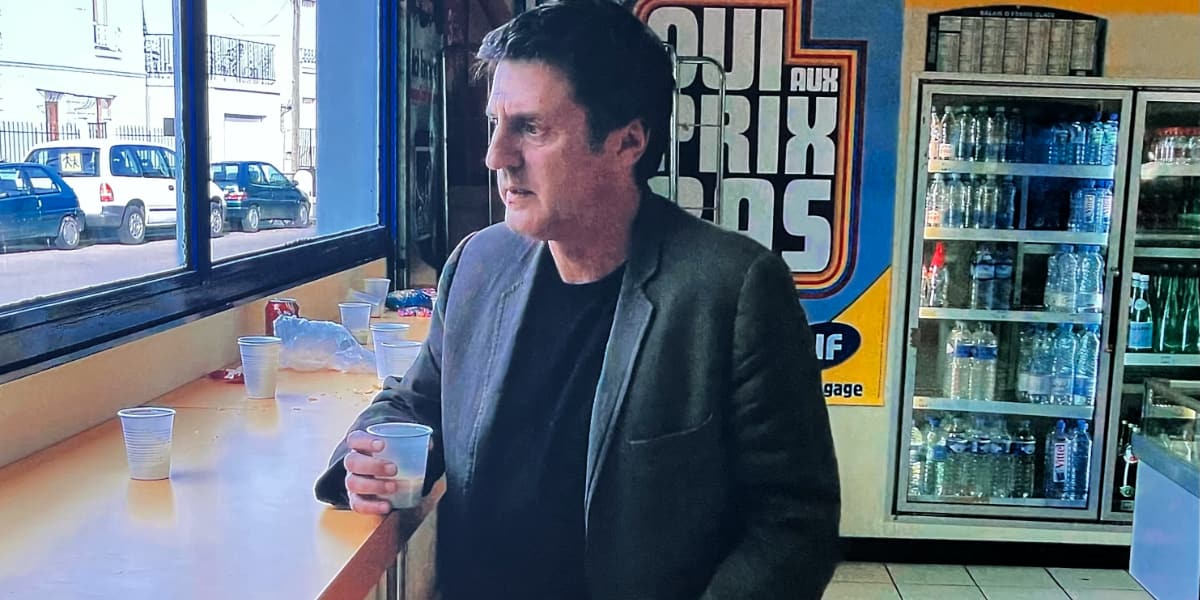
Another French classic from the early noughties that I’m only now getting around to. Georges and Anne, and their son, Pierrot, are living a comfortable middle class life in Paris when a VHS tape is left on their doorstep. The tape shows the outside of their house, with the family coming and going oblivious to the hidden camera. In the coming days, they receive more tapes, wrapped in violent child-like drawings, and Pierrot is sent one of the drawings in school. Increasingly freaked out, Georges suspects someone from his past, and tries to clear things up once and for all.
Haneke puts the bullish Georges in spaces where anyone else might feel threatened, and between the foreshadowing of the tapes’ content, Georges following the trail of clues, and the camera lingering over his shoulder and on possible antagonist faces, the suspense is palpable. The heart of the film emerges in Majid, who we learn was sent away to an orphanage when Majid’s Algerian parents, who worked on Georges’s parents’ estate, were killed in a 1961 massacre by the French National Police. Georges is convinced Majid wants revenge. Majid denies it, and we believe him, but unable to think of who else would send the tapes, Georges doubles down, eventually getting Majid and his son arrested.
Georges’s personal shame at his actions as a six-year-old is repressed so thoroughly that he cannot acknowledge the injustice he inflicted on Majid, and instead it makes him lash out and make things much worse. Haneke shows news footage in the background of many shots, and he seems to be saying Georges is a mirror of affluent French society, where the consequences of not acknowledging the horrors inflicted by their country’s power structures, especially on immigrants, leads to simmering resentments and social unrest.
We see a version of this in the UK now with Brexit, the scapegoating of immigrants, and Far Right groups rioting outside immigrant accommodation. Narratives of colonialism and British exceptionalism are still everywhere in right wing media, sickly nostalgic ideas kept alive by billionaires for profit.
Like Irréversible is famous for its violence, Caché (hidden, in English) is famous for the ambiguity of its ending. Certainly on first viewing, it isn’t clear who is making the tapes, and the final scene as the credits roll makes some suggestions, but the favourite take I read was that the hidden camera was God judging Georges for lack of empathy and remorse for his crimes. Psychologically, it could also be Georges’s own conscience, or unconscious, forcing him to face up to his past. Both work for me.
August 14 2025, 21:32
Irréversible
It’s been a couple of days since I watched this, but I needed time to let my thoughts percolate. Irréversible is infamous for the extended and brutally violent rape scene at its centre. The shock of it overwhelmed the critical thinking part of my brain, and it’s rare that I finish a film completely confused. Was it good, bad, clever, disgusting, homophobic, misogynistic, racist, or all of these things? What was Noé trying to achieve? I had to do some reading to help me work out what I thought.
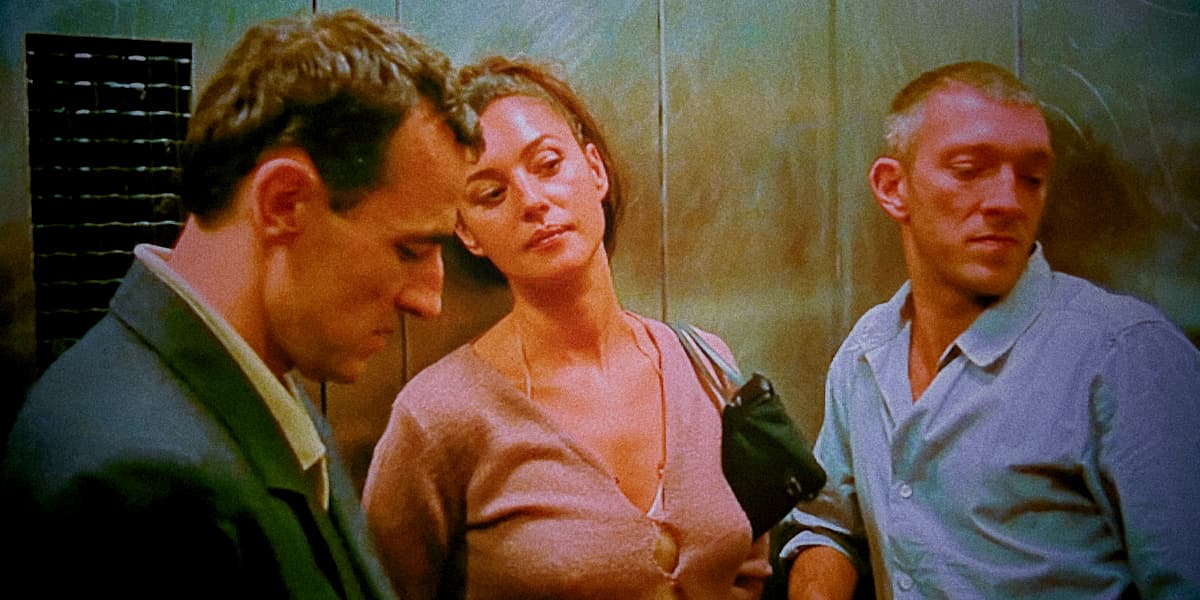
I don’t think the plot of this movie can be spoiled. Noé’s trick is to play the scenes in reverse order, so we see the ending at the start. Its power comes from making the audience see the results of the choices made by the characters before knowing the reasons. The opening/finale is shown with a swirling camera that goes upside down, on its side, making us feel nauseous, while a rumbling drone constantly assaults our ears. We follow Marcus and Pierre into a version of hell. Marcus has lost his mind, but we don’t know why, and the violence he provokes is shocking. We are presented it all without context.
From here, we retreat through the evening. A couple, Alex and Marcus, go to a party with her ex-boyfriend Pierre. When Marcus takes cocaine and becomes aggressive, Alex leaves to go home, and in an underpass she is raped and beaten. Marcus wants revenge and sets out to find the rapist, finding the man in a gay sex club. Marcus gets into a fight, and in protecting Marcus from being raped, Pierre beats the man to death with a fire extinguisher. The police take them both away, but Alex’s rapist escapes justice.
Alex is an intelligent, independent woman, who bristles at Marcus’s view of her as somehow his property. She is surrounded by men who let her down through the evening. When she leaves the party, neither Marcus nor Pierre go with her. The police talk to Marcus and Pierre as if they are the victims of the crime. When Alex is taken to the hospital, instead of going in the ambulance, Marcus is tempted by local gangsters into seeking revenge, and Pierre goes with him. These are selfish decisions that leave Alex vulnerable and alone.
The further into the film we go, the closer we get to who Alex is, and the pace slows, there is more intimacy and tenderness, and the weight of what has happened to a woman with everything to live for hits home.
August 12 2025, 18:25
Summer experiments
It’s twenty-nine degrees outside, and I’ve drawn the blinds, turned on the fan, and hunkered down until my swimming lesson at seven. My family return at the weekend, and I’m excited to see them. Tomorrow I’m taking a last-minute day trip to Edinburgh, and I’ve bought tickets to hear A.L. Kennedy talk about her new book at the Edinburgh Book Festival.
I’ve seen her in person once before, thirty years ago at the Dylan Thomas Centre in Swansea, when I was twenty-two. Back then, I was overwhelmed by the power of her work, partly because I knew she wasn’t much older than me, so she represented literary possibilities. I’d booked the train ticket for tomorrow before I knew she was speaking. It’s a serendipitous closing of a circle.
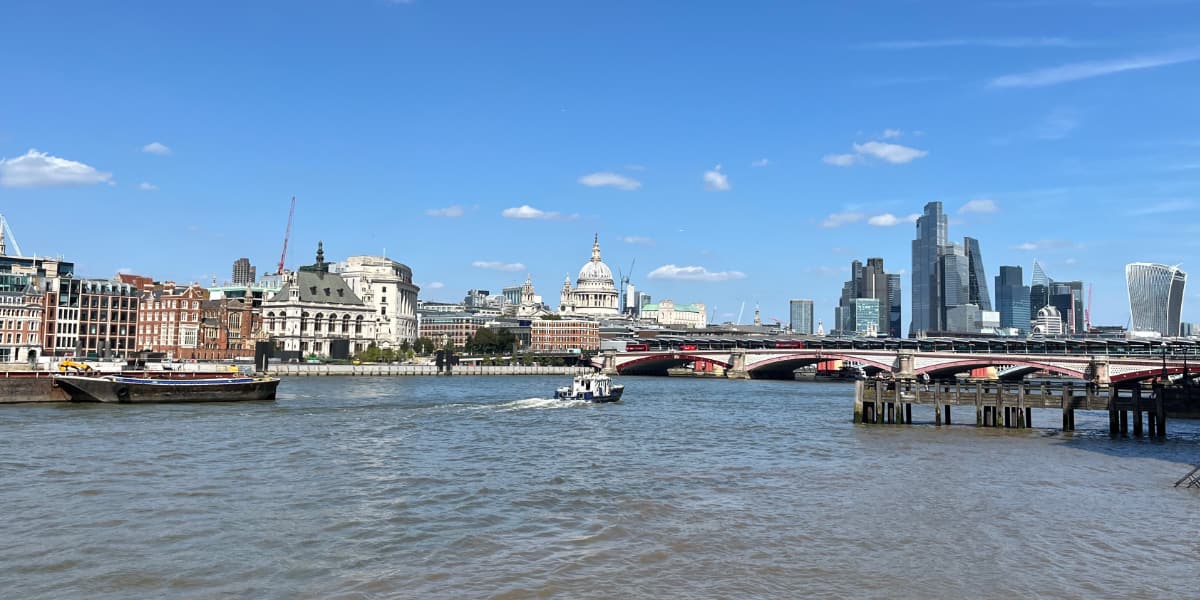
Last week I spent two days in London, being a tourist at Borough Market, the Tate Modern, the BFI South Bank, Foyles on Charing Cross Road, and Coal Drops Yard near Kings Cross. Before that, I went to Salt’s Mill, Saltaire. As a karmic down payment, the first weekend alone I spent sanding and oiling the kitchen worktops, and I wined and dined my mother-in-law. It worked.
I’ve had two weeks to myself. It’s been a joy. I can’t wait to see everyone and hear their stories, but I’ve really used my time well. Most importantly, between the jobs and adventures, I’ve made real effort to build habits to take into the autumn when I’ll be back in work with everyone around me firing on all cylinders.
Stretching and strengthening. Learning to swim. Learning to play guitar. Writing every day. Reading every day. Meditating every day. Eating well (most days). I’ve done these things regularly for a fortnight.
I was partially doing them around my 9—5. Is it possible to work full-time and keep them all going? I’m back in work for a week, then off again for the bank holiday week, so I’ve got a chance to experiment then regroup to process the results.
August 11 2025, 20:12
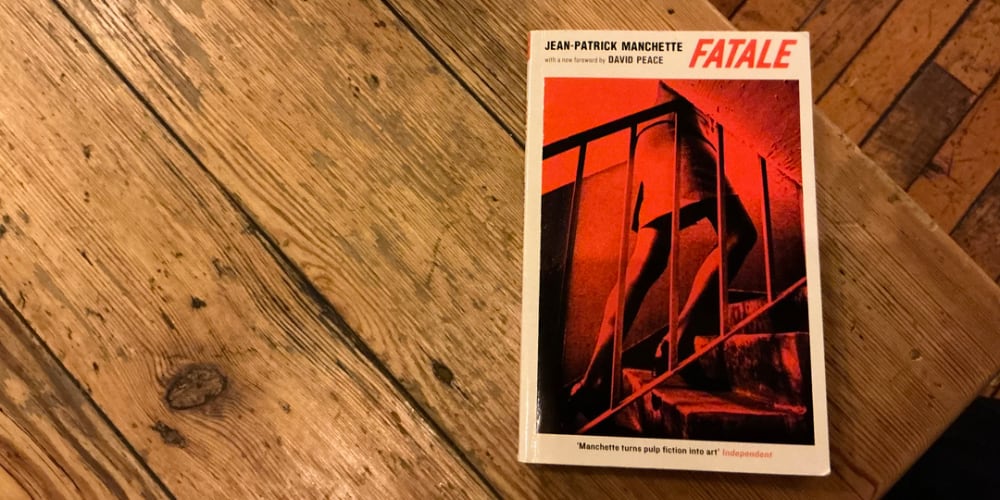
Fatale
~ 30,000 words. Third person, limited/omniscient, Aimée.
My copy of Fatale has a foreword by David Peace that includes extended quotes from Manchette’s essays and letters expressing frustrations at the reactions of both publishers and critics to the novel, which was a departure for him, and expounding on his communist politics. It’s an intimidating introduction to what is ultimately a lean, bordering on sparse, crime thriller.
In the opening chapter, we meet a group of aging, well-todo huntsmen in the French woods, one of whom is gunned down by a woman he greets with warmth and good humour. The prose style is clean, sharp and rich with details, but it doesn’t linger, so the whole scene is done with in two pages. In the second chapter the woman gets a train to Bléville, and we learn she changes her identity in each town she visits, and she has robbed a great deal of money, so on arrival she becomes Aimée Joubert and immediately sets about learning about the people who live there.
Aimée quickly works her way into the circles of the town’s powerful, playing bridge with them, going to functions, all the while making notes and looking for a way to get at their money. She is constantly listening for secrets and working out where the skeletons are buried. When a despised outsider, Baron Jules, seems to offer Aimée the perfect plan, his wayward behaviour is something she comes to admire, and the plan begins to go awry.
Manchette’s politics is woven subtly into the story, and if you didn’t know them you might not even spot the signs, which was perhaps his intention. It’s class warfare I crime fiction form. Aimée’s raison d’etre is to extort from and murder the corrupt in France’s small towns and steal their money. She is a lethal force, trained in martial arts and weapon skills, and she makes quick work of those who stand in her way.
Her backstory adds some flavour, but at heart she is the rejected and suppressed in society returning for revenge. Perhaps the revolution Manchette hoped for will start through small acts of rebellion and violence by victims of the patriarchy. Aimée is ruthless and amoral, but clearly the heroine when compared with the contemptible mayors, industrialists and corrupt police of Bléville. Manchette has written the communist version of Michael Winner’s Death Wish.