
December 08 2025, 22:07
The Shrouds
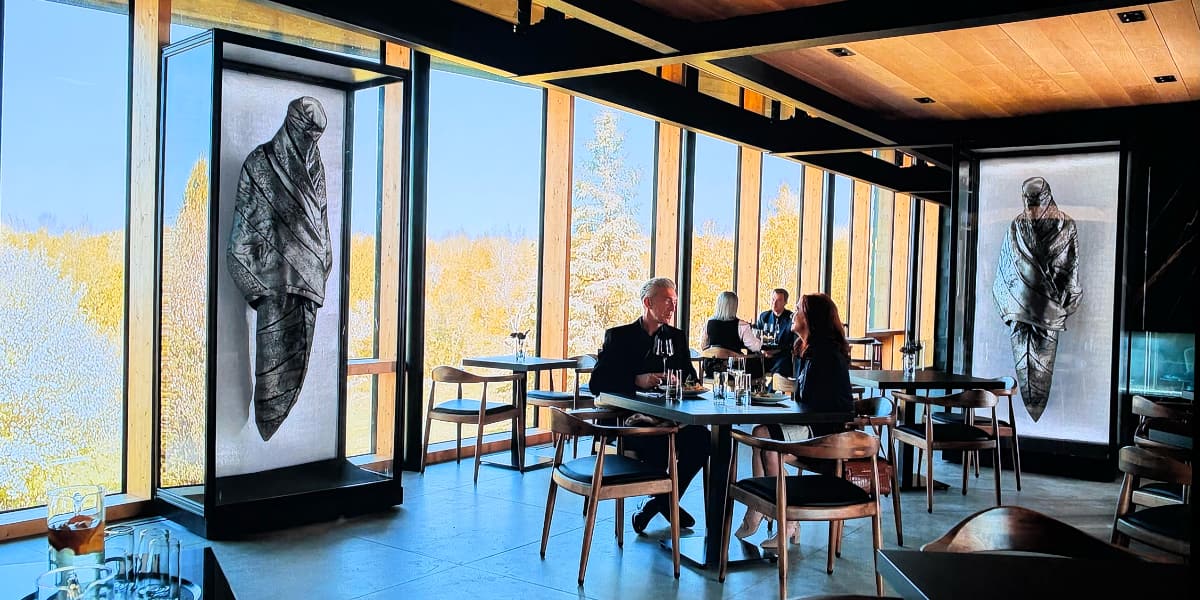
Karsh Relikh part-owns GraveTech, a company that wraps up dead bodies in a material that allows the living to view it in its grave. His wife, Becca, died of cancer, but five years on, through the technology, he notices mysterious growths on her decomposing body. Soon after, the graveyard is seriously damaged, the technology of the graves hacked, and Karsh’s business hangs in the balance.
David Cronenberg wrote this film after the death of his wife, Carolyn, in 2017, but has said there is no catharsis for him in his art. In grief, we suffer, but in The Shrouds there is also plenty of life, humour and sex. Karsh wants to keep his wife’s memory alive by observing her body in the ground as it decomposes. At one point, he tries on one of the shrouds to see what it might feel like for her, and we see him, alone, wrapped in material, looking (and feeling) ridiculous. It’s a fatally flawed enterprise.
To investigate the destruction at the cemetery, Karsh asks his brother-in-law, professional hacker Maury, for help. Maury is paranoid and the ex-husband of Becca’s sister, Terry, who is sexually aroused by conspiracy theories. Karsh is pulled into the strange inner workings of Maury and Terry’s broken marriage, and they send him on a rollercoaster ride of theories involving the Chinese government, Russian spies, Hungarian businessmen, and Icelandic eco-terrorists.
In his dreams, Karsh continues to see Becca in their bedroom, slowly deteriorating from her treatments, but still hungry for love and to be sexually desired. The awkward, absurd, terrible realities of watching someone you love die is captured in the deep oddness of how the people in this film interact. The dialogue feels unnatural and the performances are slightly stilted— the characters often say outrageous things to each other and barely bat an eyelid. Karsh often falls asleep, and in a way the whole film is like a dream, completely unlike real life, and at the same time expressing something true.
December 06 2025, 20:50
Cloud
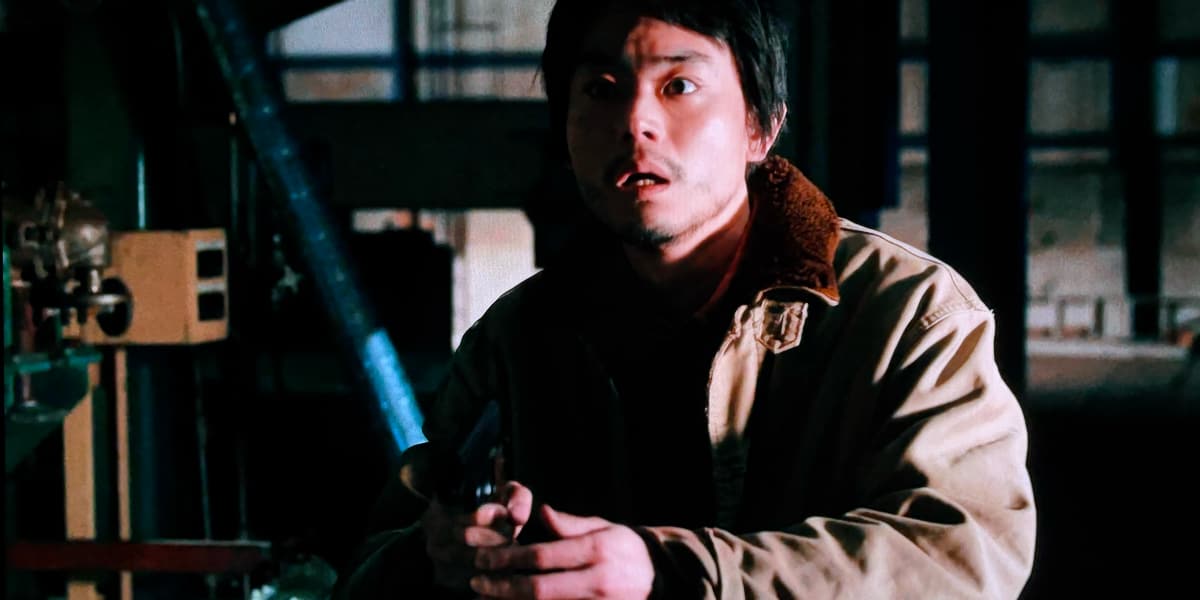
Ryōsuke Yoshii buys and sells things on the internet. He has a knack for sensing what’s valuable to the market, then buying cheap and coldly selling for enormous profits. He escapes Tokyo with girlfriend Akiko to find more space for his wares, cutting off his boss and other business associates to do it, but his insensitivity makes him enemies, and a group of them track him down for revenge.
The first half of the film shows Yoshii’s life as an online reseller, buying and selling on an auction website, collecting boxes of anonymous products, staring at a computer screen like he’s betting at machines in a casino. He’s always calculating the options to make money. It’s like in the film Wall Street, where the traders make money by destroying businesses and livelihoods. Yoshii doesn’t care if his goods are real or fake, safe or harmful, as long as they are sold quickly. He seems completely disassociated from the feelings of the people around him.
This unempathic, blank affect, along with a camera that, as in Kurosawa’s earlier films, Pulse and Cure, makes the empty spaces behind characters feel threatening, creates a deep sense of dread. Yushii’s ex-boss represents the straight road of business, and at the start of the film wants to take Yoshii under his wing, but in the film’s second half he shows up with a shotgun and a gang in tow. Things take a turn away from horror and more into a mixture of thriller and black comedy. This didn’t work as well for me.
Yoshii’s new assistant, Sano, emerges as a real-world gangland counterpoint to the motley group of kidnappers. Sano’s easy violence becomes a path for Yoshii to follow and they gradually pick off the gang in an abandoned warehouse. It’s like an awkward, slow video game. The comparison between online and real-world violence is clear, and by the end Yoshii realises his immoral actions have set him on the path to hell.
December 01 2025, 20:07
Demons
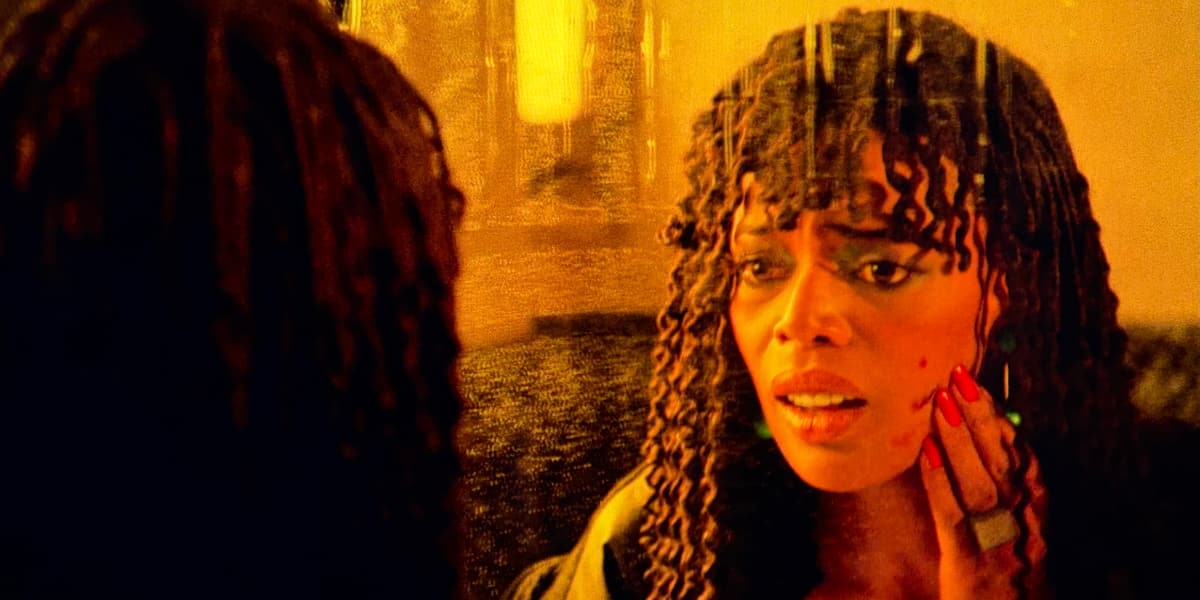
Music student Cheryl accepts tickets to a film event at an old cinema from a man in a demon mask. She takes her friend Hannah, and they hook up with two boys to watch the start of a horror movie. In it, two similarly dressed couples disturb the grave of Nostradamus and uncover a demon mask. Events in the film are mirrored in the cinema, leading to demons being released and running amok.
I found lots to love here. The people at the cinema are a fun mix of clichéd teens and more realistic adults that don’t act as you might expect. The demons are gloopy and scary, closer to running zombies than demons, converting humans with a slash of their talons. The venue is a fun mix of art deco and eighties trash decor, matched by a synth score and slew of fun eighties rock needles drops.
The dialogue is cheesy, and the acting is so-so, but you also get Billy Idol’s White Wedding kicking in while a man on a motorbike rides around the cinema stalls slaying chasing zombies with a samurai sword. The film within a film idea felt unexpectedly fresh, helped by the maximalist tone. It’s short, tightly edited, and ultimately a splash of gory joy that doesn’t ask much of the viewer except to meet it where it is.
November 30 2025, 15:12
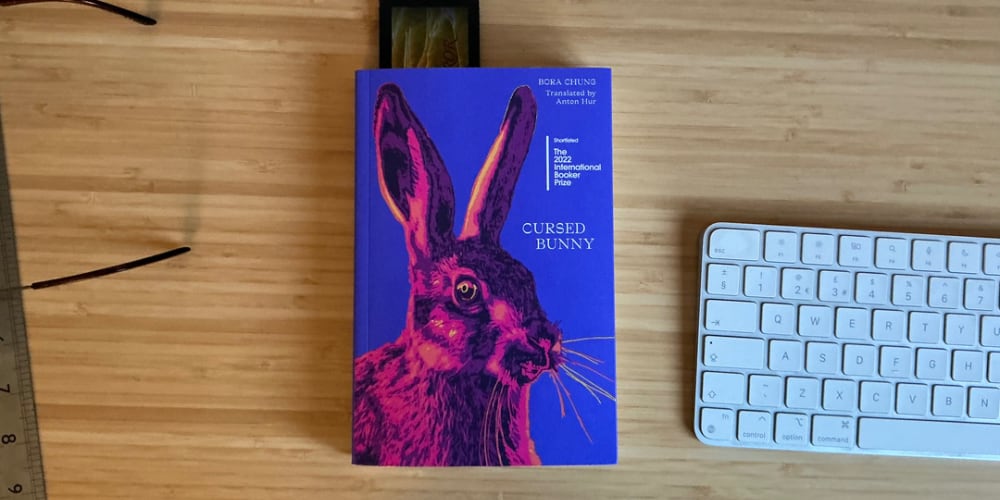
Cursed Bunny
Ten short stories. ~5,000 each
There’s a transition that happens if you read the stories in order. It starts with what feels like horrific folk tales, where women are fighting their bodies, families and the cultural norms of South Korea. The tone changes around halfway, becoming more mixed, and the genres open up to include sci-fi and fantasy.
The prose style is simple and clear. I’m never sure with translated works how much of that is down to the translator. I think I was stung by the stories of Raymond Carver’s editor changing the voice in the short stories into what we read today. Having never translated anything, I’m guessing the aim is to be as faithful to the author’s original text as possible. Translators are not editors.
The longest story, Scars, is a mysterious tale about a young boy chained in a cave for a monster to feed on. He escapes and, having seemingly taken on some of the powers of the monster, is made to fight as a slave for a cruel master. It reads like fantasy mixed with a fairy tale. The battles are written in brutal detail, and the ending is haunting. (Spoiler: all of her endings are haunting.)
Her style inspired me to write something fresh for the first time in months, so she must have gotten under my skin. Short stories don’t have to be ‘publishable’, whatever that means. They can be sketches, ideas, drafts; they can be complete-for-now and available to be developed further, if that’s what the story wants.
November 07 2025, 15:29
November mood
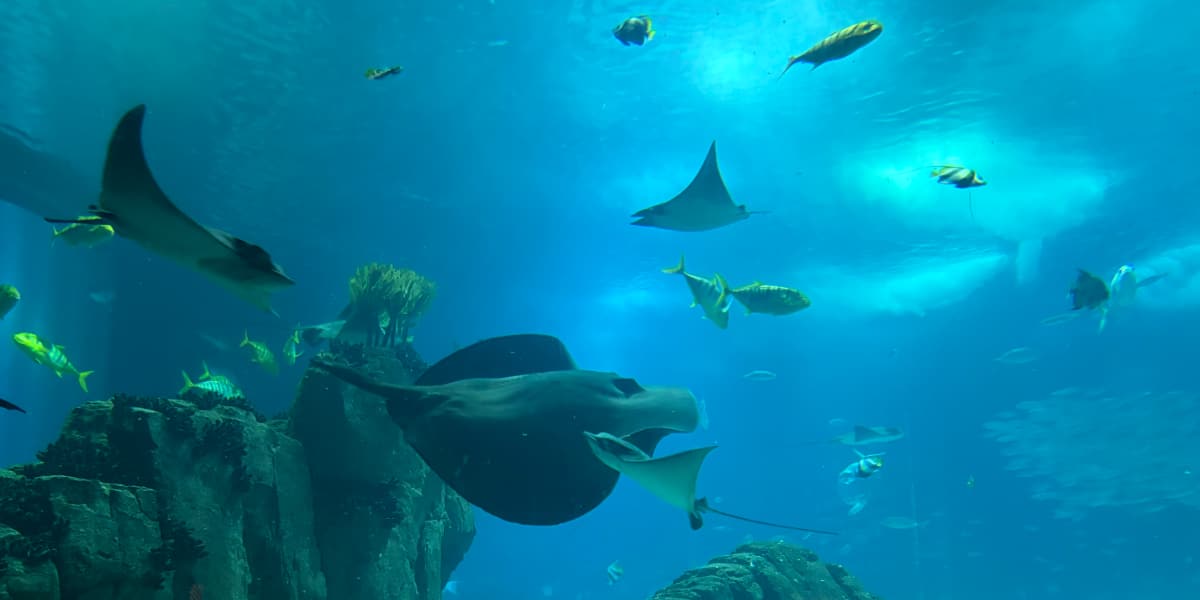
I’m between a couple of unusual (for me) adventures and recovering from a cold. We flew to Lisbon for three nights with our daughter—she’s into marine conservation, and the Oceanário de Lisboa is the second-biggest aquarium in the world. It’s a beautiful city. I was worried about the hills, but doing the strength work all summer served me well. On the flight out I must have picked up a virus, because within hours of getting home my throat started to hurt. It wasn’t Covid, but I haven’t had a cold in over a year so I was comically grumpy about it.
Next week is the Abertoir Film Festival, a.k.a., THE INTERNATIONAL HORROR FESTIVAL OF WALES, in Aberystwyth. This will be my first time at a horror film festival, and my work-in-progress novel has one, so it’s both for pleasure and research. The mix of the old and the new is particularly exciting. They’re showing BRIDE OF FRANKENSTEIN, EYES WITHOUT A FACE, THE GHOST, a documentary on the making of Michael Mann’s THE KEEP, an in-person show with Garth Marenghi on the opening night, talks on the Gothic in video games, a pub quiz, famous faces from the seventies... I’m vibrating thinking about it.
Until leaving for Lisbon, all my creative projects were ticking along well. Writing, guitar, reading, strength. No stress, just doing a bit each day. The local swimming pool closed because a pump failed, so I haven’t swum since September. That’s a bit of a blow. I’m sure my muscles will remember what to do when the time comes.
That‘s where I’m at. No dramas. I’m trying to create a stronger connection with my unconscious flow. My Bluesky account feels pretty dry and dull. If I’m worried at all, it’s that I’m too busy in the shallows and not going deep enough. No dreams, either. Well, unconscious, I’m open to a dream if you’ve got one for me.
October 21 2025, 17:42
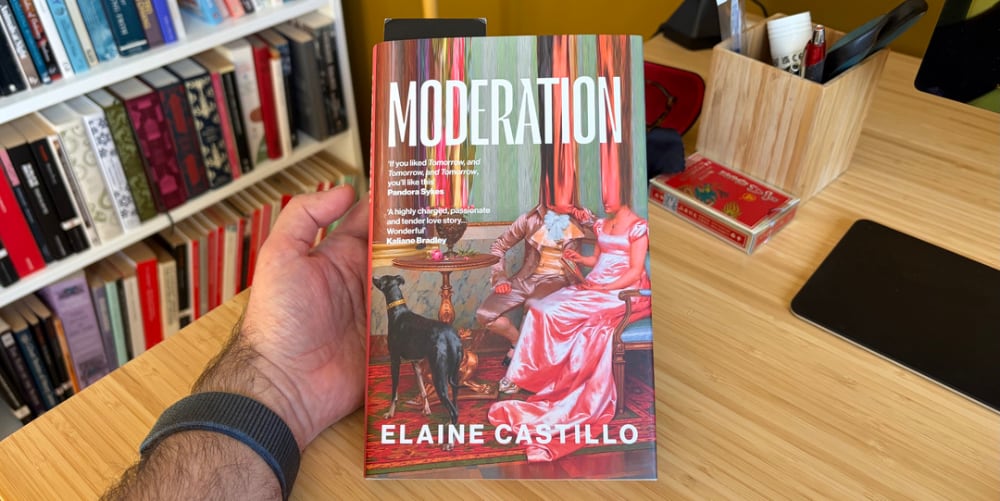
Moderation
~ 105,000 words. Third person limited. Girlie Delmundo.
It’s been a while since I last posted a review. I’m a fast reader, but I tend to read in short bursts, perhaps twenty minutes once or twice a day. The blurb and jacket description (and opening third, tbf) make you think it’s a techno thriller, but it pivots around the halfway point into clear literary romance territory, which I wasn’t expecting.
Girlie Delmundo is a content moderator specialising in taking down child abuse videos for a global social media company . She seems completely disassociated from any feelings this brings up for her, and her excellence in the role brings her to the attention of new bosses. She’s headhunted into a role moderating a virtual reality world called Playground. Her new manager is William, a man as distant and awkward socially as she is, who it turns out is one of the few remaining initial employees of the company that built Playground, and he has a surprising agenda.
In the opening chapters, there are deliberately graphic descriptions of the awful videos content moderators have to assess, and it’s implied that something from Girlie’s past allows her to be able to do the job she does. There are also detailed descriptions of Filipino family dynamics, the American class system, the experiences of the Filipino diaspora in California and Las Vegas, the effects of capitalism on... everything. Girlie’s family becomes a vital part of the story.
The technology created to give access to Playground is described evocatively and realistically. One of the themes is how VR technology can be used to create both healing and traumatic experiences (and everything in between), but it’s easy to get confused about what is real when you are wearing a full bodysuit that simulates the sensations of reality. There is also the question of what is being done with all the data. Capitalism demands profit, and it treats data as a resource to be mined.
There is a promise of darkness in the first half of the book that doesn’t ultimately get fulfilled. It’s a story about a woman breaking down the emotional barriers she’s created inside herself and falling in love. The descriptions and depth of thought that’s gone into the world are amazing. Writing a novel is another way to create a world to lose yourself in. There’s a lot of different things happening in this book, and it's not wholly successful for my taste, but there's so much to admire.
October 06 2025, 20:35
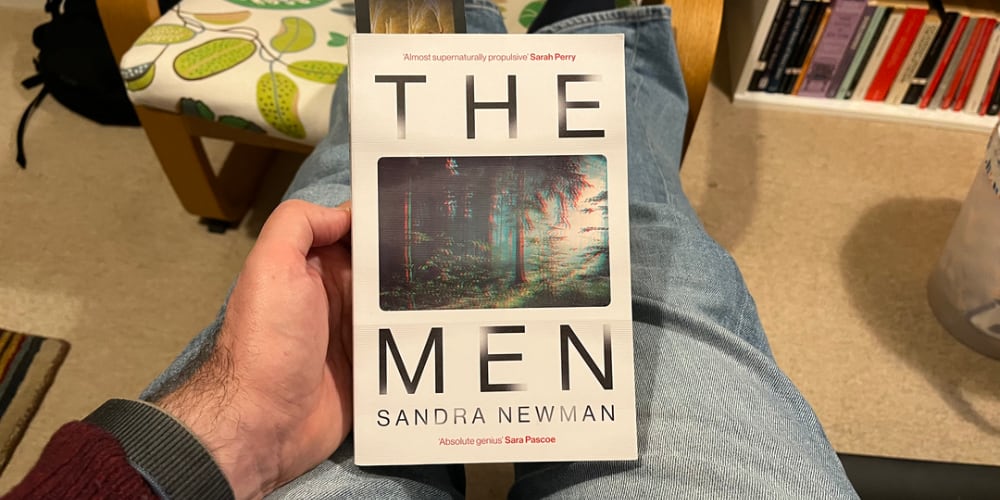
The Men
~70,000 words. 15 chapters. First person, Jane Pearson. Also, third person, other characters.
On a camping trip in the North Californian mountains with her husband and son, Jane Pearson experiences "an intense nothing" and is suddenly alone. Across the world, all males have simultaneously disappeared—men, children and babies. This conceit launches us into an exploration of how the world might feel for women without men around, and the potential female utopia that could be created.
The men's shadow is still present in snippets of video that start appearing online. The men are faceless and altered, existing like zombies in a hellish world inhabited by strange creatures within an ever-shifting desolate landscape. Some women become addicted to watching, and those who do tend to see the loved ones they've lost on their screens.
Tying the story together is our protagonist, Jane, and her ex-lover, Evangelyne, who bonded on a college campus when both were infamous for different reasons. Jane was in a devastatingly abusive relationship with her ballet teacher, Alain, who manipulates the underage Jane into having sex with ever-younger boys, leaving her with a reputation as a paedophile. Evangelyne is escaping her own traumatic teenage relationship with a girl whose psychosis leaks into the story of the men's disappearance.
The prose is terrific. Sandra Newman has a wonderful way of describing her uncanny world. The level of detail is intimidating. She invents an entire social movement around commensalism, a biological term for one organism benefiting from another without affecting it for better or worse, while diving deep into the fraught waters of racism, sexism and police brutality, all while telling a love story.
The women are almost all shown as better off without the men in their lives. Both Jane and Evangelyne have life experiences that could be inferred as the cause of the men's disappearance, and this is part of the book's mysterious dance.
September 22 2025, 20:24
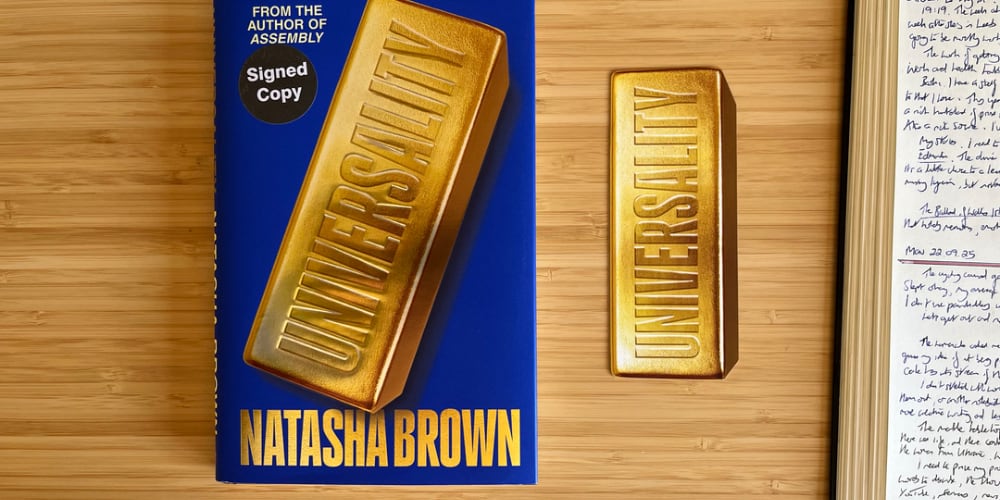
Universality
~30,000 words, featuring several characters at various levels of the media industry.
The novel is in four acts, each from different points of view. It opens with a long magazine article about a young man, Jake, who had disappeared after using a solid gold bar to knock out a squatter on a deserted Yorkshire farm. In the second act we meet author of the article, Hannah, at a dinner party she’s organised. Then we switch to much maligned banker Richard who owned the gold bar (and the empty farm the squatters were on), before we finally meet vitriolic newspaper columnist Lenny at a literary festival to promote her new book about "Woke Capitalism".
After the opening article, each successive section casts new light on what has come before. The tone of Hannah’s article is well struck—not too professional, but engaging and showing some personality. It’s a surprise to meet her at her dinner party and see how abject she feels as a struggling writer in the face of her richer middle class peers. Her old friends are awful, and old flame Martin, is particularly odious, using her to get information he needs for a prestigious interview.
The story comes at class in the British media industry from many directions. Hannah is a freelance writer, and has no connections, no rich parents, no money to fall back on, and to her credit takes a job as a shop assistant to pay the bills instead of leaving London altogether. Her article makes a brief splash, but she is left little better off in career terms afterwards. Her old boyfriend, Martin, is more vicious with his ambition, and has connections. Richard, the banker whose farm the squatters were on, is rich, but has a complicated relationship with family and money and is deeply unhappy. And anti-hero Lenny, the nihilistic provocateur, pulling the strings to get Hannah’s article published, knows how to play the media game, but is continually disrespected and underestimated because of her populist rhetoric.
Hannah’s piece appears in a magazine called Alazon, which is also a type of stock character in ancient Greek plays, an imposter who thinks themselves greater than they are. All of the characters in the story have that quality. Pegasus (!), the charismatic leader of the commune on the farm, uses the term universality to mean a society where everyone is equal. Lenny uses the term universality as similar to relatability; she wants to connect to the largest possible audience without being held to unnecessary and awkward details. Language is flexible. Language is powerful.
Lenny's caustic voice is one of the wonders of the book, and her finale, tearing apart the odious Martin, is a wonder to behold. She's spreading lies and sowing confusion, but it's hard not to cheer her on, because Martin’s slipperiness is somehow worse.
September 13 2025, 14:46
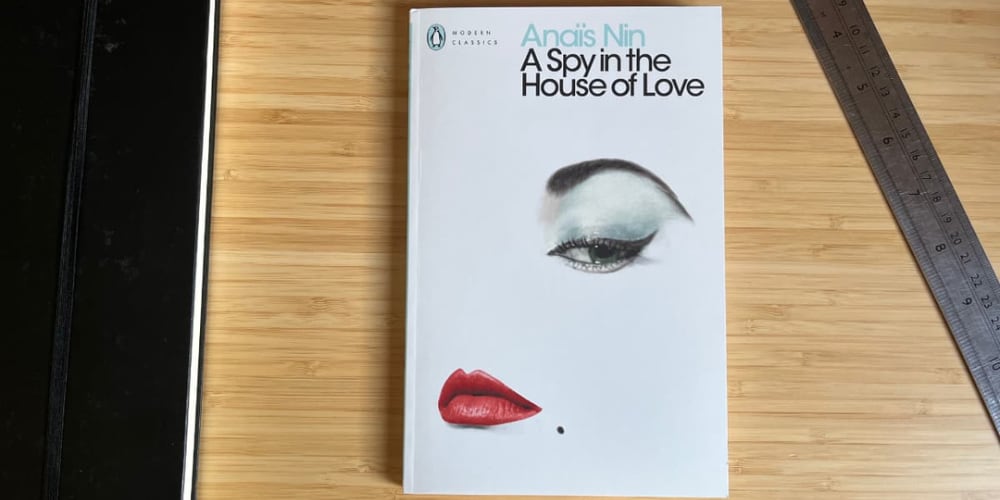
A Spy in the House of Love
~ 35,000 words. Third person limited/omniscient, mostly with Sabina.
Sabina is in a long-term relationship with Alan, a father figure, while having affairs with other men. She is an actress and, when she disappears for days and weeks at a time, she tells Alan it is to perform in plays across the country, whereas actually she is staying alone in the city to hook up with new people. On her return, she improvises for Alan elaborate lies about her time away, but this takes its toll on her mental health.
At the opening, Sabina wakes in a hotel bedroom, tense and anxious, looking for danger, then gradually feeling better as she applies her makeup and chooses her clothes, completing her costume with a cape that she feels gives her “some dash, some audacity, some swagger of freedom denied to woman”. It’s her battle dress in her lifelong fight to feel whole instead of fragmented. This is the main theme of the novel.
In the opening pages, we see Sabina through the eyes of ‘the lie detector’, who by the end we realise is Sabina’s internalised guilt. Alan gives her the stability she needs, but he doesn’t see the whole of her, and she lies to him so that she can look for missing parts of herself in other men. Whether she is really an actress or not, she is a gifted chameleon, changing with each man, responding to what they need from her. But unlike in a play, she struggles to shake off these relationship parts from her elusive underlying personality.
The prose is thick with lyrical details about feelings, needs and desires, philosophical in places, building to a conversation in a nightclub with an artist, Jay, who perhaps captures closest the reader’s view of Sabina in all her messy glory. The arrival of a character called Djuna Barnes, who Anaïs Nin admired in real life but was never friends with, gives Sabina access to some insight and peace.
September 06 2025, 13:46
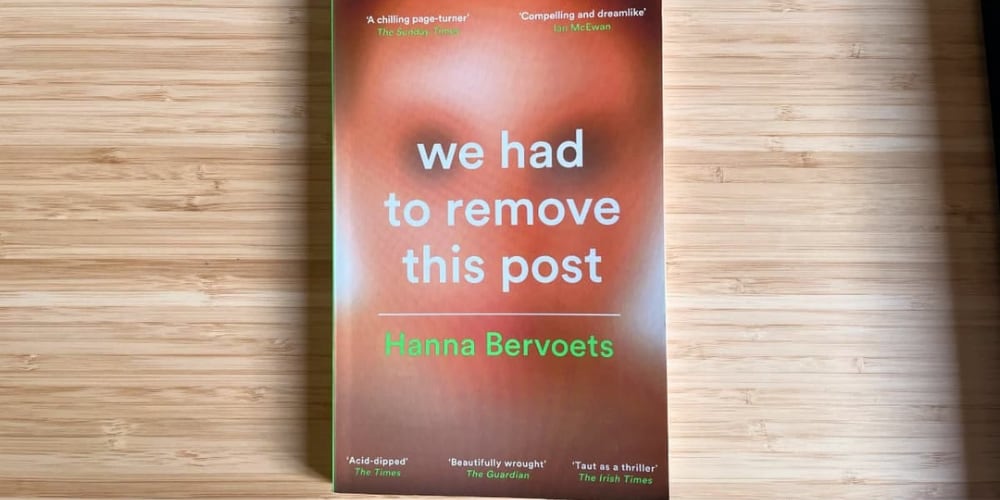
we had to remove this post
~25,000 words. Six chapters/acts. First person, Kayleigh, as a letter to Mr Stitic, a lawyer.
Kayleigh has received several emails from Mr Stitic, a lawyer at a firm bringing a civil action against Hexa, the company Kayleigh used to work for. She was in a team that moderated social media posts, taking them off the site if they broke the rules. The rules are detailed and specific, and while the staff have aggressive targets to meet each day, they are also expected to be accurate in their assessments.
Her team is a group of misfits, like any team, but bound by the horrors they are obliged to sit through for their job. They try to abstract themselves from the images their minds are assaulted with through a mixture of denial, camaraderie, substance abuse, and an almost religious respect for "the rules". We are given brief sketches of the awful things people do (and want to share!) through examples of the assessments, but the story is really about Kayleigh's patterns in toxic romantic relationships with other women.
The toxicity of the job brings out a slowly increasing extremism in everyone, and the reader begins to wonder how much to trust Kayleigh's account of things. The finale involves a question about violence and consent. The story falls apart in the final third because the conversations about the extreme views being represented are clunky and obvious, and the relationship Kayleigh is in feels thin. There isn't much depth to it all. But it was compelling enough for me to finish it in a couple of days.