
October 05 2020, 08:00
Pulse (2001)
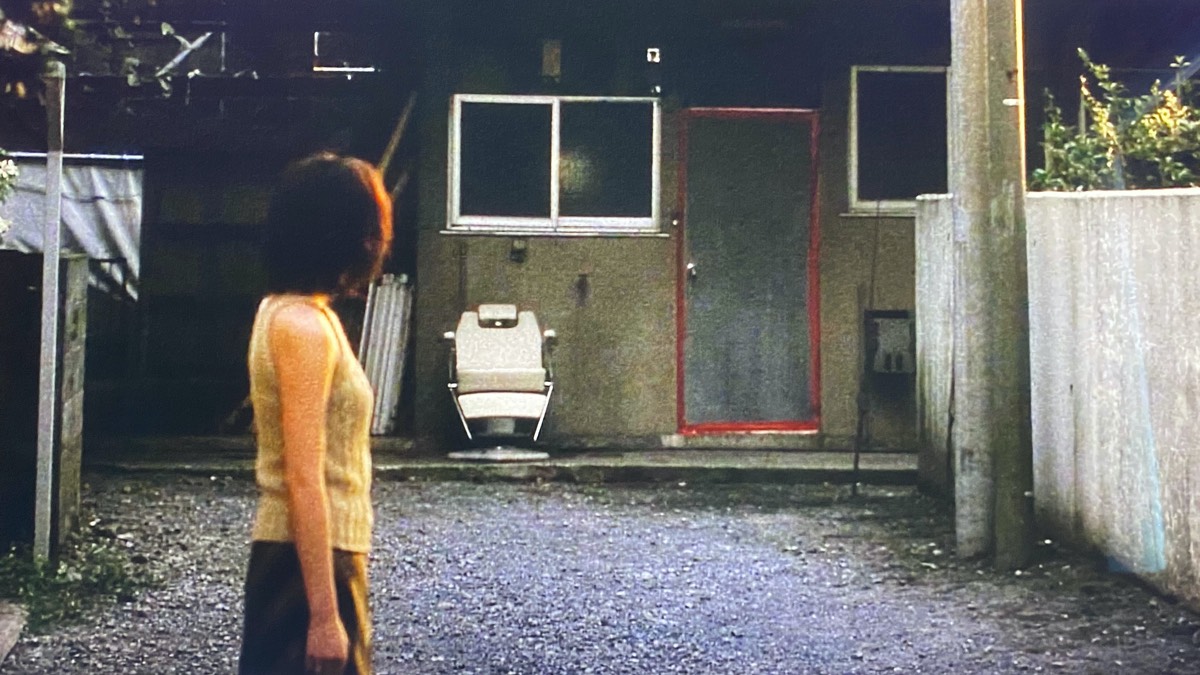
The Tokyo in Pulse is empty and eerie. People are lonely and disconnected from each other. The characters are all young and, in one way or another, alone.
We observe a man, Taguchi, in his home, through a low resolution camera of some kind, and we wonder who is watching him, apart from us. One of his work colleagues, Michi, comes to pick up a computer disk, and he hangs himself in front of her. Meanwhile, at the university, Ryosuke, a charming economics student, tries to install the internet on his PC. Something goes wrong, and he finds himself looking at someone sitting in a room through a camera, and they seem to be looking back at him.
There are cables, wires, hoses and tubes everywhere in Pulse — in the dead Taguchi’s apartment, in the classroom where the wonderful Harue offers to help Ryosuke with his Internet problem, and in the rooftop glasshouse where Michi works — but they are not connected. Screens are a perpetual threat. It’s all depressingly prescient.
Lots of unsettling things happen in the background of shots. Some of the best shocks come in deceptively simple ways. There’s a lot to think about, but it’s left to the viewer to interpret, and Kurosawa takes the story to its absolute limits. I can’t believe it’s taken me so long to watch this. It’s a masterpiece.
October 04 2020, 08:00
The Crow (1994)
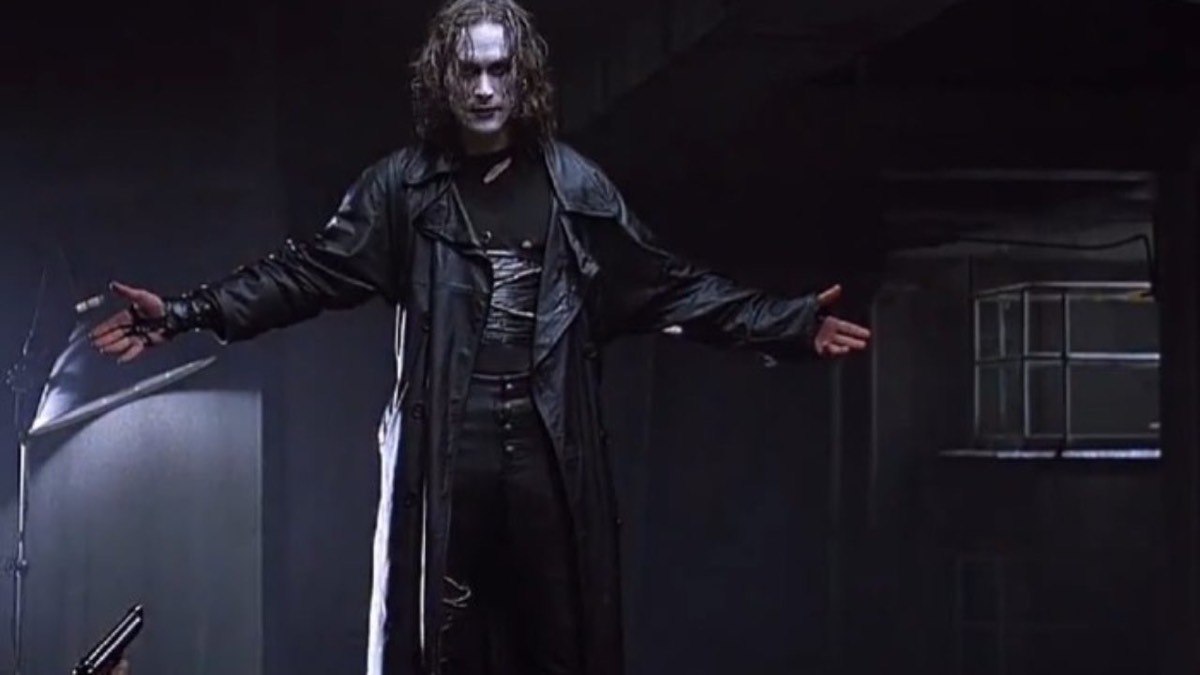
The montages, quick cuts and heavy metal of The Crow is a bit of a shock after the more sedate charms of The Fog. This is a none-more-gothic revenge story to complete my revenge triptych.
Eric and his fiance Shelly are murdered by a gang of men on the night before their wedding. Like Soueliman in Atlantics, and the lepers in The Fog, Eric’s soul cannot rest until he gets justice. One year later he climbs out of his grave, and a crow leads him to each member of the gang for vengeance.
There are a lot of eyes in The Crow. The gang throw Eric through an eye-like window that looks over the city. Top Dollar (the wonderful Michael Wincott radiating wrongness and oozing the worst kind of charisma) reveres eyes and removes them from his victims. Eric can see through the eyes of the crow that watched him die. The air of black magic is surprisingly disturbing, especially with the evil half-siblings, Top Dollar and Myca. Eric wants an eye for an eye.
The music and clothes make it a pure shot of nineties nostalgia. It’s an emotional film, helped by the fact it has a sense of humour. The characters and relationships are real enough to make you care. The Crow has a lot of heart. It really is top dollar.
October 03 2020, 08:00
The Fog (1980)
I was always going to watch The Fog at some point in these #31DaysOfHorror, but I didn’t expect it to be so soon. It was meant to be a comfort pick for later, when things usually are a little more fraught, and the 4K restoration sort of made it ‘new’. But after Souleiman and his friends came from the sea for revenge in Atlantics, The Fog was the natural next pick.
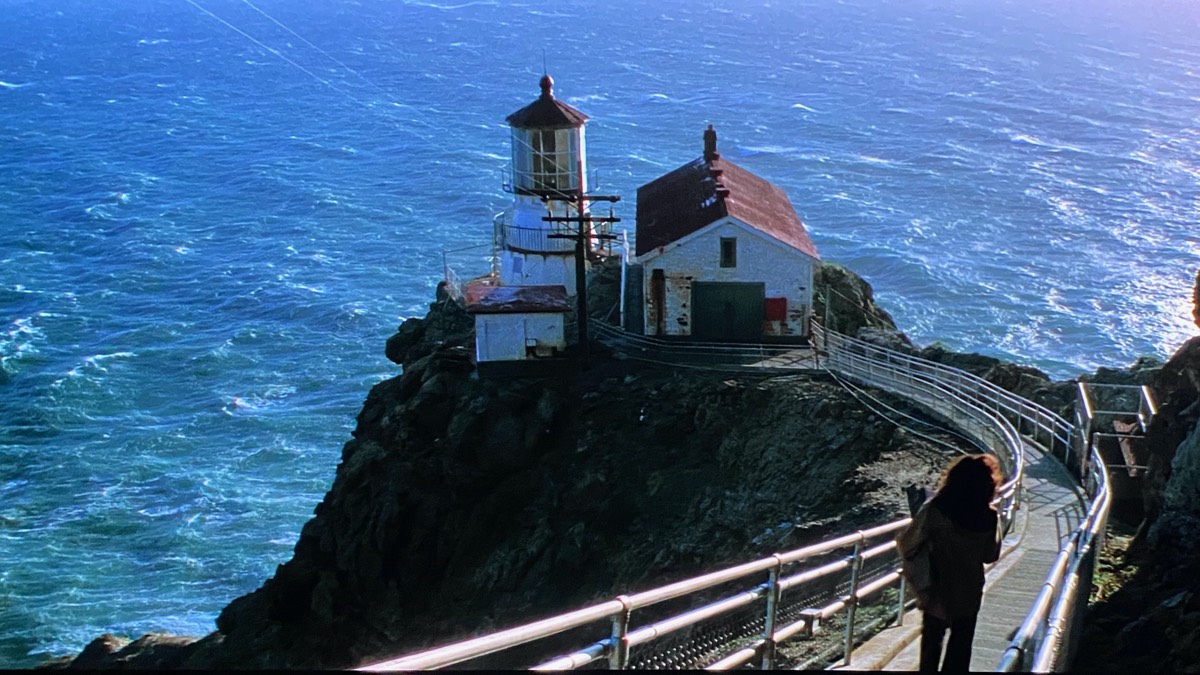
John Carpenter is one of my favourite directors, and I still haven’t seen many of his films. The Fog is an old favourite. I watched it over and over again on VHS as a kid, recorded off the television, and it embedded Adrienne Barbeau’s radio DJ, alone in a lighthouse on the edge of town, as a lifelong crush. It’s also fun to see Jamie Lee Curtis transform from the terrorised highschooler in Halloween to a horny hitchhiker happy to have sex with the crusty Tom Atkins.
The fictional Antonio Bay is either on the Oregon coast, or California, but either way it faces the Pacific. The water is just as wild and potent here as in Dakar. I had forgotten the opening quote by Edgar Allen Poe, as well as the little HP Lovecraft references to Arkham Reef and Waitely on the coastguard radio. Debra Hill, who wrote and produced The Fog, knew her horror.
It’s a tight, fast-paced film, full of clever shots and details. It starts with a twenty-minute tour-de-force of atmospheric film-making. Cinematographer Dean Cundey gives a masterclass in creating mood and tension. The 4K version is beautiful too. It’s one of those films that you only have to watch for a couple of minutes, no matter how many times you’ve seen it, and before you know it, you’ve watched it to the end.
October 02 2020, 08:00
Atlantics (2019)
For the second film in my #31DaysOfHorror I wanted something recent — from something old to something new. Atlantics had been on my Netflix queue for months. I knew it was a ghost story, and that it won the 2019 Cannes Film Festival Grand Prix award. It’s art house, and it’s a romance, but it’s hardly a horror film. It is, however, fascinating.
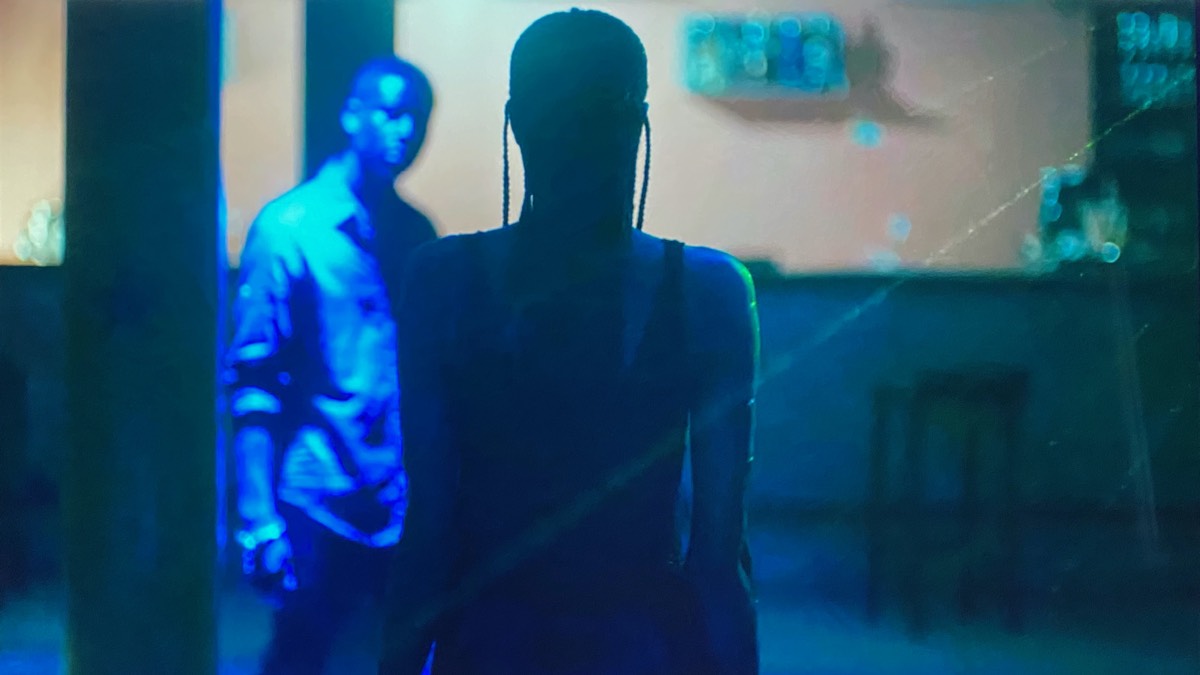
In Dakar, Senegal, on the westernmost tip of Africa, the Atlantic Ocean constantly pounds the coastline. Ada is in love with Souleiman, who is compelled by his financial situation to leave her in Dakar and set out with his friends on a boat for Spain. Dakar is a tough place to live, and there is a great deal of poverty. The economic reality for Ada is that she has to marry Omar, a wealthy businessman. Ada’s girlfriends are obsessed with money, and they think Ada is crazy for mooning after Souleiman. On her wedding night, the wedding bed catches fire, and one of her friends says she saw Souleiman in the street. That brings the police, and the mystery deepens.
The wealthy exploit the poor, mothers make their daughters marry for money, the police are corrupt, and the mixture of soothing cinematography and slow narrative pace can only partially conceal the film’s burning sense of injustice. It’s a subtle, sensual film — curtains blow in the constant breeze, glass reflects sunlight — but, the camera always returns to the sea. The sea is always there. It’s a comfort, a temptation, and in the end, a bringer of justice.
October 01 2020, 08:00
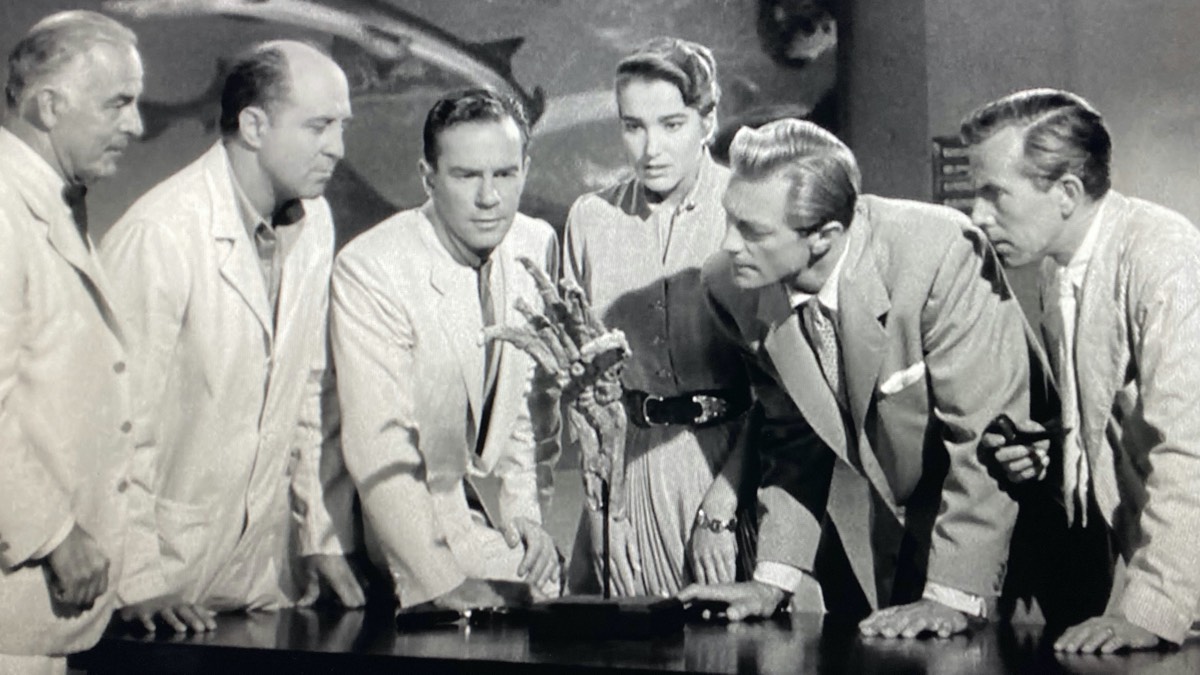
Creature From the Black Lagoon (1954)
I wanted to start this year’s #31DaysOfHorror with a classic. I’m trying to watch only films I haven’t seen, with one or two exceptions, and when I sorted my iTunes movie library by release year, Creature From the Black Lagoon was the oldest unwatched horror film I owned.
I knew the Creature was one of the Universal Classic Monsters. I’d heard Guillermo del Toro talk at length about how much he wanted to see the monster get the girl at the end, and how that had fed into him making The Shape of Water. I’d also listened to Mallory O’Meara talk on the Shock Waves podcast about her book on Creature designer, Milicent Patrick. I’d heard lots about the film, but never seen it for myself.
I rarely watch older films. There is so much I haven’t seen from the seventies, eighties and nineties, that I never think to go back further. I mention this because the first thing that struck me about Creature from the Black Lagoon was its gender dynamics. I still can’t decide if they were depressingly old-skool or surprisingly modern. Is Kay passive or is she actually in charge of her male relationships? Kay, her boss David, and his boss Mark, are scientists going up river into the Amazon on a geology expedition. Kay is going out with David, but used to go out with Mark. She wants David to marry her, but he doesn’t see the point. Mark starts to make moves on Kay again, and so we see Kay spend most of her time smartly, but also tragically, trying to keep them both happy. I can’t remember when I last saw two men compete so openly for a woman in a film where it wasn’t a romantic comedy.
Steven Spielberg was clearly inspired by this for Jaws — the camera shots of the woman from below, the duh-dum orchestral score, and the Creature caught in the net bending the boat’s rigging. The shark in Jaws attacks for food, although it could be a metaphor for the nuclear bombs dropped by the United States in Japan, or even the shadow of tourist capitalism in Amity. The Creature from the Black Lagoon attacks because people are afraid and attack him. The Black Lagoon as a metaphor for repressed desire is pretty on the nose.
In a beautiful sequence, Kay, wearing a white costume, swims on the surface, while the shadowy creature mirrors her in the water beneath. He seems enchanted by her. The love triangle between Kay, David and Mark, also has a mirror in the triangle between feminine, masculine and monster. Even though the film focuses on the battle between Mark, David and the Creature, this is Kay’s story, and in seeing both the egotistical Mark and the creature die, she ends the film with the wholesome commitment-phobe David. Like Guillermo del Toro, I wish she could have loved the monster instead.
Letterboxd: The Creature from the Black Lagoon (1954), dir. Jack Arnold
September 30 2020, 16:39
October beckons
I love October. I love September too, but October is the favoured child. Since rediscovering my love of the spooky, eerie and horrible, I relish the enthusiasm people have this time of year to cherish the darker paths of the heart. As 2020 enters ‘awful autumn’, I wanted to reclaim my oft-distressed mind with a project that was pure fun. That’s what #31DaysOfHorror is for me. It’s fun.
I’m going to post a horror film on Twitter every day in October, culminating in Halloween (whoooOOooo!). I will also publish a short response to the film on this website. In previous years I’ve watched a film every day, but it wasn’t good for me. Even by stretching my definition of horror to the very edges of what you might think a horror film is, a film a day when you are working full-time with young kids is a lot to handle. It’s overwhelming. This year I started in early September, but I will probably have caught up with myself in the final week of October, so things might get a little hairy with the blog posts. Hopefully I’ll be in a groove by then.
So, with a hopeful heart, perhaps holding hands, we enter the lands of the dead, and we let our shadows guide us.
September 20 2020, 12:13
In the foothills
Graham Swift once said, ‘All novelists must form personal pacts with the pace of their craft.’ Now I am deep in the foothills of my second novel, that quote is a comfort, because I’d forgotten how hard it is to write fifty thousand words. (I plucked fifty thousand from the air because it feels less intimidating than eighty thousand, but of course I have no idea how long the story will end up being. So much of it is mind games. I could equally think of it is ten five-thousand-word short stories that share characters and work as a cohesive whole, but that sounds immeasurably harder.)
The pace of my craft is not as fast as my ego would like. It’s a slow journey, with many meandering paths — all necessary. I know at a rational level getting frustrated is counterproductive, but I can’t help it. Donna Tartt describes a wrong turn while writing The Goldfinch (3:50) that was eight months of work, but it gave her information she couldn’t have found out any other way. If this bit isn’t fun, you know, the writing bit, what’s the point of writing at all?
In a summer holiday spurt, I wrote just over ten thousand words. The autumn stretches ahead, with more COVID-19, the American election (which shouldn’t be my business, but is), and Brexit, all looming in my imagination. I am safe, and my family is well, for which I am grateful. I know how lucky I am. But the technology that makes working from home possible and gives me a degree of financial security, is also the source of all distractions. I must close my ears to that noise. Those ten thousand words want to become twenty thousand. I can hear them whispering. They are the signal.
If I am in the foothills of a novel, the ascent to the summit comes from following the paths marked with the golden thread. In the land of the imagination, intuition is queen. Connections are as common as spiders webs. You don’t see golden threads or spiders webs when you rush.
Hm. I didn’t see that fairy tale turn coming. So, on we go. What did the grandma say? Keep to the path.
September 06 2020, 15:38
Doing 31 Days of Horror, 2020
With 2020 being a demented shitshow, I did fleetingly wonder if I wanted to do #31DaysOfHorror again this year, but then I remembered why I love horror films — they are an escape from reality; they are an outlet for the darkness in me; and they are smart, subversive and funny, as well as gnarly, gruesome and grim. I find them endlessly fascinating, invigorating and fun.
Now #31DaysOfHorror might seem extreme (the original idea was you watch a horror film every day in October, culminating in Halloween, and post your pick each day with the hashtag), and in my first attempt, in 2018, I was such a purist about it, it really did feel extreme. It was actually bad for my mental health. I watched a horror film every day, apart from, ironically, the very last day, Halloween, when I was so emotionally exhausted I completely forgot to do it. My unconscious mind just said no.
But I did watch a lot of films I’d meant to watch for years. There was a lot of fun to be had if I could better pace myself. In 2019, I did it again, this time remembering that horror films vary enormously, and seasoning the stronger fayre with a dash of comedy or sci-fi, which improved the whole experience. I also added the ‘five picks from September’ rule, for days when watching a horror film was a bad idea. That was a good compromise between making it a challenge and looking after myself.
For 2020, I want to go a step further. My plan is to write a short blog post about each film, just a couple of paragraphs to help me process my thoughts, that I can link to instead of the Letterboxd page. Perhaps it will send a few more people to my website and raise awareness of The Complex.
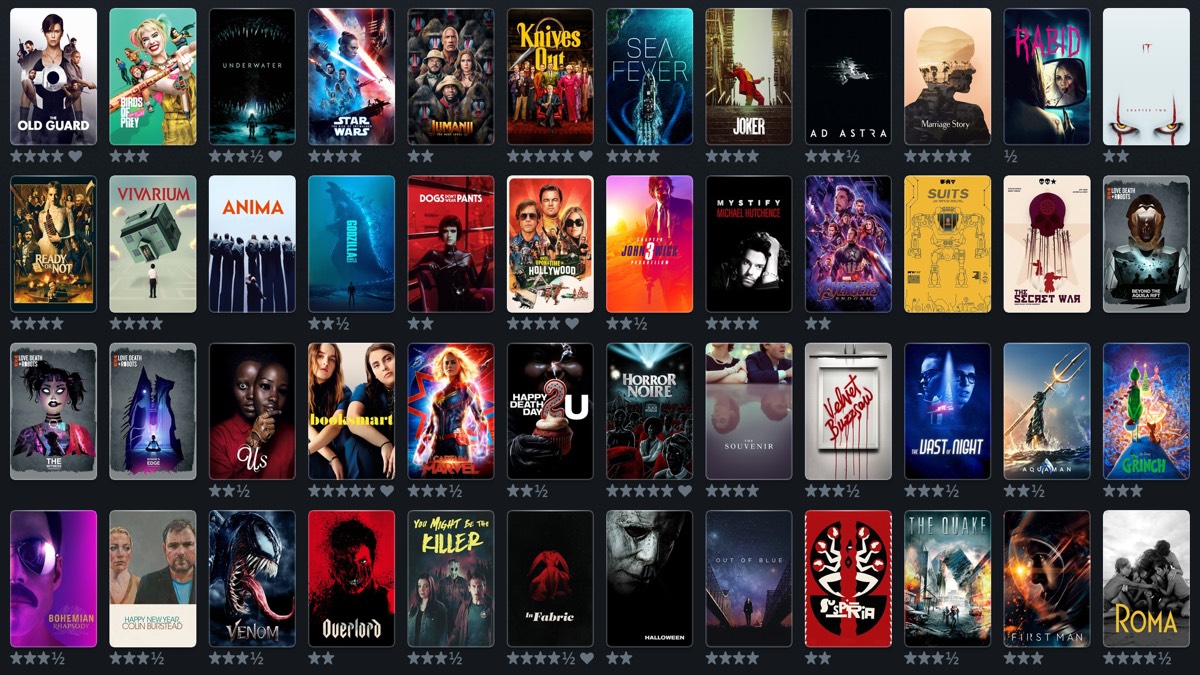
Sadly, I deleted my 2018 Twitter list, but thanks to the magic of Letterboxd, here are both lists for the record.
2019 — 31 Days of Horror
- The Eyes of Laura Mars (1978)
- Ringu (1998)
- A Girl Walks Home Alone At Night (2014)
- Don’t Look Now (1973)
- The Rocky Horror Picture Show (1975)
- Possession (1981)
- Troll Hunter (2010)
- Rabid (1977)
- Jurassic Park (1993)
- Drag Me to Hell (2009)
- Sunshine (2007)
- Count Yorga, Vampire (1970)
- Friday the 13th (1980)
- Carrie (1976)
- A Nightmare on Elm Street Part 2: Freddy’s Revenge (1985)
- It Chapter Two (2019)
- 28 Weeks Later (2007)
- A Nightmare on Elm Street 3: Dream Warriors (1987)
- The Day of the Triffids (1962)
- Anaconda (1997)
- Black Sunday (1960)
- Dead of Night (1945)
- Rec (2007)
- From Beyond (1986)
- The Final Girls (2015)
- Se7en (1995)
- Alien (1979)
- Prometheus (2012)
- Alien: Covenant (2017)
- Trick ’r Treat (2007)
- Joker (2019)
2018 — 31 (cough, 30) Days of Horror
- Predator (1987)
- Hellraiser (1987)
- Halloween H20: 20 Years Later (1998)
- Scream 2 (1997)
- Scream 3 (2000)
- Night of the Demon (1957)
- Cat People (1982)
- Pontypool (2008)
- The Borderlands (2013)
- The Birds (1963)
- Deep Red (1975)
- Season of the Witch (1972)
- A Dark Song (2016)
- Dawn of the Dead (1978)
- Under the Skin (2013)
- American Psycho (2000)
- Repulsion (1965)
- The Company of Wolves (1984)
- It (2017)
- Venom (2018)
- The Evil Dead (1981)
- Suspiria (1977)
- mother! (2017)
- The Fly (1986)
- Poltergeist (1982)
- Jennifer’s Body (2009)
- Night of the Living Dead (1968)
- The Lost Boys (1987)
- Cat People (1942)
- Urban Legend (1998)
- Damn you, unconscious mind! shakes fist
July 12 2020, 05:28
Reality Bites
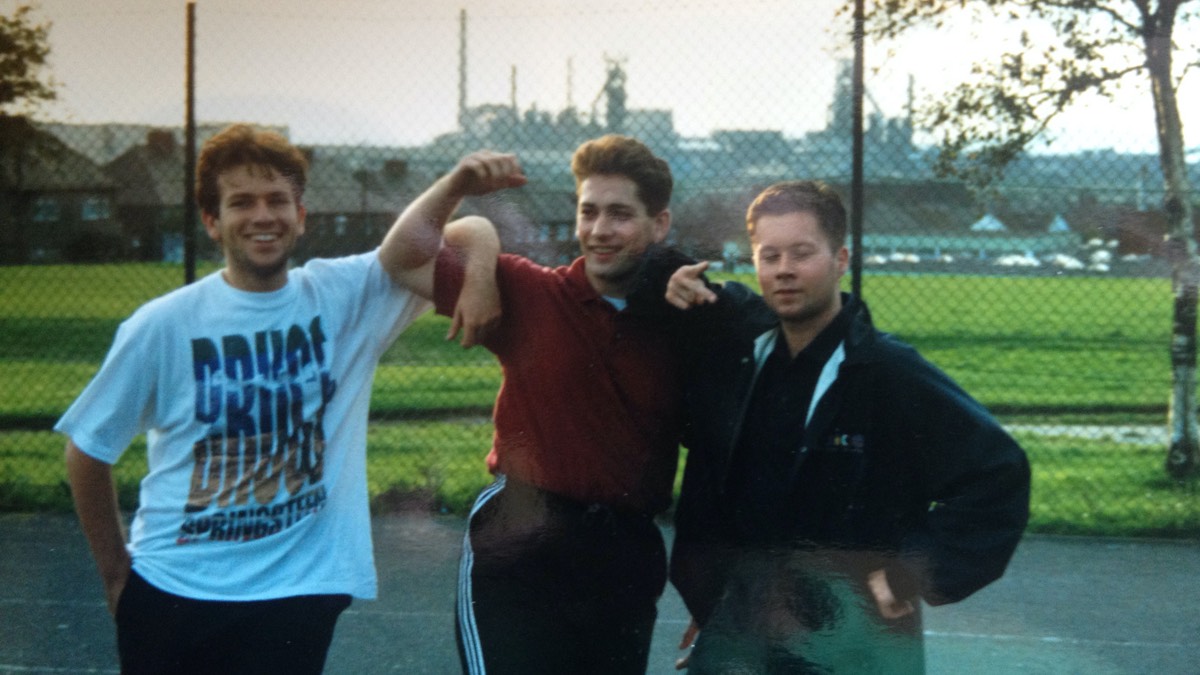
I first watched Reality Bites when it came out in 1994, the summer of my final year at university. I’d finished cramming for my exams and it was obvious I wasn’t going to be an astrophysicist, or any kind of physicist, and there was nothing else I wanted to do with my life. You would think I was the films prime audience, but I don’t remember thinking much about it, good or bad, beyond having a deep crush on Winona Ryder. Her character, Lelaina Pierce, was a film-maker, and creative, funny, principled, determined, vulnerable, and a fighter. She was everything I wanted in a woman. She was who I wanted to be, in retrospect, and like me, she wanted to do her thing, or do nothing.
In the sweet, terrible month of waiting for my degree results, wandering a familiar campus, hanging out in a house I shared with my closest friends, with no classes and no commitments, I sensed this was a time unlike any I would have again. It felt precious, and I wanted it to last forever. I wasn’t ready to get a job. I wasn’t thinking about the future. I had no plans.
We meet our film heroes immediately after graduation, on a woozily high rooftop, being filmed by Lelaina, who is making a documentary about her friends and their generation. They speak and joke about while her terrible camerawork judders and spins around them, often perilously close to the roof’s edge. It’s dizzying. They are about to jump into their working lives. Vicky (Janeane Garofalo) works at a Gap; Sammy (Steve Zahn) plays guitar in a band; Troy (Ethan Hawke) is a singer. They quickly end up sharing one apartment, but the story only really begins when Lelaina flicks a still-smouldering cigarette into the car of yuppie Michael (Ben Stiller). He crashes into her and they end up going on a date. Her ambition is fired up, but so is Troy’s jealousy.
It’s easy to forget just how big a star Winona Ryder was in 1994, and Ethan Hawke credits her with getting the film green lit. I also didn’t know this was Ben Stiller’s directorial debut. The script was written by Helen Childress, who was closely involved in the film’s shooting. It feels like a collaborative labour of love. Hawke gives an outstanding performance as the prickly, self-hating Troy. I know he ends up having ‘reasons’, but really, he’s such a manipulative dick. Michael, who is sweet in many ways, is also insensitive, and not in Lelaina’s league. She’d have been much better off with me. In South Wales. In my parents’ house.
Reality Bites is still surprisingly affecting. I had low expectations. I’m not sure why. There is something about your early twenties that is particularly painful and potent. You are working out who you are, and the world is only just beginning to press on you. Now, when I am forced by life once again to change course, as I guess a lot of us are coming out of lockdown, Reality Bites is a reminder of the possibilities when you step into the unknown. I want a new tribe around me. I feel a bit lost, vulnerable and unsure, but also hopeful and looking for reserves of courage. Unlike Roger Ebert, I love this film. Twenty-six years on, it really stands up.
May 18 2020, 06:09
Rebecca
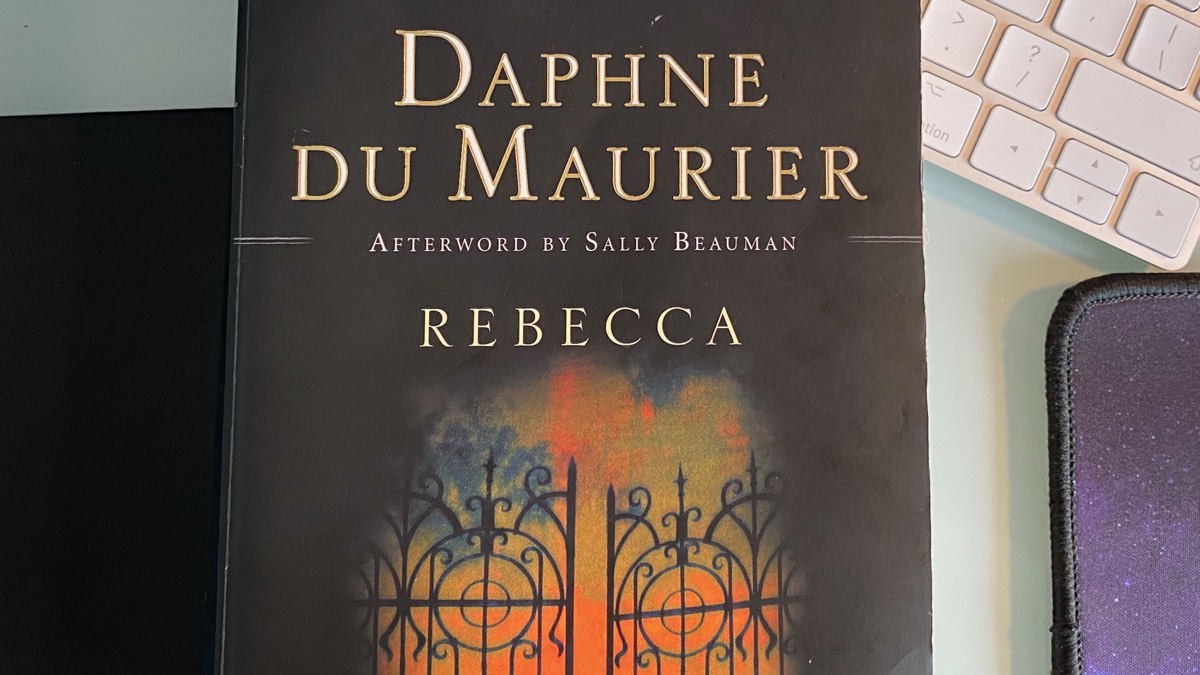
It’s hard to pinpoint when I stopped reading Rebecca. I started it in the middle of April, and I chose it for many reasons: lots of people I like and admire loved it; I wanted to read something from the literary canon for a change; I loved the film adaptation of Don’t Look Now; my wife recently read it for her book club, so it was always floating around in my line of sight. There were so many little cues from the universe that it felt rude not to read it.
I recognised the opening paragraph just from other people talking about it. The prose was rich and detailed. The characters were vivid, and I knew I was going to grow to love them.
But work was busy and kept leaking, in the way the lockdown makes almost impossible to stop, into my personal time. My concentration was not what it normally was. Rebecca wanted to be read — I wanted to read it — but the days became weeks, and I didn’t want to start another until I’d finished this one. Other books, with sexier covers and alluring blurb, kept drawing my eye.
Barbara Sher’s Refuse to Choose is a book about the different creative approaches you can take if you are what she calls a scanner. A scanner is someone who has lots of projects, lots of ideas, but struggles to make time for them. When I first read it, I felt validated and a little less alone. One of the concepts she talks about is being like a bee, who digs around in a flower for nectar, and once it has what it came for, it flies on.
I think that’s what had happened with Rebecca. I was attracted to it, and I dug around in it, but once I saw what it was, had taken what I needed from it, it was time to move to the next flower. I had what I needed for my current project. The energy was gone.
As an aside, this is probably why I’m not a good book reviewer. I read selfishly. If it isn’t resonating with me, that doesn’t mean the book isn’t good — it might even be brilliant — it’s just that I lose enthusiasm.
There have been times in my life where I want to lose myself for hours on end in a story, and those times will come again, but at the moment I’m mining ideas for my current work-in-progress.
I was feeling guilty, frustrated, embarrassed, confused and bored, because what sort of writer doesn’t get on with Rebecca?
It wasn’t her, it was me. Rebecca is back on the shelf.
(While getting the links for this post, I found out Barbara Sher died on May 10, just over a week ago. Damn, that makes me sad. She was my Dad’s age. Here is a TED talk she did in 2016.)