
July 25 2025, 13:49
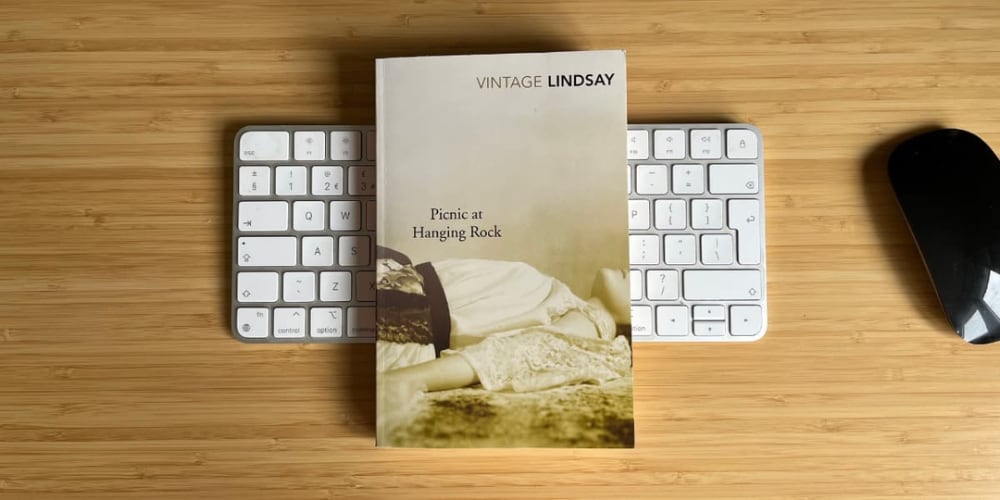
Picnic at Hanging Rock (novel)
~110,000 words. Third person, many characters.
My daughter bought this for me for my birthday in March, and I wanted to watch the Peter Weir film for #ArthouseSummer2025, so it seemed right to read it before the film images infected my imagination.
Three schoolgirls and a teacher go missing while on a picnic at Hanging Rock, a volcanic rock formation in Victoria, South Australia. The police and locals search the area but can’t find them. A week later, two men return to the site and miraculously find one of the schoolgirls still alive. She has no memory of the incident, and the mystery of the other missing girls lingers and affects people in unexpected ways.
The story unfolds through the eyes of the many characters linked to the boarding school and local community. In the opening chapters, I was overwhelmed by the number and variety of perspectives. It’s impossible to remember who is who at first. The authorial voice is front and centre, and it’s told as if it is a true story, including letters and newspaper reports. There isn’t a single protagonist; instead we observe people going about their lives at all levels of Australian society, from the schoolgirls, to gardeners and cooks, teachers, police, holidaying gentry, settlers, and the Appleyard School’s malevolent owner and headmistress, Mrs Appleyard. The effect is a chorus of voices worrying over their lives with the central mystery of the disappearances always in the background.
The details of the natural world and structures (physical and social) humans create in it are exquisitely captured. There is a consistent sense that nature hums behind everything the characters do, in insects, vegetation, weather—sometimes they notice it, but usually they don’t because they are caught up in the social and economic necessities of their lives. The Hanging Rock inspires both awe and fear. Humans are a small part of nature’s ecosystem, and the rocks are a reminder of individuals ultimate insignificance, as well as the threat of chaos cutting through attempts to feel in control in the unpredictable wilderness.
The novel seems to be saying that some things are unknowable. On a process note, Lindsay wrote a final chapter that her editor advised they cut out, and that decision gives the book its defining mystery. While poking around on Wikipedia, I read the summary of the original ending, and while it makes sense of the whole book, it also detracts from it, because pondering the mystery of the events is why to me the book is powerful. Part of me wishes I hadn’t found out the author’s intention, or at least not so quickly after reading the last sentence. It's a curse of the modern age to have facts so readily to hand. It’s probably better to engage with a piece of art on its own terms, at least for a while, to get a fuller experience of it, before trying to find out more.
Previous: The Fog | Next: Run Lola Run