
July 23 2025, 14:23
The Fog
~110,000 words. Third person, many characters.
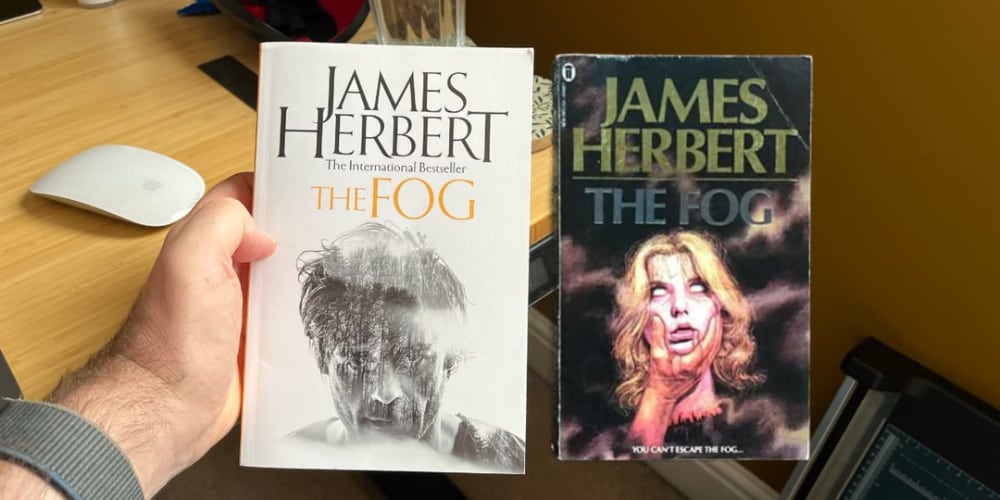
This is one of those formative books for me. I mean, look at the cover! The one I have now is on the left, but the hastily Photoshopped one on the right is the edition I owned in my teens. My father was bringing horror books into the house all the time growing up, and I think I discovered Herbert’s Lair first, which was the follow-up to his first novel, The Rats. I remember a classmate reading The Rats in school and showing everyone the gory bits. For emotionally-stunted twelve-year-olds, these were catnip as representations of the repressed horrors of adolescence.
The Fog mostly follows John Holman, an environmental inspector who specialises in covert investigations of Department of Defence land. An earthquake opens a crack through a rural English village, demolishing it and releasing a yellow-tinged fog into the atmosphere. Holman’s car falls into the hole and he is one of the first to be exposed to the fog, which sends anyone in contact with it insane (usually into a sadistic rage). He is the only person to recover, and he is asked by the government to help as the fog is blown around England leaving mayhem in its path.
I didn’t remember much about this beyond one standout scene that was tattooed into my brain involving a private school, a possibly paedophilic teacher and some pruning shears. Holman is the protagonist, but the point of view jumps between many characters as they are affected by the fog. It’s astonishing the range and depravity of the things Herbert imagines people doing to each other, and each character gets a back story, perhaps an injustice, and then a horrible revenge and death. It’s a collection of short stories in that way.
It drags in the second half, more like an uber-violent sixties Doctor Who, with the army personnel, provincial English life, government officials from the MoD, and a bordering-on-alien enemy. By the time the fog reaches London, the extended route Holman is forced to take to find the fog’s heart allows Herbert to describe a Hieronymus Bosch–style hellscape of brutality and despair. It’s written well enough, but there’s no character development or subtext—the seventies equivalent of Victorian penny dreadfuls.
It was fun to revisit. I wouldn’t want another any time soon.
Previous: Splashing in the shallows | Next: Picnic at Hanging Rock (novel)