
June 17 2025, 21:49
Satin Island
Jonathan Cape. ~45,000 words. First person, as U.
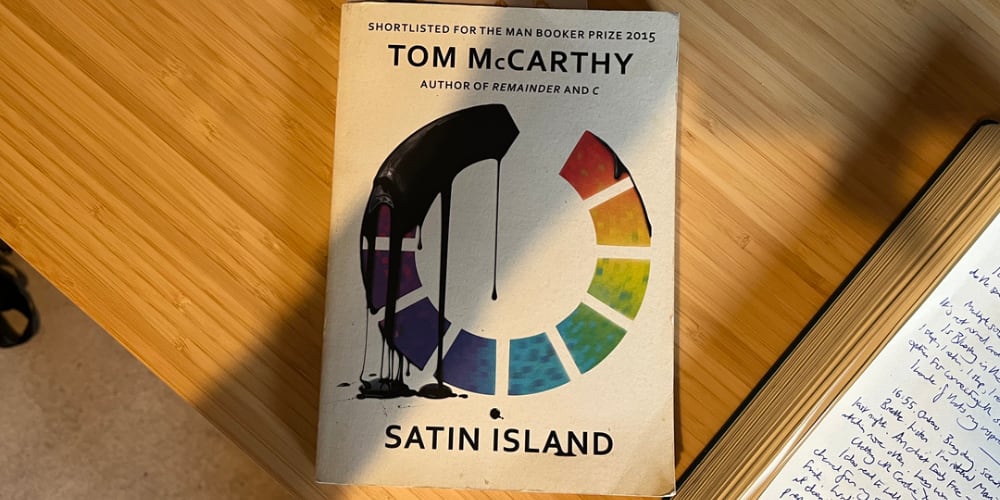
I bought this in Barter Books, Alnick, because of the beautiful cover, unusual size, and the blurb proclaiming it was shortlisted for the Booker in 2015. The cover has a colour wheel of some kind with a coating of oil on one side. The drops of oil on the opening pages become a more insidious seeping coat of it by the closing pages. Oil keeps coming into U’s head after he sees an oil tanker leakage on the news while stuck at an airport in Turin.
The opening sentence describes the Turin Shroud, an artefact that represents peoples needs for foundation myths, and is also provably false. As an anthropologist, U’s job is to find meaning in the patterns of the world. He works for a corporate consultancy where the conman-genius CEO Peyman hobnobs with governments and global brands. Peyman believes the company doesn’t sell knowledge, but fiction, invented narratives, and in that spirit instructs U to write the Great Report on their company. Unwilling to admit he has no idea what that means, U loses himself in unlikely research. The death of parachutists around the world. The effects of the oil spill. The history of his field, anthropology, and his hero, Levi-Strauss.
There are other characters U spends time with. His friend Petr who discovers he has cancer. Madison, a girlfriend who sends him lusty messages when he’s away, but keeps him at arms length when he visits. A work colleague, Daniel, who spends his time studying the traffic patterns in a Nigerian city, and the legs of hundreds of roller skaters as they skate past a camera. U is desperate for recognition at his workplace and is able to spin outrageous ideas out of seemingly random data, but in Petr he faces death, and in Madison someone to possibly love.
There’s an extended sequence towards the end where Madison tells a disturbing story about why she had once been at Turin airport that brings the books themes to the fore—corporate greed, our need to belong, our susceptibility to power and powerlessness, and how we spin tales to make it feel like what we’re doing is normal. Consultancy is a business built on selling fiction. U is a professional bullshitter. By the end, all becomes clear.
Previous: Soft machine | Next: Splashing in the shallows