
September 19 2026, 11:50
Resident Evil (2026)
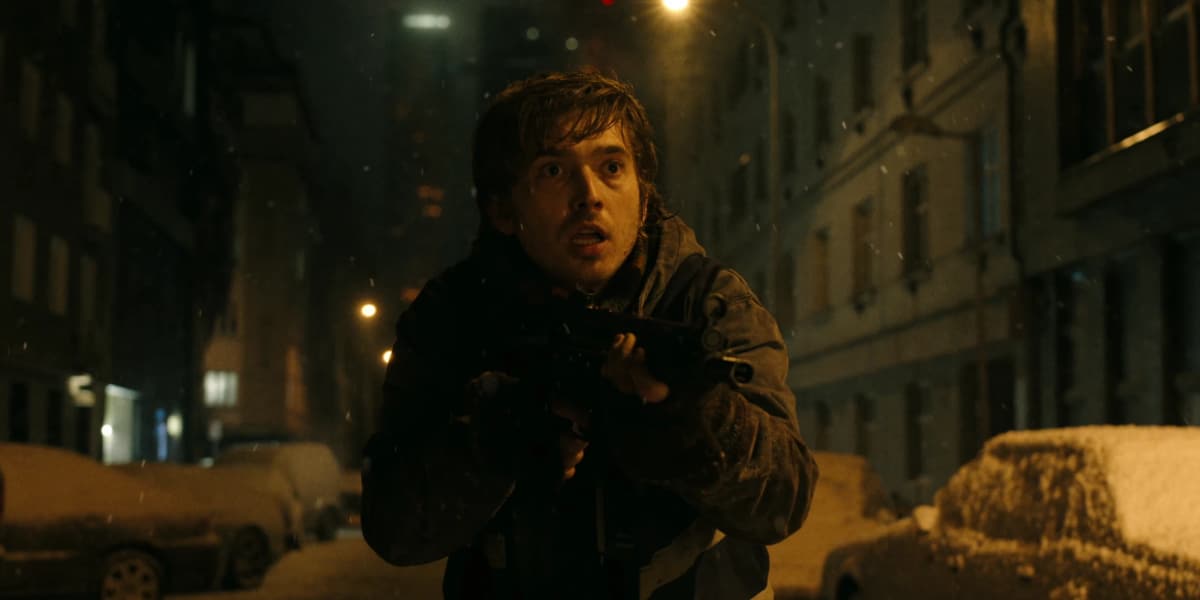
Medical courier Bryan takes an extra job at the end of the night to get an emergency bag to the general hospital in Racoon City. It’s snowy and dark, and on the road through the mountains he hits a woman who is infected with something... nasty. Stuck in a remote wilderness, Bryan has to get to Raccoon City with his medical bag, which is more important than he knows.
I'm surprised two of the horror video game adaptations that have come out this year have been about young men wrestling with the possibility of becoming a father. Whereas Exit 8 plays it straight, Resident Evil is very much a horror comedy, and I laughed quite a bit. There are plenty of jump scares, and one in a farmhouse actually made me shout out loud, which is something Bryan does a lot of too, along with cursing, whimpering, squealing and screaming. Simple things are hard. Padlocks won’t break. Gates won’t open. Cars won’t start. Guns won’t fire. We watch Bryan learn how to do things that in other films would happen more naturally. He’s like someone playing a video game for the first time and working out the mechanics as he goes.
On a side note, I don’t like the mechanics of the Resident Evil games. I’ve tried to play more than one a few times, but I get too frustrated with the aiming of the gun. Maybe I’m not using the right console or controller. The vibe and stories fascinate me though.
The source idea — a shadowy corporation working in secret labs to create bioweapons that are accidentally released on the population of a remote city causing monstrous chaos — is a generic enough sandbox to let directors and writers to let come up with many different stories and characters (and even genres — I’ve enjoyed all the Milla Jovovich films, which are nothing like the video games (and made over a billion dollars)). The source idea is also specific enough to always mark the stories as being in a Resident Evil world. The threat of greedy corporations and ambitious scientists being unethical in a rush to make money feels real and ever-present. Story-wise, it seems to never get old.
Zach Cregger has come up with a fresh perspective on a thirty-year-old franchise. It’s a true rollercoaster ride, fast paced and thrilling, but knowing when to slow at the corners to give just enough time to think about what just happened before throwing you into the next gloopy set piece. It’s one of those rare films this year where I really want to go again.
September 13 2026, 08:43
Colony
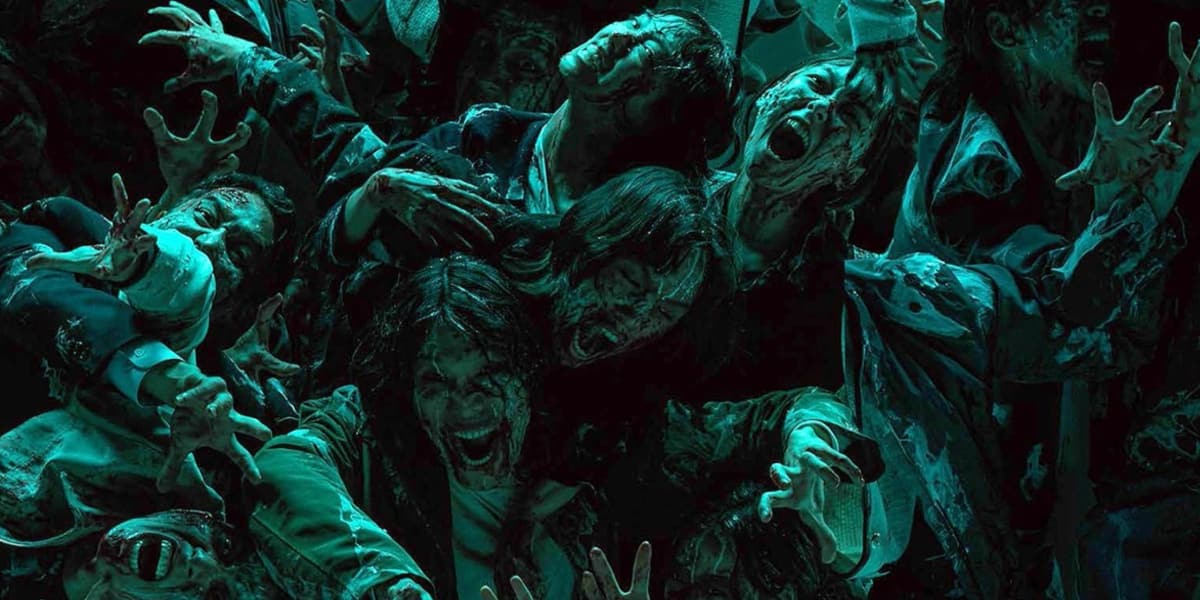
Professor Se-jeong arrives at a high-rise building in the centre of Seoul to attend a presentation by biotech company Chains Bio. Meanwhile, Seo Young-chul, a scientist and disgruntled ex-employee, phones the police to tell them he is about to commit an act of bioterrorism with a weapon based on the evolving intelligence of slime mold. He injects himself with the antidote, then attacks the Chains Bio CEO, Kang Woo-chul, infecting him and starting an outbreak.
Behind the fast-moving zombie chaos, the characters are thinking about work, ambition, family, patriarchal control, corruption in research-based companies, and government incompetence. Se-jeong is unemployed and her ex-husband, also a Professor, is trying to get her a job before he moves to the United States with his new family. He says Se-jeong’s inability to get along with people is leaving her with no friends or job opportunities. She is then thrown in with a handful of people trapped on the shopping floor where as a biological scientist she gets to observe how the infected behave, and to demonstrate her ability to work with others.
I saw this at the recently-restored Hyde Park Picture House in Leeds in a small basement cinema where they’d fitted a balcony at the back for wheelchair users. The showing was nearly full including the three wheelchair bays. One of the key characters is an initially wheelchair-bound software developer, Hyun-hee, who hides in the security centre with CCTV to guide the group through the building. Her chariot doesn’t survive the first zombie onslaught, but her brother rigs a support on his back from climbing equipment so he can carry her. There aren’t many characters in wheelchairs in horror films, and there’s a grimly amusing reveal linked to this around the halfway point illustrating how the infected learn.
There are several fun twists and turns as the group tries to apprehend Young-chul, who is plugged in to the senses of the infected. He wants the hive mind he has created to take over the world. The finale is clever, and seeing the film with other people groaning and squealing in a cinema made the experience especially memorable.
September 12 2026, 16:40
Exit 8
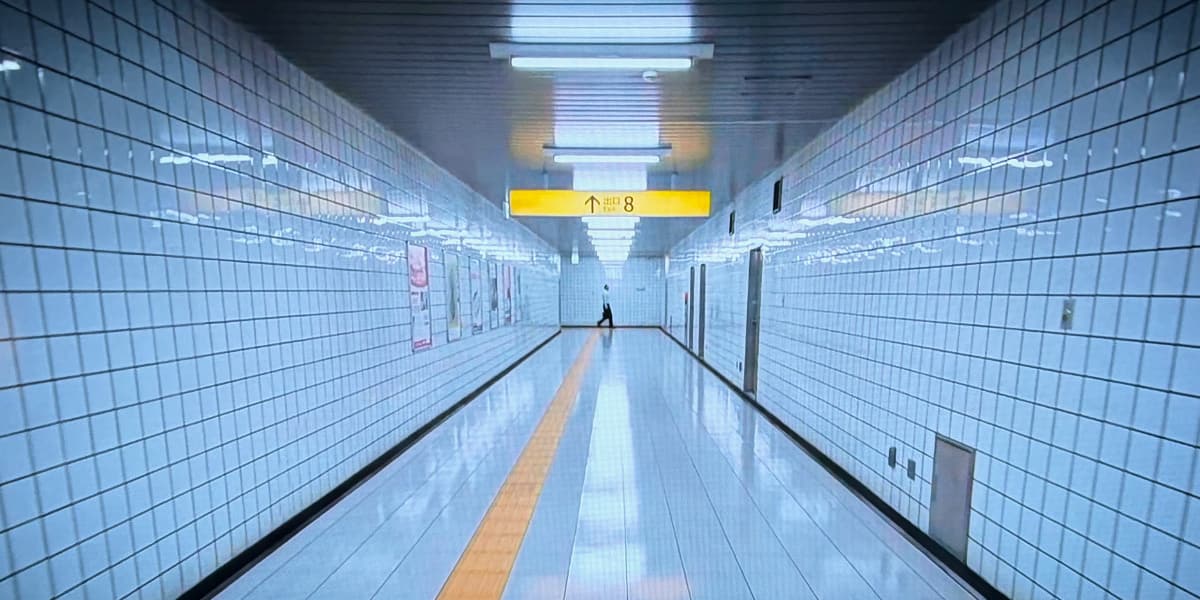
A man gets a call from his girlfriend while getting off an underground train in Tokyo, and she tells him she’s pregnant. She’s disappointed at his muted reaction, but before he can express his feelings to her, he loses the connection and finds himself lost in the station corridors looking for Exit 8.
The film is based on a 2023 indie video game. I also spotted a novelisation written by the film’s director in Waterstones. The game’s rules are simple—follow the corridor, which will loop back on itself, and for every subsequent loop look out for anomalies, and if you spot one, turn back. There are three characters in the film: The Lost Man from the train, The Walking Man, who walks past The Lost Man in every loop, and The Boy, a child who ran away from his mother. Their varied interactions keep the story moving along and prevent things from getting too repetitive.
Unfortunately it was still too repetitive for me. The characters kept making annoyingly bad decisions, and the metaphors were too literal to keep my attention. It’s about a man stuck on a boring day job working long hours and afraid to become a father. The film makes him reckon with that position. Game over.
September 04 2026, 15:04
In Ascension
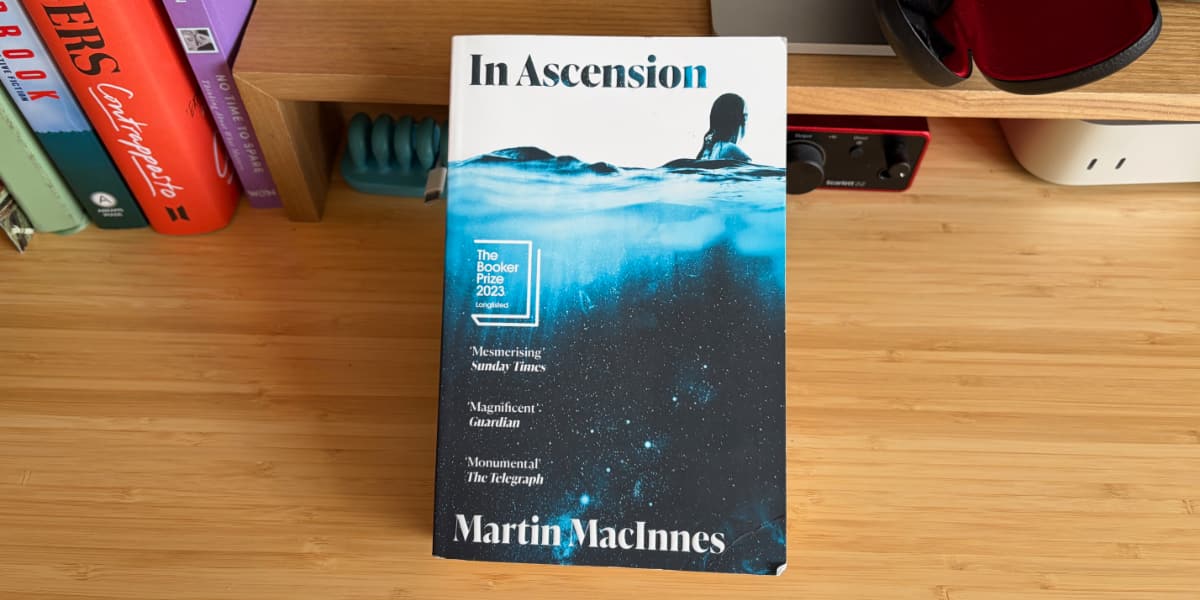
Dr Leigh Hasenboch is a marine biologist with a PhD specialising in the possible industrial uses of algae. On the Endeavour, a research ship exploring unexplained readings in an anomalous area of the Atlantic Ocean, she is exposed to something in the water, and this leads to her being involved in a backup team for a secret trip into space. Her knowledge of biology is key to developing a spacecraft, designed with alien knowledge, that would allow humans to survive the distances and long stretches of time. Her crew of three unexpectedly become the main team and Leigh sets out to find an alien spacecraft trying to communicate with Earth.
Leigh’s family is central to the structure of the story. At the beginning, Leigh tells us about her childhood in Rotterdam, her abusive father Geert, enigmatic mother Fenna, and sister Hannah. Geert’s temper is fierce and unpredictable, but he only hits Leigh when Fenna is not around, and he doesn’t hit Hannah at all. Leigh has a moment of clarity while swimming in a canal to escape her miserable situation with her father. She realises that everything around her is alive. This sets her on the path of marine biology and escape from Rotterdam. When Geert dies, Leigh’s relationships with mother and sister stay awkward and distant, and when Fenna begins to develop dementia, Leigh chooses her scientific work over caring for her mother, forcing Hannah to manage Fenna’s care alone.
Towards the end, we get Hannah’s version of their childhood, which is different to Leigh’s, and the change in perspective is a clever way to close the loop of Leigh’s story. Leigh doesn’t come back from her journey to the Oort Cloud, and Hannah is living with the unresolved anguish and grief of having lost someone but them not being legally declared dead, and then fighting a corporate behemoth to get answers that are deemed top secret.
As wondrous and knowledgable as the details about space flight and humans surviving in space are, it’s the relationships that I was most interested in. I found the long sections describing the science and realities of scientific work interesting to begin with, but then increasingly dull, and that was my main issue with the book. Leigh is a memorable character though, and the ending was worth the wait.
August 31 2026, 19:43
The Dog Stars
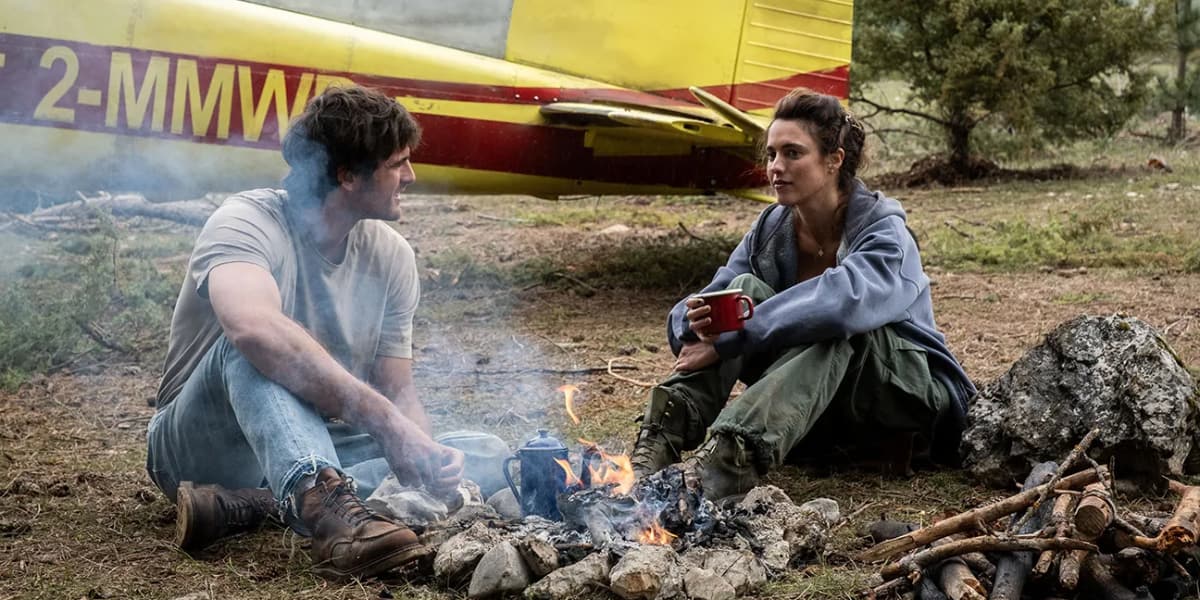
Hig, a mechanic, lives alongside Bangley, an ex-sniper, in a valley in Colorado, several years after a flu-like plague wiped out most of the human race. Bangley is a hard-nosed survivalist, but Hig is a gentler soul who relies on his family dog, Jasper, for company. Violent gangs called Reapers roam the wilderness, pillaging and killing as they go, and when they find the valley, Hig is forced to explore further into the new world.
Ridley Scott is eighty-nine years old, this is his fifth film in five years, and he has another Alien/Prometheus project (with Michael Fassbender) in the works. His energy levels are astounding. His films always wrestle with big ideas. Here, he is asking questions about the collapse of civilisation, being self-sufficient, the value of community, losing loved ones to illness, the importance of dogs as companions, and more.
The pace is pleasingly slow, reflecting the reality of living alone in the wilderness, punctuated with bursts of action. The night sky is rich with stars, and Hig likes to look for the constellations, imagining new ones to amuse himself. When he finds Cima and Pops in another valley, their lifestyle is closer to living in a Western, and we realise Hig has far more luxuries because he can fly his plane to get supplies. Most survivors are not that lucky, but Hig still fantasises about flying his plane into a mountain to put himself out of the misery of losing his family.
The film does an impressive job of reminding us how amazing it is to have simple things like coffee, fresh vegetables, recorded music, and fuel for vehicles. Life in nature without technology is extremely hard, and in our modern lives it’s easy to take these things for granted. The Dog Stars is a mournful, meditative film for long stretches, and those were my favourite parts.
August 29 2026, 19:18
The Beyond
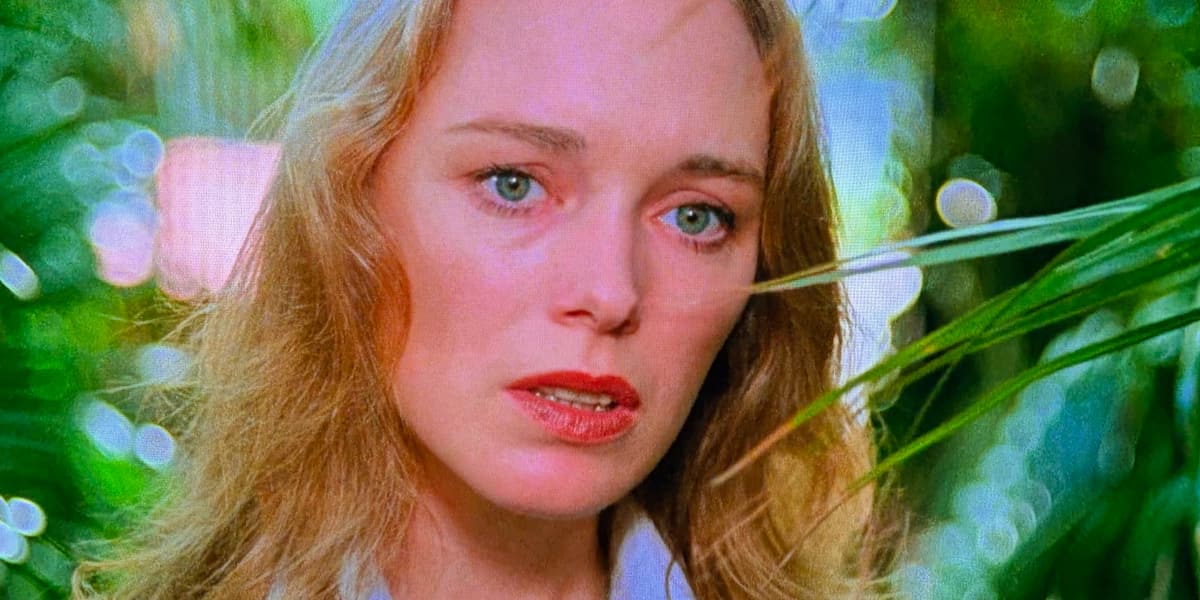
Liza inherits a derelict hotel in Louisiana swampland and, short of other options in her life, decides to repair it and open for business. Fifty years before, an artist at the hotel is accused of being a warlock and brutally killed in the basement. In an attempt to drain the flooded basement, a plumber discovers the bricked up area of the killing, awakening the dead warlock and opening one of the seven gates of hell.
Catriona MacColl is the lead in all three of Fulci’s "gates of hell" trilogy. In this one, she is joined by David Warbeck, amusingly the backup James Bond for Roger Moore, as the local doctor who gradually comes to terms with the situation’s hellish reality. She also meets Emily, a blind woman with an Alsatian, who seems to have a connection with the underworld and warns Liza to leave town while she can.
As a story, it’s straightforward, but it’s told through a series of outlandish, unexpected deaths that make you wonder if any of it makes sense. The Beyond is like the gory goth cousin of The Amityville Horror. Instead of a nuclear family, we get Liza and her group of misfit workers, who are gradually picked off by the ever-increasing undead. The ending is infamous for its bleakness, and it’s a clever link back to the warlock’s painting, but there’s too much bad dialogue and narrative confusion for this to be a favourite.
I also reviewed this as part of my #31DaysofHorror 2020 challenge. Interestingly, I felt the opposite to how I do now, and I made some connections that I didn’t see this time around.
August 27 2026, 18:09
Army of Darkness
This was not the film I was expecting from a third film in the Evil Dead trilogy. I was not prepared for the levels of goof and silliness, but perhaps I’m not remembering Evil Dead 2 accurately, and I’m definitely the wrong audience for the broad humour this goes for. I did not have a good time.
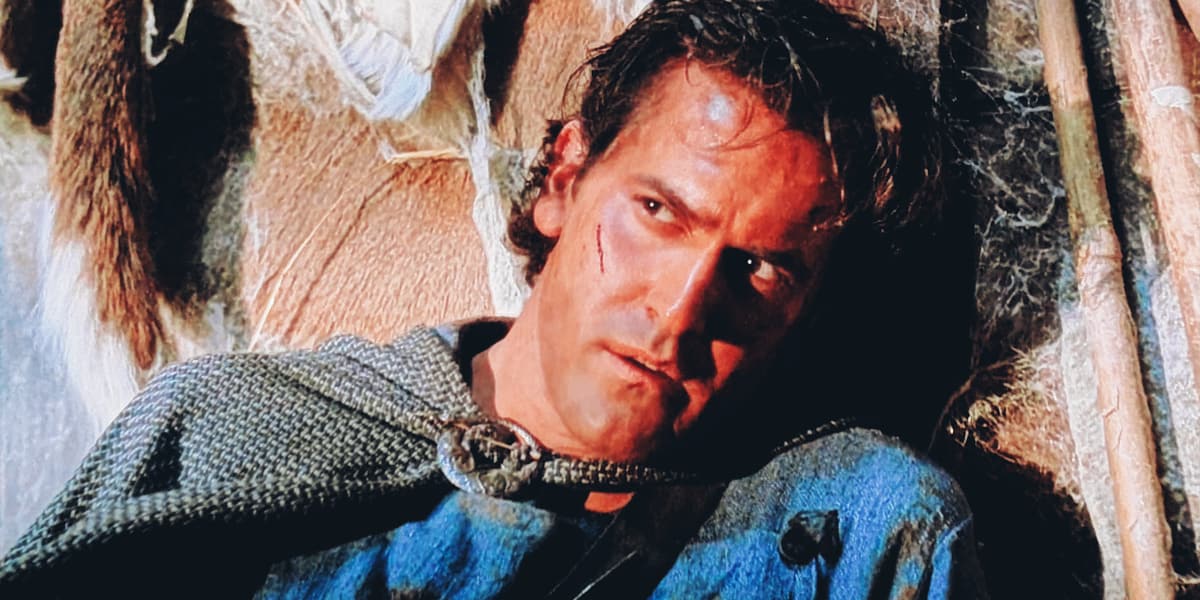
After fighting Deadites in a cabin in the woods, Ash falls through a time/space hole and lands in a medieval landscape where he is taken prisoner by Lord Arthur. At Arthur’s castle, Ash is thrown into a pit of Deadites, but with the help of Arthur’s Wise Man, he defeats them with his chainsaw and shotgun. The man tells Ash that only the magical book, the Necronomicon, can send him home, so Ash sets out to find it. He brings the book back, but behind him are an army of Deadites led by his doppelgänger, Evil Ash.
Bruce Campbell goes full three stooges in his fights with the Deadites, which I found irritating, and other attempts at humour tip the whole film perilously close to an unfunny version of Monty Python and the Holy Grail. Ash’s clichéd machismo and “quotable” moments were jarring and dull. I don’t have a previous relationship with this film, so there’s no nostalgia factor. The action scenes were good, and the fight scenes with the skeleton army at the end saved it from oblivion for me. (And it really should have been called The Medieval Dead.)
August 23 2026, 21:01
City of the Living Dead
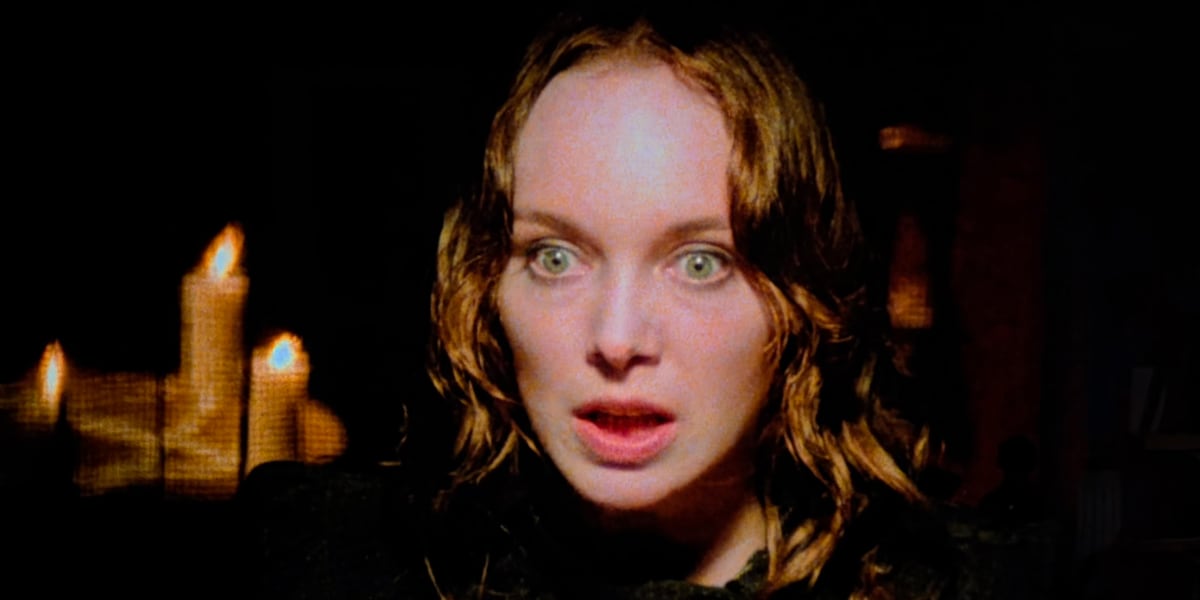
Mary is a psychic, and at a New York séance she has a vision of a priest hanging himself in a church graveyard. She breaks the circle and dies, causing journalist Peter to investigate. Visiting her grave as her body is being buried, Peter hears her screams and pulls her out of the ground still alive. She tells him the priest’s death has opened one of the gates of hell in Dunwich, where he died, and they only have a few days to close it otherwise the world will end.
In Dunwich, the townspeople are dying one by one, each seeing the dead priest before being killed in gruesome, violent ways. Local psychiatrist Gerry is pulled in via the death of his girlfriend, and then a cry for help from a patient, Sandra. Meanwhile the dead are disappearing from the mortuary and appearing in the streets and houses of Dunwich to mercilessly kill the residents.
One of the many details I enjoyed was Sandra’s artist studio, a gloriously arcane mix of sculptures, drawings and paintings, including her work-in-progress, a dual-horned rhinoscerous creature floating over the sea. On the wall is a detailed giant charcoal drawing of a single eyeball. She is seeing a psychiatrist because she hates men, something Gerry dismisses later as being a common neurosis shared by seventy percent of all women. The seventies were a different time.
The “gates of hell” trilogy, of which this is the first film, are famously illogical and difficult to follow narratively, and Fulci is known for basing his rather flimsy stories around vivid horror set pieces. The ending is plain confusing. I have my take on it, after a brief review of Reddit theories–there is a background howl of wind and when the screen zooms in on the boy’s joyful face, reality cracks and the dead take over. Personally, I think it should have been ended on the high of a minute earlier. But I’m not Fulci.
I reviewed this film as part of my #31DaysofHorror 2020 challenge, and I purposefully didn’t read it before writing this. I had less fun in 2020! But I like my writing style.
August 22 2026, 16:35
Insignificance
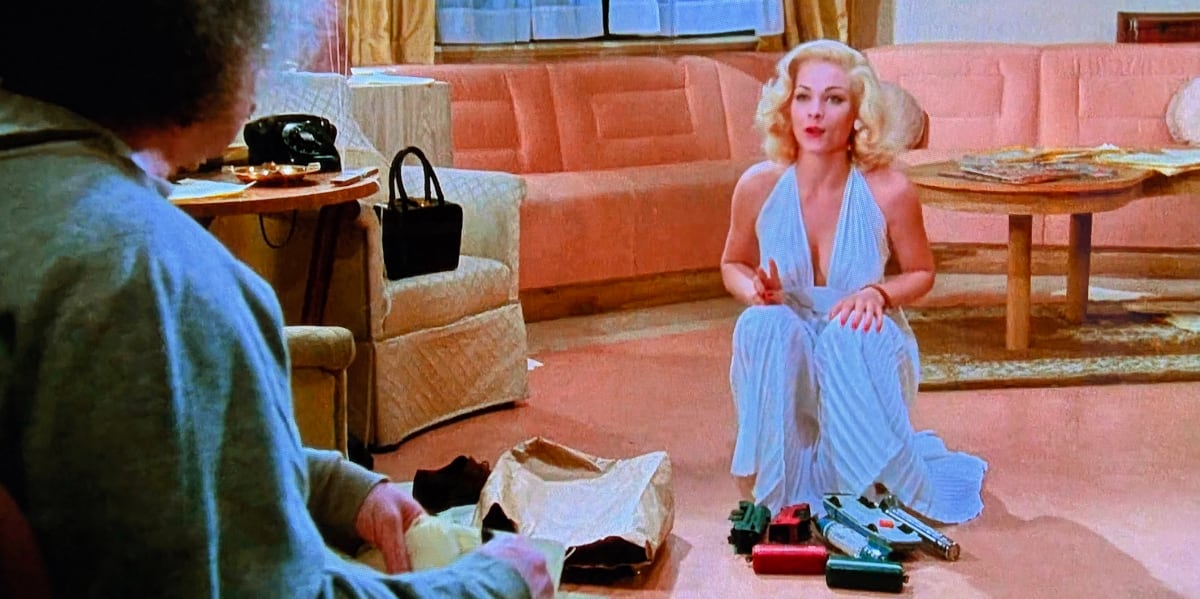
Four iconic figures meet in a New York hotel room in 1954. They are not named, instead called The Actress, The Professor, The Senator and The Baseball Player, but it’s clear who they are meant to be: Marilyn Monroe, Albert Einstein, Senator Joe McCarthy and Joe DiMaggio.
Einstein is tormented with visions of the dead in Japan after the atomic bombs dropped in 1945. When Monroe knocks on his door in the middle of the night, he doesn’t take much convincing to let her in, even if he doesn’t know who she is. She’s lonely, unhappy in her marriage to DiMaggio, and wants to take the chance to get to know Einstein as a person. One of her strategies is to show her understanding of his theory of relativity with a joyful demonstration using children’s toys she bought en route. Another strategy is the offer of sex. But then DiMaggio shows up.
The relationship between Monroe and DiMaggio is doomed for many reasons. Her desire for children is thwarted by abortions organised by the studios because she’s under contract that have left her permanently damaged. DiMaggio is a man who knows what he wants and gets it – but he can’t give her children, and the attention she gets is making him miserable. In buying her attention he has bitten off more than he can chew.
Senator McCarthy tries to intimidate Einstein into appearing at one of his infamous hearings, and if he doesn’t, threatens to confiscate his life's work. He is power hungry, manipulative and brutal. Einstein’s mathematical proofs lie in chaotic loose piles around the hotel room and Einstein seems to be happiest when lost in theory and abstractions. He wants to describe the universe completely with mathematics. By the end it becomes clear that this is one of the ways that he avoids feeling the guilt of his connection with the creation of the atomic bomb.
The wonder of the film is that it’s played as a black comedy bordering at times on farce, but it still manages to address all the themes alluded to above – the deaths of civilians by atomic bombs, abortion and miscarriage, the allure of fame, the psychology of needing attention, Hollywood misogyny, political power, infidelity, and more. The actors lean in to the mythic qualities of the icons they are playing, but the script puts all of their human insecurities on display. Even the biggest names in Western culture are insignificant in relation to the stars in the sky — looking up at the stars is a motif that comes up multiple times. Fame (and infamy) is relative.
August 21 2026, 16:42
Teenage Sex and Death at Camp Miasma
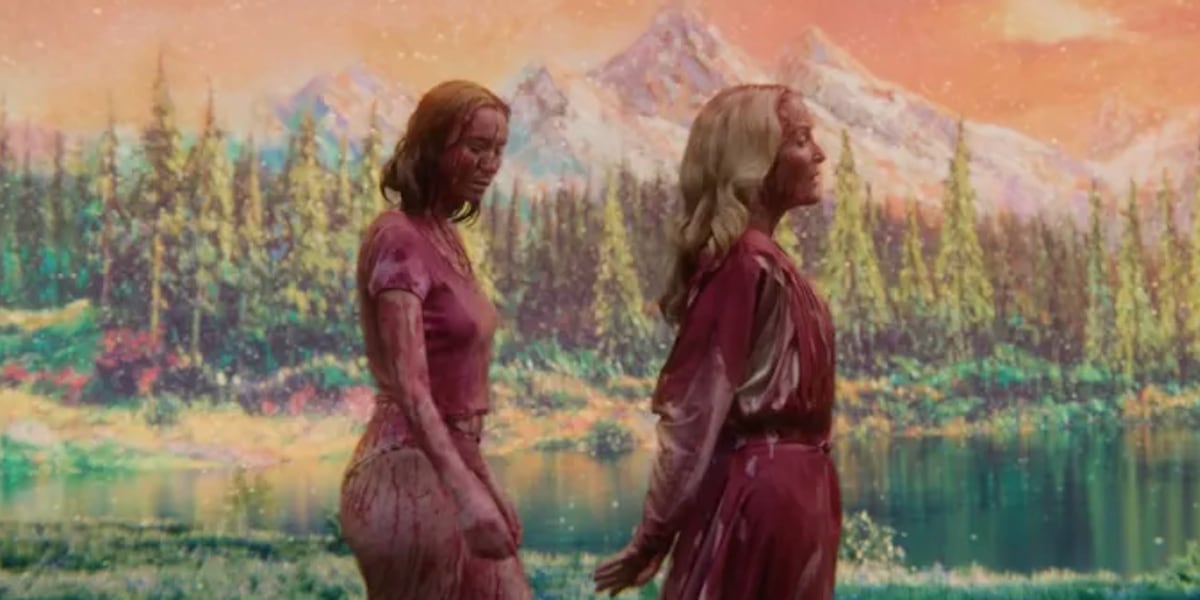
Filmmaker Kris has signed up to reboot a famous eighties horror film franchise set at a summer camp. The studio wants it to be "woke" to attract a young audience, but Kris wants to make something artistic. She sets out to meet the reclusive original final girl, Billy Summers, who lives alone in the woods at the original film location. On meeting Billy, Kris begins to question her own motivations and finds the real purpose of Camp Miasma’s killer, Little Death.
It’s clear from the opening that Kris (Hannah Einbinder) isn’t happy with her studio executives or the direction the film is going. Her polyamorous relationship with Mari (who is also seeing a man called Thor) seems shallow and shaky. Kris is skilled at intellectualising feelings to avoid dealing with them. In their first meeting, Billy (Gillian Anderson) is quick to call this out, and because Kris is desperate to work with Billy, Kris has to start to open up, and she quickly realises Billy needs to be the lead of the film.
The slasher villain, Little Death, is an on-the-nose metaphor for Billy’s secret history with the original film and Kris’s inability to enjoy sex. The growing intimacy between them enables Kris to stand up to the studio executives, and then, as her creative power grows, harness Little Death to fully unblock her creativity. As in a therapeutic relationship, change can be sudden and strong in the presence of someone paying the right sort of attention. Billy has what Kris needs and is willing to give it.
The kills are played for slapstick humour, with the blood mostly cartoonish, and there’s a tremendous, extended slaughter scene to an amusing needle drop just after the halfway point. However, this isn't a horror film, it's a romantic comedy about creativity, and it wouldn't work without the tender chemistry between the two leads. I had a great time watching this!