
August 11 2025, 20:12
Fatale
~ 30,000 words. Third person, limited/omniscient, Aimée.
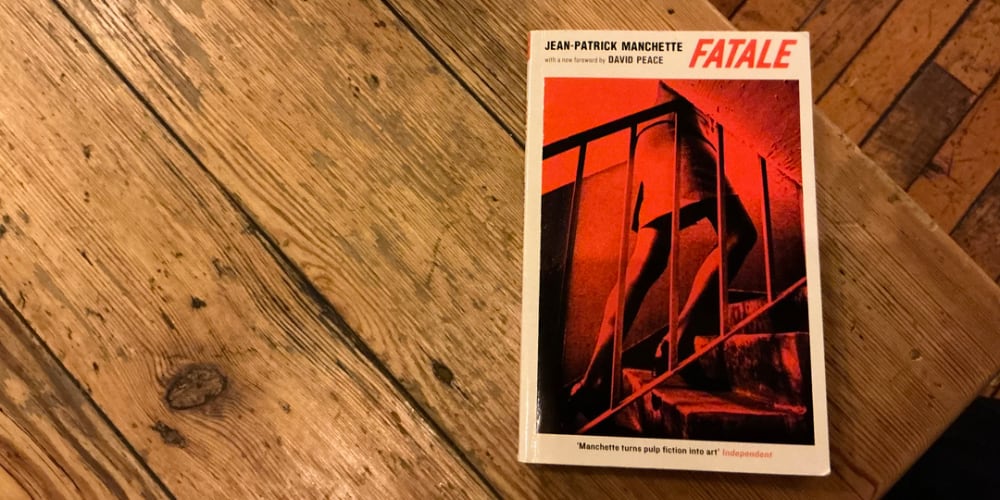
My copy of Fatale has a foreword by David Peace that includes extended quotes from Manchette’s essays and letters expressing frustrations at the reactions of both publishers and critics to the novel, which was a departure for him, and expounding on his communist politics. It’s an intimidating introduction to what is ultimately a lean, bordering on sparse, crime thriller.
In the opening chapter, we meet a group of aging, well-todo huntsmen in the French woods, one of whom is gunned down by a woman he greets with warmth and good humour. The prose style is clean, sharp and rich with details, but it doesn’t linger, so the whole scene is done with in two pages. In the second chapter the woman gets a train to Bléville, and we learn she changes her identity in each town she visits, and she has robbed a great deal of money, so on arrival she becomes Aimée Joubert and immediately sets about learning about the people who live there.
Aimée quickly works her way into the circles of the town’s powerful, playing bridge with them, going to functions, all the while making notes and looking for a way to get at their money. She is constantly listening for secrets and working out where the skeletons are buried. When a despised outsider, Baron Jules, seems to offer Aimée the perfect plan, his wayward behaviour is something she comes to admire, and the plan begins to go awry.
Manchette’s politics is woven subtly into the story, and if you didn’t know them you might not even spot the signs, which was perhaps his intention. It’s class warfare I crime fiction form. Aimée’s raison d’etre is to extort from and murder the corrupt in France’s small towns and steal their money. She is a lethal force, trained in martial arts and weapon skills, and she makes quick work of those who stand in her way.
Her backstory adds some flavour, but at heart she is the rejected and suppressed in society returning for revenge. Perhaps the revolution Manchette hoped for will start through small acts of rebellion and violence by victims of the patriarchy. Aimée is ruthless and amoral, but clearly the heroine when compared with the contemptible mayors, industrialists and corrupt police of Bléville. Manchette has written the communist version of Michael Winner’s Death Wish.
Previous: The Girl on a Motorcycle | Next: Summer experiments