
April 06 2025, 14:13
Holding
I’m going through an uncomfortable phase. My creative projects feel stale. It’s an effort not to check the news. My YouTube algorithm has been infected with news influencers. The people I follow on Bluesky are understandably incensed by what’s happening in the world, so the news cycle plays out there too. I need to take some time away from being online.
It sounds pretentious, but I sense there’s something useful for me in the ideas of Carl Jung mixed with Zen philosophy. Both address the work of living from different perspectives. Jung believed in individuation, becoming whole through the work of interpreting dreams, assimilating the Shadow, confronting the Anima, and encountering the Wise Old Man. Zen Buddhism is about accepting all thing-events as equal, developing a still mind, compassion for all living things, and moving in simple, direct ways to do what is right in each moment.
Things are as peaceful in my life as a whole as they’ve ever been. I’m healthy, my family is thriving, we’re secure in our home and jobs. Something is bothering me I can’t pinpoint. There’s movement under the surface of my mind towards change. I’ll slow things down, do some reading, and observe.
April 05 2025, 21:52
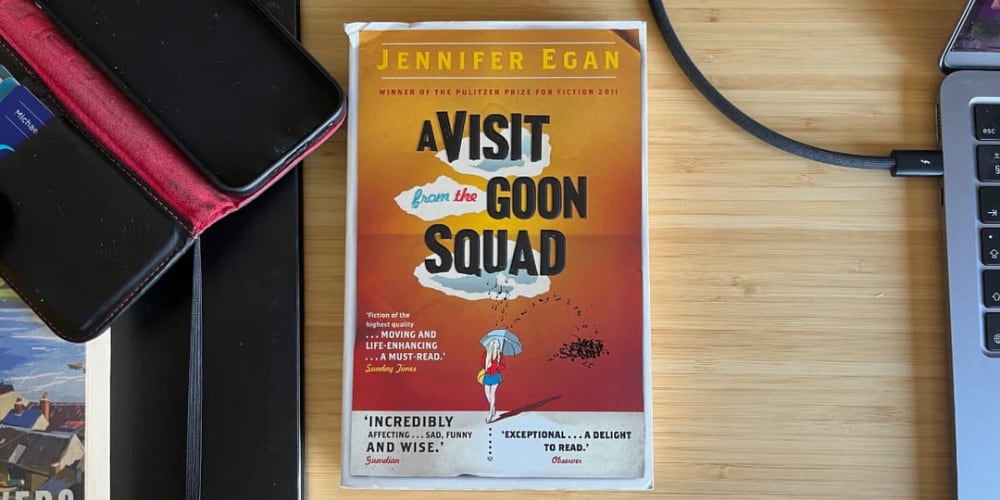
A Visit From the Goon Squad
350 pages, ~105,000 words, 13 chapters, one per character with varying points of view: Sasha, Bennie, Rhea, Charli, Jocelyn, Scottie, Stephanie, Dolly, Jules, Rob, Ted, Alison, Alex.
I wanted a novel, and this pushes the boundaries of what a novel can be, interweaving short stories over multiple decades with connected characters. It’s a work of genius, and occasionally maddening for that, because she represents some of these characters in irritating ways—for example, Alison’s story is a series of Powerpoint slides that require the book to be turned on its side. On the other hand, the range of voices and having to work out who was related to who all the time was getting tiring by Alison’s chapter, so flying through seventy-five pages was a relief.
I can only imagine Jennifer Egan had the lives of each character carefully mapped out, because the variety and number of connections between them is impressive. It opens with Sasha stealing a woman’s wallet in the company of her date, Alex. Then we meet Bennie, Sasha’s boss and record label manager, and from there the story expands until we return to Alison, Sasha’s future child, and finally Alex, Sasha's disastrous date, meeting Bennie for the first time fifteen years later.
Music and the music industry runs through all the stories. Many of the characters have made mistakes and are looking for ways through the moral fog they’ve created for themselves. If I had to say what it’s about, it’s understanding that everyone has a history that has led them to where they are, and those experiences shape who we are, and with empathy we can repair some of the damage we sustain looking for things we need in the wrong places.
There are so many interesting approaches to writing from a character’s point of view in these stories, I’ll definitely return to it when I want ideas. It’s a fizzing, beautiful thing.
March 29 2025, 13:55
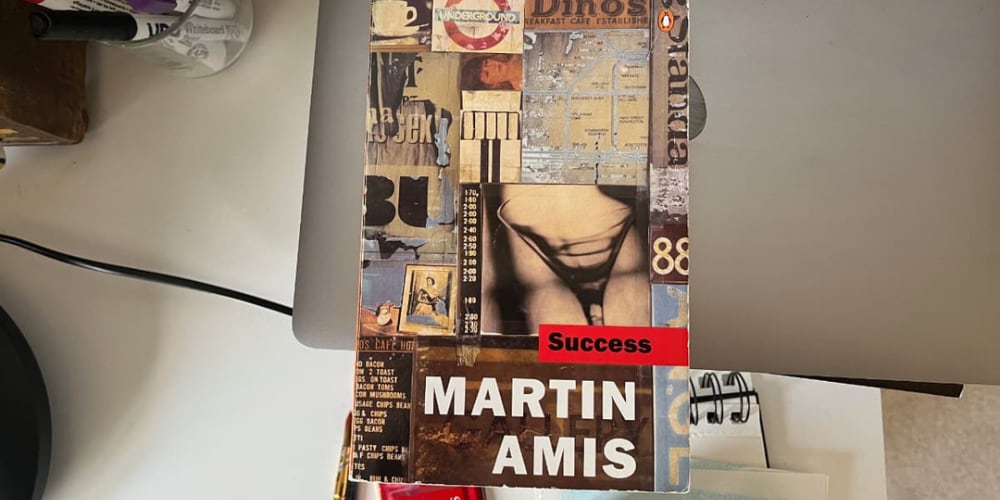
Success
220 pages, ~75,000 words, 12 chapters, one per month of a year, each chapter split in two by the first person voices of Terry and Gregory.
Sex-obsessed half-brothers Terry Service and Gregory Riding share Gregory’s London flat, where Gregory is living an abundant life of money and sex, and Terry is miserable and impotent. When sister Ursula becomes old enough to join them in their adult lives, their fortunes start to change.
These are two unpleasant characters with misogynistic, homophobic and racist views. Terry was taken in by the Ridings when he was nine years old. His father's murder of his sister was on the national news and fifteen years on he's still traumatised. A couple of minor asides to the reader reveal Gregory and Terry are both making a case, and both wonder what lies the other might be telling. As the months pass, Gregory’s rich life begins to unravel, and we begin to see he’s deceiving himself as well as us.
As the working class usurper in the upper class home, Terry lacks confidence and has a chip on his shoulder, made worse by Gregory’s narcissism, and they clash repeatedly over the flat, work, money, and most often women. In the opening chapter, Gregory tries to pass a girlfriend he’s bored of on to Terry, who can’t seem to get any success with women. Later Gregory steals from Terry a woman Terry’s been obsessed with for months but can’t seem to seduce. This back and forth is a tragic mirror of where the story ends up.
Amis is darkly playful with his language, a maestro really, but he's not for the faint of heart. He goes to town with Gregory, who sees opportunities for pleasure everywhere and spends most evenings at dinner parties with the wealthy Torka in Mayfair which inevitably become orgies. The elaborate descriptions and mannerisms are absurdly funny. He is a fool, and Amis makes merciless fun of him.
Terry’s psychological rise comes through his job in sales. His fear of being sacked is transformed into power when he accepts his role as assistant to the powerful union figures appearing in the company. By the end of the book, he is making more money than he knows what to do with, and certainly more than Gregory. On publication, the UK was at the end of the Callaghan Labour government, and one year later was the election of Margaret Thatcher. Success mixes the dourness of seventies London with the hope of the eighties when the culture came to believe that anyone could make money. The collapse of the entitled Riding family and the rise of Terry, the working class boy made good, is a glimpse into the future.
March 22 2025, 14:58
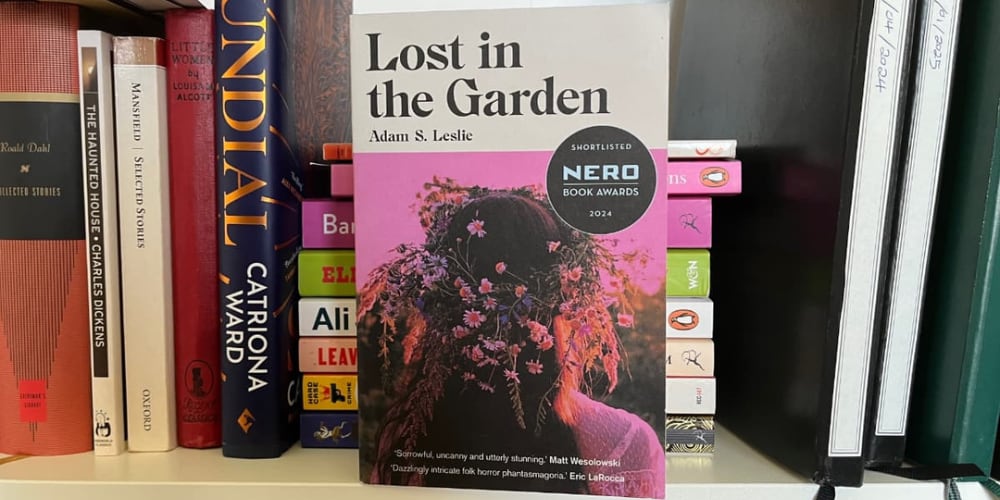
Lost in the Garden
446 pages, ~130,000 words, 72 chapters, each around 1,500 words. It’s roughly the same length as Super-Cannes! The point of view is third person limited, switching between three protagonists.
Heather, Antonia and Rachel are adults, but they live a child-like existence in a rural England that is in a forever summer, and the dead wander lost in the streets. Heather’s boyfriend Steven sets off for Almanby, a place everyone knows to never go to, vowing to return, but he doesn’t, becoming another of their friends who has disappeared. When Rachel has to take a package to Almanby, she recruits Antonia because she has a car, and Heather tags along to track down Steven. The three set off on a journey through an endless, ever-changing countryside, dodging the dead, and looking for a place that feels like the centre of all that is wrong.
The first half follows the trio as they try to find Almanby. There’s a lot of banter, some of it funny, and the three personalities bump pleasingly against each other as they navigate the increasing weirdness of the world they’re driving through. A radio station plays Steven’s voice saying nonsensical things. People from the women’s pasts keep showing up as the wandering dead. The day they leave never ends and they hardly notice. Strange images come to them when they doze. They pass empty cars on the road that seem to have just stopped working. It’s eerie, amusing and involving.
Eventually they reach Almanby, and the second half of the story goes harder into the realm of English nostalgia, squidging together memories, cultural history and folklore into a thick goop of strangeness as the women try to get to the heart of what’s happening. And pleasingly, they do find out what’s happening—I was worried several times through the book that the author was having too much fun to ever draw it properly to a close.
Nostalgia will eat you alive if you let it. The characters are content to live in the comfortable fug of their rural village well into their twenties, horsing around, watching people leave and not return. They never talk about older people still being alive, only as the walking dead. The underlying threat of evil fits with their medieval existence seen through a nineteen-seventies lens. England requires sacrifices. The countryside is not safe.
Things I liked: the descriptions of the countryside and strange goings-on were immaculate, there is a proper ending with no ambiguity that manages to not feel false, the characters were distinct and felt real.
Things I didn’t like: some of the circular conversations went on far too long, I wish it was 100 pages shorter, Heather’s repetitive mania felt out of place and pulled me out of the rhythm too many times.
March 17 2025, 20:51
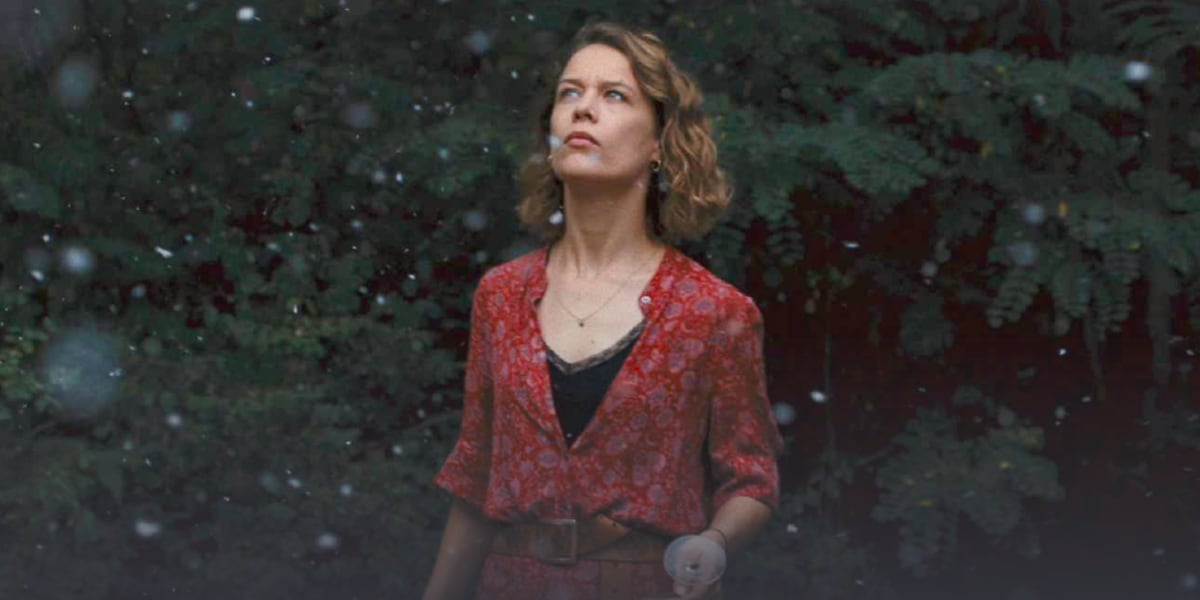
Afire
Writer Leon travels with his friend Felix to a remote house to finish his book. Felix’s cousin, Nadja, unexpectedly joins them, as well as local lifeguard Devid, and Leon’s obsession with his work over all else becomes a source of humour and friction. When Leon’s publisher arrives, forest fires are threatening the house, and Leon has to face reality.
Petzold’s last film, Undine, made my favourites-of-the-year list in 2022, and the lead actress in that, Paula Beer, plays Nadja here. Leon’s pretentious, self-absorbed manner initially shocks the sensitive Felix, but Felix knows the power of intuition and connection, and he thrives when he escapes Leon’s baleful eye and brings Devid and Nadja into his holiday—whereas Leon just wants to be alone. Leon is so heavy with ambition he can’t write anything good, but Felix’s light touch brings a grace to his photography that Leon refuses to see. Leon’s envy and fear of failure is crushing.
Felix finds love with Devid, but Leon is too afraid of vulnerability to be a friend to Nadja. Nadja persists in trying to open Leon up to what’s going on around him—he is comically unlikeable right up to the final scenes. The fear of actual death (rather than of not being successful) seems to finally break through his armour of unpleasantness and brings a small redemption. Life comes before art, kids.
March 16 2025, 11:25
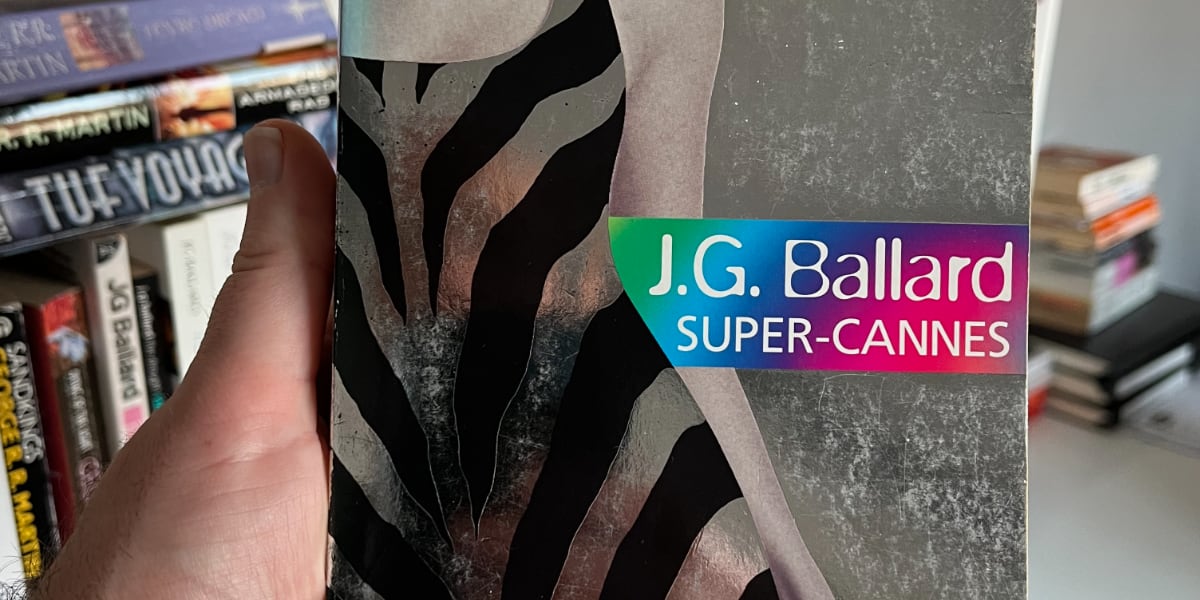
Super-Cannes
It’s 392 pages long, which at 34 lines/page, 10 words/line, is around 133,000 words. There are 42 chapters, each around 3,000 words, it’s in two parts. I needed to know!
The point of view is first person. The protagonist, Paul Sinclair, is an aircraft pilot, ex-RAF, recovering from both legs being broken in a flying accident. He’s newly married to Jane, who’s much younger, a paediatrician, starting a six-month secondment at Eden-Olympia, a giant business park above Cannes. She’s taking the place of David Greenwood, a doctor she knew from London, who killed ten people with a rifle before being killed by security staff.
I wanted to read this now because it’s a book I’ve told myself I love for years, but I couldn’t say why, and I remember it was also frustrating, and again, I couldn’t say why. The idea of an outsider going to a campus where something is terribly wrong is part of my work-in-progress. I was looking for prose style ideas and also to see how Ballard moved his story through time (because I’m not good at that). What timeframe does the story unfold over? How many characters are there? What made it so readable? Why did it stick with me?
The first chapter sets up the dynamics of the Sinclairs’ marriage and packs a lot of inciting incident information. Paul observes Jane: reading the details of Greenwood’s death in Paris Match, driving the Jaguar aggressively, changing spark plugs, being protective of Paul’s legs which are in braces from his accident, and being doubtful about her decision to take the new job. He describes his relationship with his parents, his business as an aviation publisher, and it becomes clear they are both impulsive adventurers egging each other on. It’s a chapter to set everything up.
From here, each chapter is a scene, more or less, between Paul and one of the characters working at Eden-Olympia. While Jane loses herself in Eden-Olympia’s relentless work ethic, Paul is bored and easily led by the psychiatrist Dr Wilder Penrose into an investigation of Greenwood’s crimes. At each turn he’s met with a new clue and more details of the criminal underbelly beneath the world of extravagantly paid CEOs and scientists. It’s propulsive, lyrical, intelligent, full of philosophically playful ideas about work, capitalism, corporations and what it means to be human, and it’s sexy in a cold, disturbing way.
Towards the halfway point, it begins to feel dull. Every character outside of Paul and Jane’s marriage is unpleasant. It’s exciting to find the next piece of the plot’s puzzle, and the descriptions are often wondrous, but the coldness and nihilism, which is the part of the point of the novel, sucks away much of the fun. Everyone involved in Eden-Olympia is a workaholic zombie, except for Dr Penrose, who is joyfully running his violent experiments.
Ballard thankfully changes gear to give the story a new lease of life, first via the emotional reactions of security head Frank Halder, then with the sexual manipulations of Frances Baring, and finally the philosophical reveals of psychopath Penrose to set up the final act.
What I found frustrating: it’s 150 pages too long; he has lyrical motifs that can grate; it’s rigid, repetitive, and too emotionally cold for my taste.
What I want to take with me: the way a character can give the world a personality through details; sweet, seedy dialogue; how characters have memories and fantasies; being daring with ideas.
March 13 2025, 19:46
Black Bag
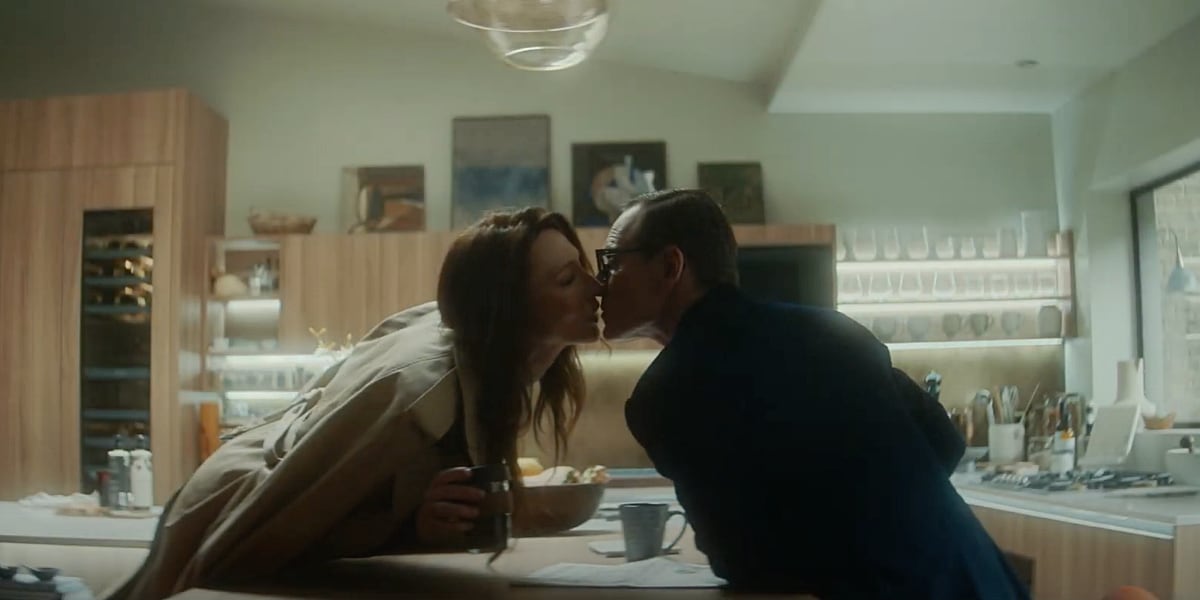
George works for a British intelligence agency in London and is tipped off someone in the service is trying to sell a deadly secret. Known for his tenacity, he quickly assembles a list of suspects and begins to unpick their various motivations, but his wife, Kathryn, is also on the list.
It’s great to see a highly-skilled, middle-aged couple in a spy film, helped no end by the fact they are both supremely sexy in their own ways. George is relentless and loyal with a knack for spotting liars. Kathryn is an ambitious department head who used to be a computer hacker. Setting out to find the traitor, George gathers the suspects for a memorable dinner party that involves a drug-laced curry, and the resulting emotional chaos is a wonder to behold. At heart, it’s a portrait of a marriage, but one within a profession that requires everyone to be liars.
It’s a simple film in some ways, a mix of spy film and whodunit, but it feels sophisticated in Soderbergh’s hands, with a layer of luxury that comes with having Cate Blanchett and Michael Fassbender in the lead roles. The whole cast is top-notch, and the script smartly allows some wonderful dry humour to sneak in when you don’t expect it. It’s a brilliant little film. Simple things done with great skill are good for the soul.
March 09 2025, 09:51
Mickey 17
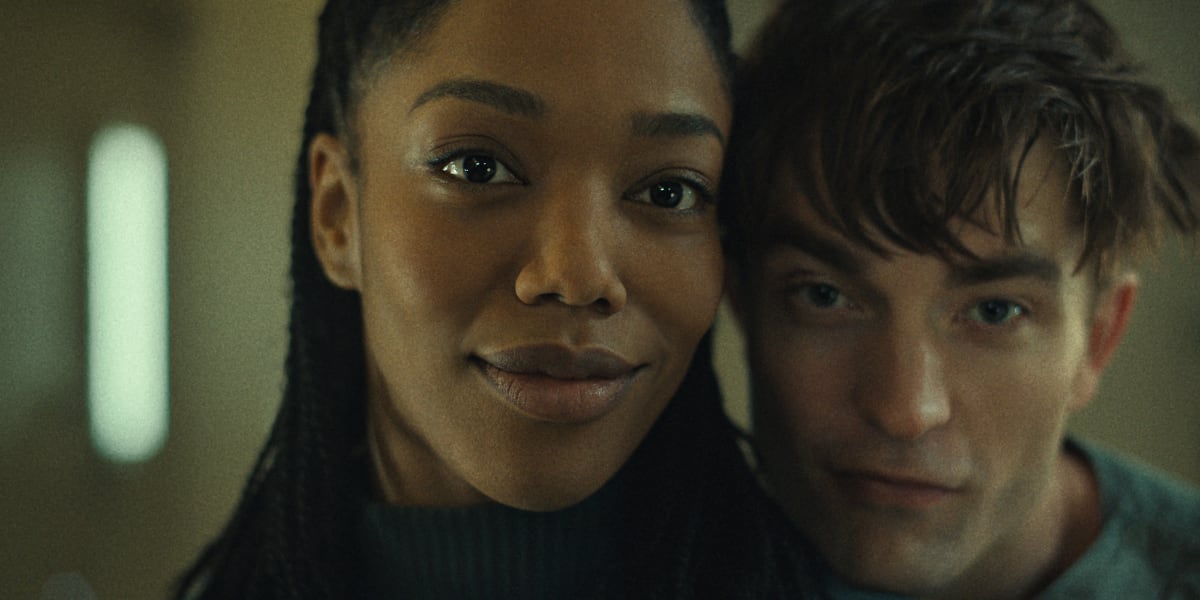
Mickey Barnes owes money to sadistic loan shark Darius Blank. To avoid a tortuous death, Micky enrols on a colonising mission to a new planet as an ‘expendable’, a person digitally copied so they can be endlessly recreated after kamikaze scientific tasks. But Mickey 17 doesn’t die before Mickey 18 is created, which makes them both question everything.
The trailer gave strong cartoonish comedy vibes, and that’s true of the film as a whole, but it’s also dark and icky with a twist of philosophy and a relentless anti-capitalism message. The lack of subtlety is deliberate. The monstrously narcissistic mission head, Kenneth Marshall, has the mannerisms of Donald Trump mixed with the space-conquering seed-spreading racism of Elon Musk. The mission is filled with MAGA surrogates. In the script, this must have been a roll of the dice that Trump would lose, but it feels despairing in our current reality, and more like a helpless fantasy.
Nasha is a great character, full of life, a mixture of dark and light, and a vibrant mirror for Mickeys 17 and 18. All the actors bring something unique and cartoonish to their roles, which makes the grim universe they’re inhabiting more bearable to be in for two plus hours—but they all treat Mickey as expendable. I enjoyed much of it, and the central foursome of Mickey 17/18, Nasha and Kai keep things emotionally interesting, but it goes on too long saying the same thing.
March 07 2025, 17:09
Art funnel
I have a pitch to myself. I want to get better at speaking in public. I also want to be more actively engaged in the research I’m doing for my next book. I love doing #31DaysofHorror, where I reflect on films I’ve watched, but the pace is not sustainable. Instead, I could drop the goal aspect, add books to the mix, post some thoughts in the same format (three to four paragraphs) and at the end of the month make a short video about them for Patreon.
I saw Mulholland Drive last week in the cinema, and it was a feast for the senses. Instead of writing about it, I tried making a video. I floundered. If I were in the pub talking to a mate about a film, there would be bustle around us, body language, questions, encouragement, and I’d adjust what I was saying according to the feedback. Instead, alone in my room, I obsessed over lighting, microphone placement, the blemishes on my face, the size of my ears, the state of my clothes, and my voice was a drone of clichés and dull details. Talking to a camera is unnatural. It’s hard!
In contrast, I wrote a piece about Mulholland Drive a few years ago with none of this drama. Writing to help think something through feels completely natural to me. I think differently while walking—talking out loud doesn’t add anything, and the walk-thinking is more expansive, more associative. I can drift and easily lose track.
On camera, my talk-thinking was a disaster. I tried pretending there was a person in the room, but it didn’t help. In a conversation, the other person solidifies what’s being said. The podcasts I love are conversations, not monologues. Solo vloggers on YouTube are more like TV presenters, and most have scripts, or at minimum a list of talking points.
So, back to my pitch to myself. Write more posts about films and books, and add a video summary to Patreon each month. It’s a proposal for a bit more structure to what I already do. The vlog part is an audio-video version of the “seen, read” I already post for patrons. It’s not a big deal.
Am I convinced? I woke up the other day with the words ‘art funnel’ in my head. Look, in dreams, you get what you’re given. Freud would love an art funnel. A sexy art funnel. Now there’s something to ponder.
March 05 2025, 19:56
What’s good to share?
I noticed this week that my Bluesky spring was going dry. It took a couple of days, but I caught myself being—what’s the best word, inane, clichéd, boring?—and so I did what I always do, I started deleting the chaff from my feed. I don’t know why it matters to me in such a transitory medium what my last month’s posts look like. I suppose I’m thinking about how I come across to potential new readers. It’s also because I’m a natural-born (word killer) editor.
I’m playing with YouTube-style videos at the moment (ffs). Patreon has added the option to host videos and also create a podcast feed from the audio. I am a tech moth to a flame. Talking to a camera alone is hard. My favourite podcasters come in pairs, in conversation about things they love, sparking and connecting off each other, but my attempts to talk about a film, Mulholland Drive, alone, felt lifeless.
YouTubers seem able to turn on the charm, possibly because they can see themselves on camera. Often they have someone else filming. I was suddenly sympathetic with all the actors recording auditions on their phones in hotel rooms (all of them!). It’s an imagined audience. It requires structure, even if that’s just a list of things to cover. The flow can easily dry up without another to prompt you. It feels silly, slipping into a persona when nobody is with you, for a future audience. And I’m still not used to how I look and sound to other people. I’m not a natural performer.
Writing is different. I have to write alone. I can rewrite to my heart's content. I can be another person more naturally in words.
I posted a short story to Patreon this week. That’s real content. I’ve been ambivalent about doing that for years, but fuck it, I’m ready to start experimenting with new approaches. I want to create good work and lots more of it. Getting it into the world is energising.
I’m not going to second guess what other people want anymore. The true path is to say what I want to say, even if nobody’s interested, and to be myself, to become myself as fully as I’m able, even when that pushes people away.