
August 09 2026, 20:24
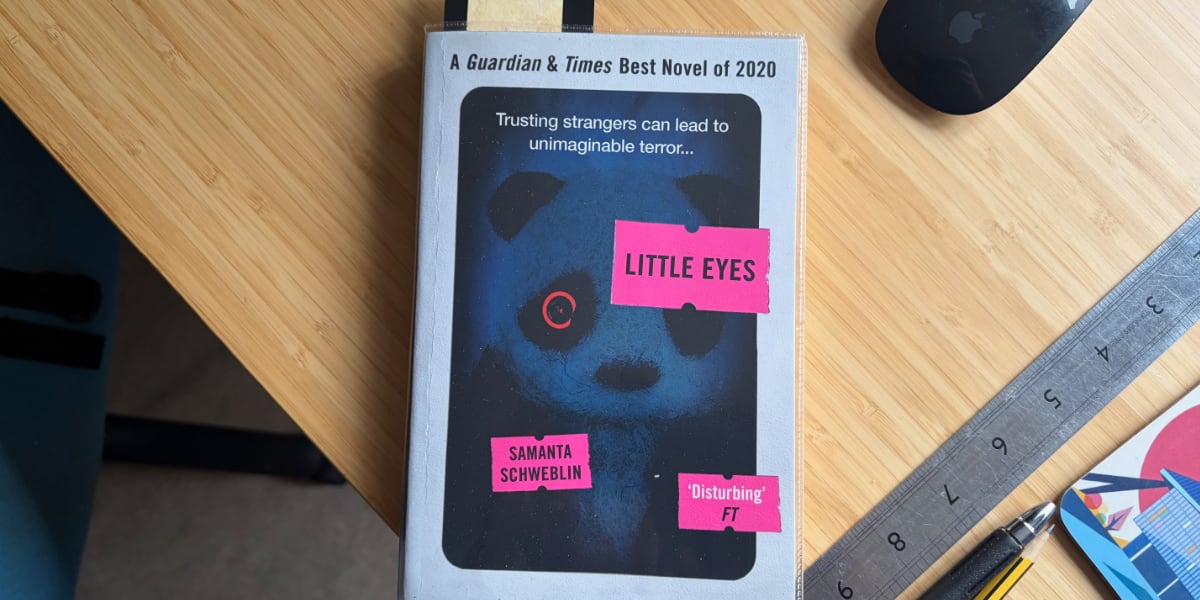
Little Eyes
People all over the world are buying a new toy, a kentuki, that comes in different animal forms, as a companion. Kentuki can move around, communicate through animal noises, and understand what you say, because behind each kentuki is an anonymous person observing their stranger’s life through a camera in the toy’s eyes. Keepers own the kentuki, and dwellers control them – you choose which you want to be on purchase.
We follow several characters on both sides of the kentuki divide, with chapters labelled by location. Some of the characters are more important than others, and sometimes it was tricky to remember who was who as the point of view jumped around the world. When Schweblin was writing this (in the initial Spanish version), it was 2017, at the peak of social experimentation with Facebook, Twitter and YouTube. This novel explores those same desires to connect, see how others live, make money, survive, impress our friends, find a partner, be seen and be understood. It takes its time teasing out the moral ambiguities and problems implicit in the concept of anonymous voyeurism.
There’s a YouTube video where Schweblin speaks eloquently about the power of language to make us feel awe, discomfort, tension, and to let us face our worst fears safely. She also talks about how cinema influenced her work. It’s a fascinating interview. She talks about literature as a powerful technology that we continue to underestimate, instead focussing on phones and the internet. Losing ourselves in fiction, short stories, novels, puts us in situations that can make us wonder what we would do, how that would feel, and literature ultimately can influence our decisions in the real world and change our lives.
“Novels happen when a short story does not completely work.” That’s something interesting she said in the interview. She’s a prolific short story writer, but Little Eyes was nominated for Booker International Prize in 2020, and Fever Dream in 2017 (and made into Netflix film in 2021, directed by Claudia Llosa, which I now will watch!). The book and the interview have given me lots to chew on.
Previous: Freaky Tales | Next: Adaptation