
November 30 2024, 11:10
The Card Player
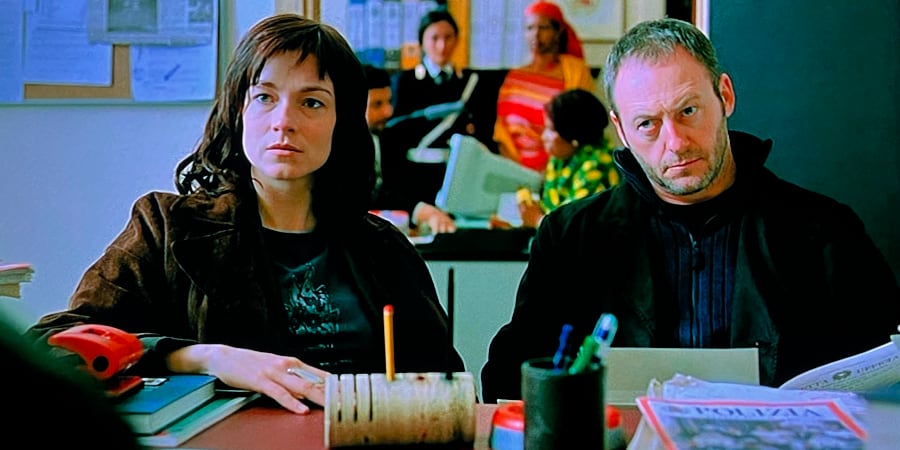
Rome detective Anna Mari pairs up with rogue Irish cop John Brennan to find a gambling serial killer who challenges the police to games of online poker to save the lives of kidnapped women. Twists and turns (but not that many) ensue.
Some people seem to hate that the poker game in this hasn’t aged well graphically, but I prefer to think of how much it would cost a director today to replicate a period technological thriller set in 2003 and just enjoy it for the time it’s set in. It’s an odd film, though. Brennan starts the film as an aggressive idiot and never really becomes believably likeable as the love interest for Mari.
There’s one outstanding set piece in Mari’s apartment where the killer breaks in to kidnap her, but apart from that there’s not much here to make it stand out from most procedural serial killer thrillers. It’s dramatically empty—we just lurch from one game of online poker (on Windows 2000!) to another.
This might be the most disappointing Argento so far. Say what you like about his The Phantom of the Opera, but it tries for something new.
November 28 2024, 19:36
Sleepless
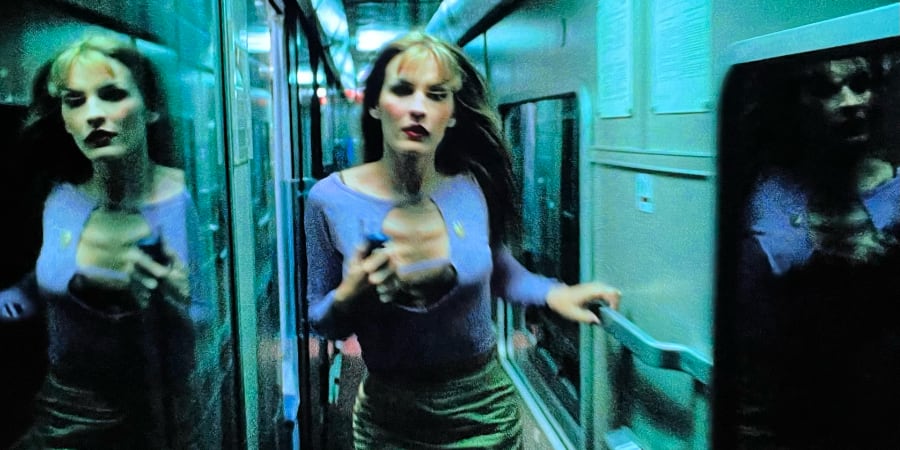
Young Giacomo watches a hidden figure stab his mother to death with a flute. Police Chief Moretti promises the boy he will catch the killer, and he does, but seventeen years later the killings begin again. The retired Moretti teams up with adult Giacomo to catch the Dwarf Killer who seems to be back from the dead.
Doesn’t that sound like the most Argento film ever? And it’s good! It doesn’t match the pizazz of his seventies giallo films, and it’s too long, but it has many other charms, especially the opening murder on the Italian night train. Argento is always looking for the interesting shot, the killings are imaginative and brutal, the Goblin score is great, and Max von Sydow as the elderly, forgetful Moretti brings an unexpected class and lightness of touch to the otherwise pitch black story.
November 26 2024, 21:11
The Phantom of the Opera
After Hammer’s Dracula and Ken Russell’s Frankenstein origin story, The Phantom of the Opera was an accidentally perfect pick—another turn of the century literary adaptation, another Universal Monster, and the next film in my parallel project to watch all the films of Dario Argento in chronological order.
Looking for films for #31DaysofBlackXmas, it seemed wrong not to continue the Dario Argento quest I started back in June. That stalled because the films got harder to find, and frankly I was getting bored. Argento’s The Phantom of the Opera is only available on a DVD rip of what looks like a VHS (the quality is awful, which colours everything), but it wasn’t expensive, and I didn’t want to let go of the idea without another try.
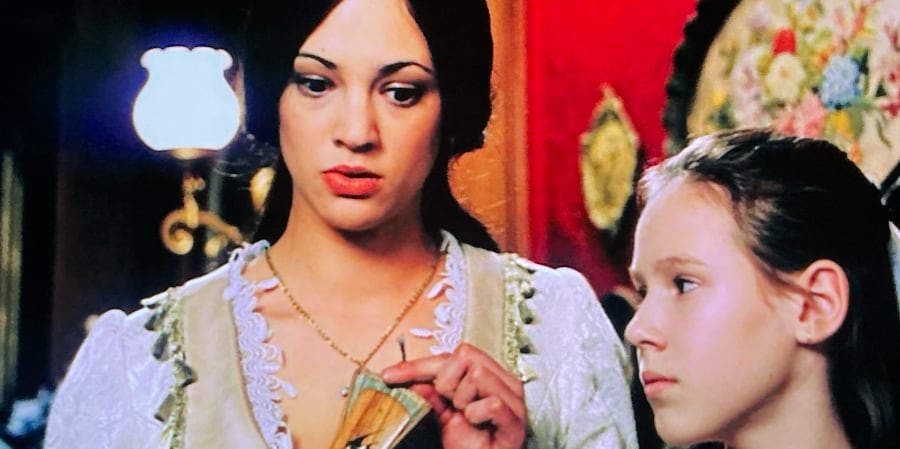
A baby is put in a basket and released into the sewer. A rat spots it, pulls it to safety, and the rats raise the child as one of their own. This makes Argento’s Phantom the king of the rats when the story starts, but also a hunky blonde stud, played by Julian Sands as beautiful, charming, and with no mask in sight. The Christine he is entranced by is (of course) Argento’s daughter, Asia, caught between the good Baron, who woos her in conventional ways, and the dark Phantom, who can talk to her telepathically, kills people, and wants to keep her forever in his dank rat cave.
It took me a while to accept that Argento has made here a baroque mix of horror, romance and comedy, with some steampunk thrown in, and it was only the extended sequence of the rat-catcher careening through the caverns in a self-built rat vacuum-mincer where that hit home. If you’re looking for a straight horror, or a classic adaptation of the original novel, you’ll be disappointed, but if you’re able to look at this with an open mind (and find a copy of high enough quality to do the sets and costumes justice), then… you might think it works.
Looking back to his 1987 film Opera, the Phantom has always been in the back of Argento’s mind, and I wonder if it was a childhood favourite. He certainly loves theatrical spaces (like the opening of Deep Red). He’s made a long career from mysterious killers stalking artists. I wonder if there’s an interview where he talks about this? (Much scouring of the internet ensued, no evidence was found by the time this went to press.)
November 23 2024, 13:02
Gothic
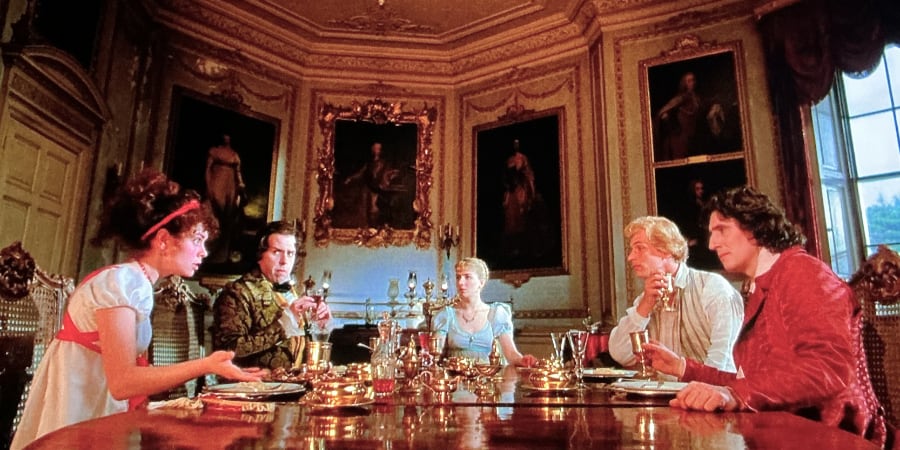
Keeping things in the same vein (!), Gothic begins with famous poet Percy Shelley arriving at Villa Diodati on Lake Geneva to visit Lord Byron, with his bride-to-be Mary Godwin, and her stepsister Claire Clairmont. Byron’s physician Dr. John Polidori provides an endless supply of laudanum, sending these literary figures on a riotous, hallucination-filled journey through one stormy night that’s famed for being the source of some of our most famous fictional monsters.
Byron, Godwin, Shelley and Polidori whip each other into a fervour as a metaphor for the artists creative process and the courage required in the face of all the imagery and emotions that can fly around while making art. They bicker and fight and challenge each other in ever more excessive ways. I love Ken Russell. He’s not afraid to be weird, sexual, gloopy and violent.
His camera gets in the faces of the actors, and what actors he found: Julian Sands, Natacha Richardson, Gabriel Byrne, Timothy Spall, and a wondrous Myriam Cyr (here talking about working with Ken Russell who sounds like he was a bona fide genius). Cyr is a new name to me, and had a long career after this in theatre, writing and directing.
The script was written by Stephen Volk (here talking in depth about the history of the Frankenstein story and how he worked with Russell). Volk went on to write Ghostwatch and many other things for television, as well as novels and short stories. In that linked interview he talks about writing being done by aristocrats back in the day, the idle minds that didn’t have to work, and how we’re heading back to that today, with most writers not being able to make a living as writers, and film-makers having to be lucky enough to be supported by rich parents with houses in London.
November 22 2024, 18:09
Dracula
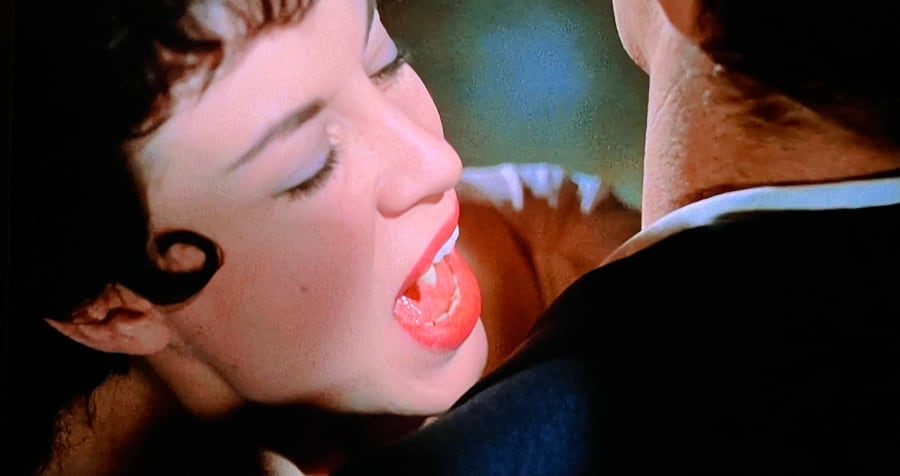
Christopher Lee’s Dracula is iconic. He’s tall, his face carries an animalistic quality when in vampire mode, he’s sometimes slow and imposing, but then he strides up castle stairs three at a time. Beneath his civility is a barely held in check hunger. It’s wonderful to watch. As critic Tim Stanley said, "Lee's sensuality was subversive in that it hinted that women might quite like having their neck chewed on by a stud."
Against this power you need a wily, intelligent Van Helsing, and Peter Cushing has those qualities in abundance. I definitely saw this growing up, but I didn’t remember much of it this time around. The finale, where Van Helsing jumps onto a table and runs at the curtains, was familiar, but that was at the very end. The scenes in the local inn are parodied in The Fearless Vampire Killer’s (a comedy that I don’t find funny) and probably many other places. The interiors are lush and colourful, and the clothes pleasing on the eye, which makes me wonder what sort of budgets Hammer was playing with at the end of the fifties.
Director Terence Fisher was clear that being bitten by a vampire was a sexual act. When Dracula closes the door of Mina’s bedroom, the last thing we see is her face looking lustfully and submissively up at her predator. This must have caused a stir in cinemas across the world in 1958, pre-dating Psycho and Peeping Tom, two more serial killers targeting young women and shocking social mores, by a couple of years.
November 20 2024, 20:09
The Eternal Daughter
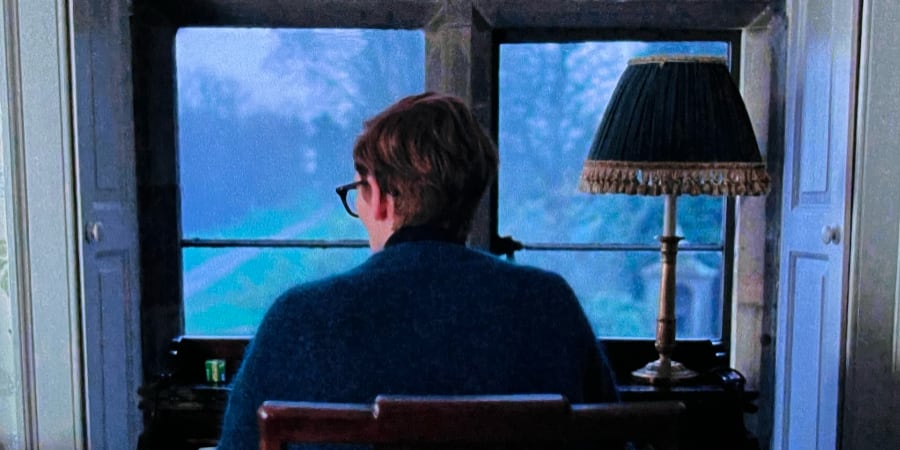
Julie, an artist and photographer, takes her mother to a luxurious country hotel for her birthday, but is unsettled by strange noises and half-seen figures. The hotel was once her mother’s family home, and the visit unearths unexpected memories.
Tilda Swinton plays both Julie and her mother, Rosalind, which took a while to get used to. I kept looking to see where the cutaway or stand-in was. Julie spends the whole film trying to make her mother happy, and her mother both appreciates the attention and is frustrated at her daughter being ‘a fusspot’. Julie is sacrificing other areas of her life to please her mother, but can’t ever get the resolution or reaction she needs to be able to relax. Her mother remains distant and elusive.
The setting is wonderful, and the supporting cast adds to the fun, especially the increasingly rude receptionist. It looked like director Joanna Hogg wanted bits to feel like a ghost story, but the potentially spooky scenes didn’t feel spooky at all. Hogg can’t help but make things about making things. As a drama and character study, it’s a moving piece of work, and the ending got me.
November 19 2024, 21:00
The Car
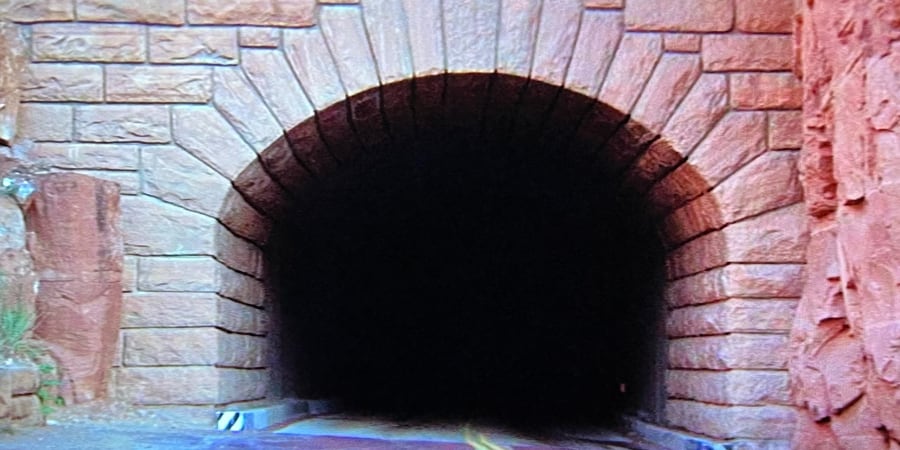
Deputy Wade Parent is raising two daughters alone after the death of his wife and policing the usually peaceful small town of Santa Ynez. A black car with darkened windows drives out of the Utah desert and runs two cyclists off a bridge into a ravine. When the deaths start to mount and local suspects ruled out, Wade has to martial the town to stop the car from killing more innocent victims.
This was one of my favourites when I was a VHS kid, up there with Piranha as a repeat watch, another Jaws rip off. I’m surprised how much I cared for the people of Santa Ynez this time around. James Brolin and Kathleen Lloyd are bursting with charisma and easy chemistry, and the supporting cast give all the potentially stereotypical characters unexpected life, helped by the various relationships and backstories that a film like this doesn’t usually bother with.
It’s a town that sees it’s brightest and best mowed down by an evil car, and the grief of their loss is palpable. Once the killing starts, a surprising amount of time is spent with people grieving, which adds to the tension when the car does show up. The standout scene is when the car mysteriously appears in Wade’s garage and won’t let him leave. It’s a shark on desert roads with a knowing, malevolent streak.
November 18 2024, 20:19
Enys Men
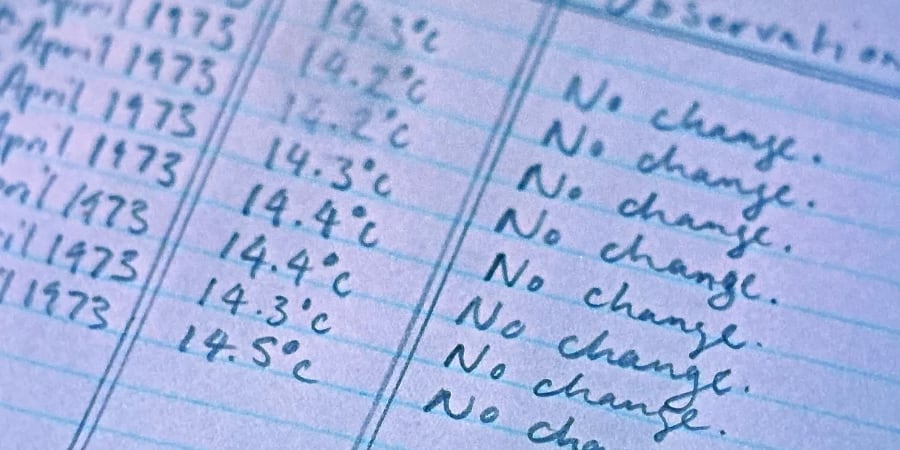
A woman in a bright red coat walks the barren landscape of an island somewhere off the coast of Cornwall. She’s a volunteer monitoring wildlife, in particular a clutch of white flowers of which she records the soil temperature at their roots every day.
It’s a life of strict routine—measure the soil temperature, drop a stone in the shaft of an old tin mine, make a cup of tea, record the details in a notebook. She’s alone, but she talks to a girl who she sometimes sees standing on the shed roof, and the old stone that stands against the horizon is sometimes closer than it should be, and there are children, women, miners in her dreams.
The landscape seems to press closer, and it begins to feel like the island is part of her, and time is playing tricks. A visiting boatman with supplies wears a yellow raincoat that she's previously found washed up on the rocks. The radio speaks of the anniversary of an accident fifty years before, but the date is in the future of her written temperature log. The mystery mostly resolves itself but not completely, which is just the way I like it.
November 17 2024, 21:42
Australia
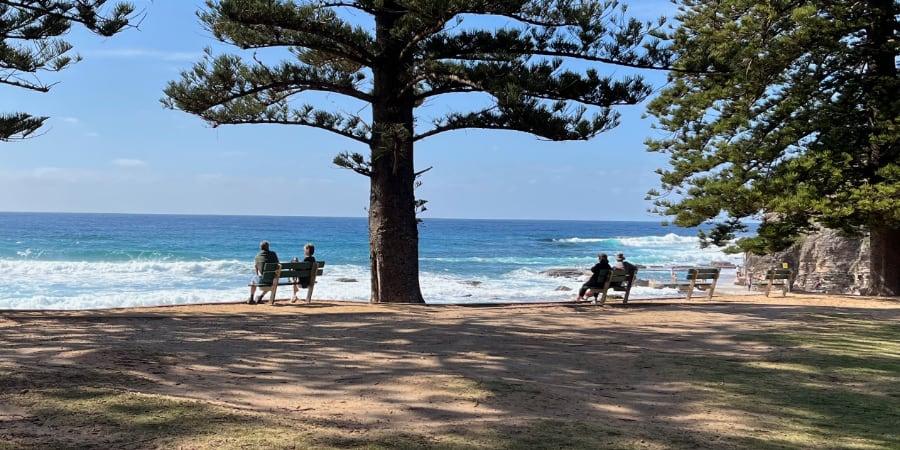
October was a blur of holiday preparations, work dramas, and then boom, we were on the plane, digitally clutching almost forgotten eVisas, trying to use ridiculous neck pillows, and making ill-advised small talk with customs officers. Two weeks on the other side of the world staying with an old friend in Sydney and (too briefly) hosting our Perth-living son.
We’ve never had a holiday like it, and certainly not since the children were born. I felt young again out there. An October spring. Now I know what a cicada sounds like. I’ve driven the long road to Byron Bay and tried all the coffee shops. There were bookshops everywhere I turned. I drank so many flat whites I had to switch to long blacks. Everything went right. Unlikely parking spaces. Accidentally discovered perfect beaches. A humpback whale and her calf off Lady Bay.
There’s too much to try and write about. It was a holiday that I’ll remember when I’m old and can’t travel anywhere. It’s given me an appetite for more.
September 21 2024, 17:38
Spirals
Returning from holiday, I went into an overwhelm spiral, and I'm only just getting out of it. Nothing too serious, but frustrating nonetheless. Lots of loops are closing, but it’s taken me a while to acknowledge that, and they’re not yet completely closed—my father, his house, my hip pain, general work tumultuousness—life is different and will become more so.
For a couple of days I thought I was going to do #31DaysofHorror again, even though we’re travelling to Sydney, Australia, for the second half of October. I wasn’t thinking rationally. I just wanted to fill the empty spaces around me without knowing what I was doing. Got to keep busy, you know? Something doesn’t feel right, so I’ll watch a horror film. Luckily, I noticed, so we’re good.
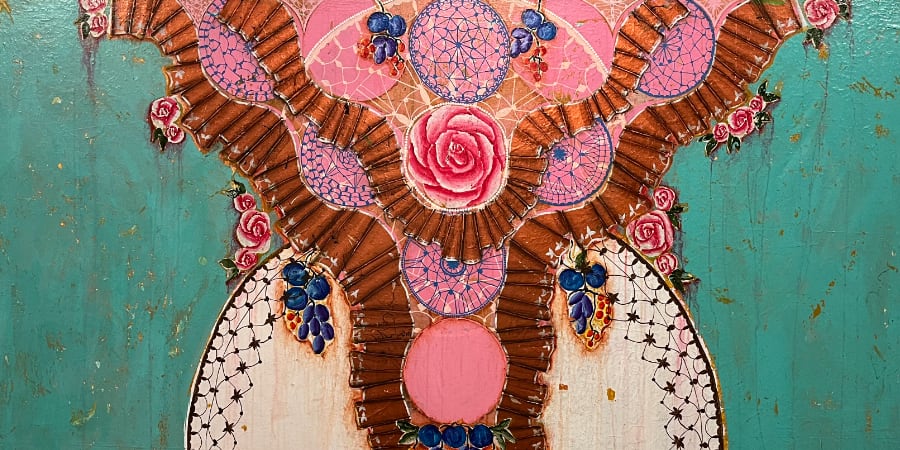
The picture is of a collage by Brazilian artist Beatriz Milhazes, from her exhibition at Tate St Ives. The exhibition was called Maresias, which apparently means an Atlantic breeze, and lots of the other pieces fitted more into that idea, but this one stood out to me because it had a different energy. It’s called 'O Rapaz, The Young Man'. I love the femininity of the phallic shape, and in person it's really big, over six feet high. It commands the space.
Coming back from St Ives, the feelings of freedom, exploration and fun dissipated quickly. I knew I’d get the post-holiday blues, but that didn’t stop them coming. Busy blues. Hectic blues. Some of the damage was self inflicted, some from circumstance, but the horse is back in the stable, the phallus is back in the trousers, and the skies are clearing.
I want to finish the short story I’m writing before the end of this month and post it for my Patreon friends. It’s called The Box. More information soon.