August 29 2024, 22:11
Gluteal tendinopathy (and me)
Sometimes in my groin, sometimes at the front of my right hip, sometimes deep in the buttock, the pain started with the long drives to Wales, then got worse when I started golf lessons. A Pilates machine debacle led me to Physio One, who suggested it might be hip arthritis, then never returned my calls. Physio Two said it was deep gluteal syndrome. He gave me exercises (that worked), then switched career to become a tree surgeon.
In May, the pain returned, so I found Physio Three who diagnosed gluteal tendinopathy. She also suggested I get a GP referral for a hip X-ray (which revealed I also had hip osteoarthritis).
Gluteal tendinopathy and hip osteoarthritis in a desk-bound homeworking software engineer have similar treatment plans. My glutes weren't strong enough to do their job, so my inner thighs and quads were picking up the slack, which was part of the reason I was in pain. My tendons had degenerated because I wasn't using them enough, and I then hammered them with too much exercise too quickly.
To repair my hip and leg ecosystem, I needed to engage my brain. The physio gave me some rules:
- Reduce daily activity until you find the baseline where symptoms have disappeared
- Any pain that is above 3/10 is the body’s message to do less (“reduce load”)
- Accept that rehabilitation of chronic tendinopathy can take 6-12 months, and shortcuts only delay progress
- Start with daily isometric exercises (holds), then add slow eccentric movements (repetitions)
- Keep walking, but increase distance slowly, reducing if pain is above 3/10 the next day
- Use the gym to safely add heavier loads to strength exercises, but obey the 3/10 rule
- When ready, progress to gentle plyometrics (e.g. low hops and jumping), then to sport-related movements, before returning to sport
The treatment plan requires consistency and control. Life doesn’t always allow that. Right now, I’m on holiday, in a flat on the third floor at the top of a steep hill. When we booked it, this was a good thing, but the reality is I’ve had a couple of miserable days recovering from asking my tender tendons to do too much. I probably overdid it in the gym in August, thinking I was fitter than I really was. Unlike muscles, tendons take twenty-four hours to complain, which is another complication. It can be a stop-start affair.
Four months in, I’m still in the strengthing phase. I haven’t yet reached the excitement of hopping. New exercises mean new stresses on my body. I can’t always tell what’s hurting and why. I also struggle with knowing which type and amount of pain is necessary and which is holding me back. It’s an ongoing physiological education. I’ve watched a lot of YouTube videos.
There's little online about the mental health aspect of all this. Up to a year is a long time to recover from what the medical profession considers a common problem, and that’s if you stick to the treatment plan and pay rigorous attention to the signals your body is giving you. What if a person’s baseline activity level is below what’s required to do their job, or care for a loved one? I can’t imagine. In that I feel lucky.
EDIT: If you want to know how it worked out, here’s part two from January 2025.
August 20 2024, 18:13
The Stendhal Syndrome
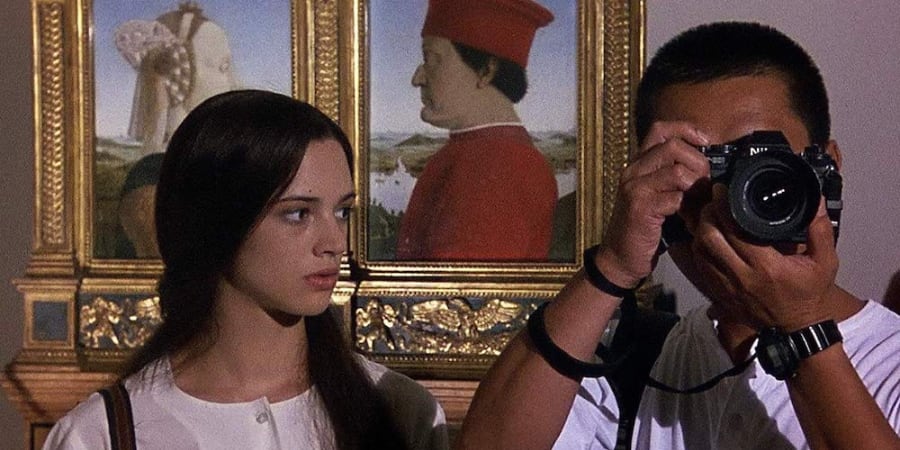
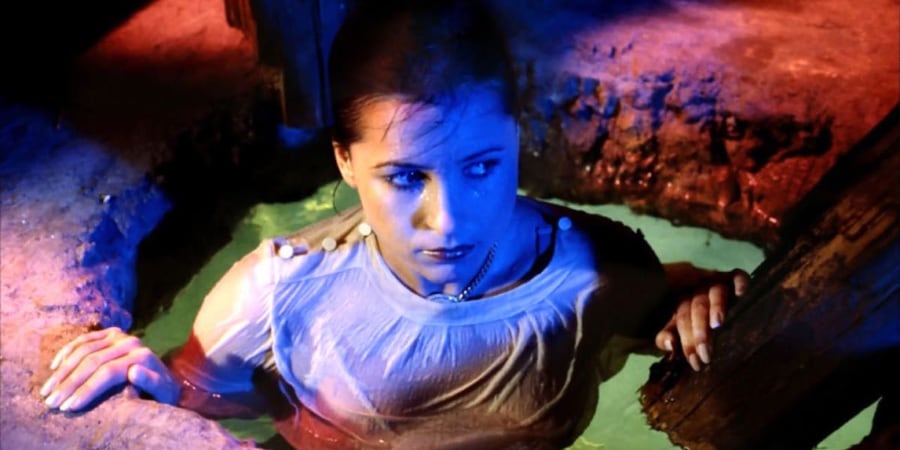
Imaginative and clichéd, intriguing and brutal, this film is primarily about rape, torture, and insanity. Asia Argento is Detective Anna Manni, sent from Rome to Florence on the trail of a serial killer and rapist. Anna collapses while visiting a gallery, overcome with hallucinations from the works of art. The killer steals her gun and uses it to capture and rape her when she returns to her hotel. Traumatised, Anna tries to continue to hunt Grossi, but her personality begins to change, and she loses her grip on reality.
It's implied that the killer is also overwhelmed by art, although it's not clear if he also has Stendhal Syndrome. Anna becomes more aggressive, and starts making her own art to process her trauma. Grossi kidnaps her and rapes her a second time, holding her in a cave covered in graffiti. Terrified of the hallucinations the graffiti brings on, something breaks in Anna, and the strength she finds both saves her and tips her into insanity.
Thomas Kretschmann as Grossi has something of Rutger Hauer about him with his confident killer’s persona and cropped blonde hair. At the halfway point the film switches to be more like Hitchcock, De Palma or late Paul Verhoeven. The blonde wig Anna starts to wear stretches credulity, and the twists and turns feel perfunctory towards the end. It’s a brave film, shocking, and Asia Argento is impressive in how hard she goes in the role. The film fizzes with ideas but doesn’t quite deliver.
August 13 2024, 18:39
The Black Cat/Trauma
These two odd kittens are making me wonder if my Argento project is reaching its end. The Black Cat is the second story in a double-hander, Two Evil Eyes, with George Romero. Both stories are adaptations of Edgar Allan Poe. Romero’s The Facts in the Case of Mr. Valdemar is a plodding melodrama with some fun performances, especially Adrienne Barbeau, and a strong ending. Argento goes for more of a character study in evil.
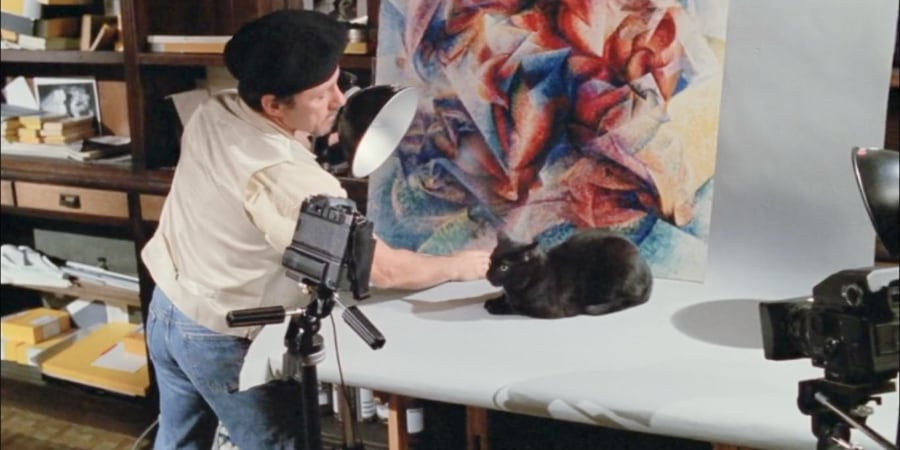
A deranged, beret-clad Harvey Keitel plays Roderick Usher, a photographer obsessed with taking pictures of mutilated bodies. When his girlfriend takes in a stray black cat, Usher takes an instant disliking to it and kills it to take its photograph. That night he dreams of a medieval village where his wife is the local witch. She knows what he has done. This is the first Argento film with creature effects, designed by Tom Savini, but they couldn’t save a flat story.
Trauma is a traditional Giallo, but in America. Teen runaway Aura enlists the help of David, a journalist, when she comes across a killer in the act of beheading someone in the grounds of her family home. David is following the serial killer, “The Head Hunter”, who only strikes when it’s raining and uses an electric-powered garrote to decapitate victims. Freudian high-jinx ensue.
Based on that description, I feel even more disappointed that it was such an unexpectedly tough watch. I can’t put my finger on what didn’t work, and it could be that I’m getting tired of the Giallo formula and need a break, or perhaps these aren’t as carefully crafted as earlier works. Nineties America doesn’t have the allure and exoticism of Rome or Zürich, it's too familiar... I don’t know. I’ll try one more.
August 05 2024, 18:34
Early summer books
It started with the good: All Fours, by Miranda July. I haven’t laughed out loud so much at a book since Bridget Jones’s Diary. I don’t choose comedy novels because I take reading far too seriously. The unnamed artist makes terrible, hilarious decisions over and over, but she’s also just trying to have the horny creative life she wants. I chose another light novel next, Muriel Spark’s A Far Cry From Kensington. Working in publishing always seems so grim in fiction, and grey fifties London too, but this journey is lit up by the delightful Mrs Hawkins who starts a devastating feud with the poisonous Hector Bartlett.
My hardback-a-month project hit a wall with Parade, by Rachel Cusk. I’m surprised how much I hated this book, and I have a pattern of refusing to give up on a book once I’ve started it, so this was a blow. After a few weeks I saw sense and pivoted to In Ascension, by Martin MacInnes, because it’s sci-fi and it was on the Booker Longlist 2023. The opening act was good, set mostly on a ship exploring a newly discovered trench in the ocean, but I became overwhelmed by the dry science talk, and I wasn't interested in the arc about feeling guilty not caring for an aging mother, so I fell into the reading pit again.
The recovery: A.O. Scott’s Better Living Through Criticism: How to Think About Art, Pleasure, Beauty and Truth. A bold title, bought after listening to the author being interviewed by Marc Maron a year or two ago, and picked up because I owned it digitally. The new iPad needed a run out with the Books app. The first half of these essays on what criticism is and why it’s important was a joy. It got a little stodgy towards the end, but he reminded me how important it is to pay attention—to how I choose and how I engage with art of all kinds. (The iPad Books app is amazing, btw.)
Finally, the very interesting Double Fault, by Lionel Shriver. I was expecting not to like this because of the pickle she got into over cultural appropriation. The interviews she was doing at the time left a bad taste in my mouth. It’s dark. Winnie, a professional female tennis player, marries another pro and is crushed with envy when he begins to have more success than her. She’s unlikeable, there isn’t much tennis, but I read it in a day, admittedly skipping the melodrama and repeated arguments. Winnie has a heart of ice when it comes to competition. The Olympics started this week. It makes me wonder what’s going through the competitors minds.
July 31 2024, 17:48
Opera
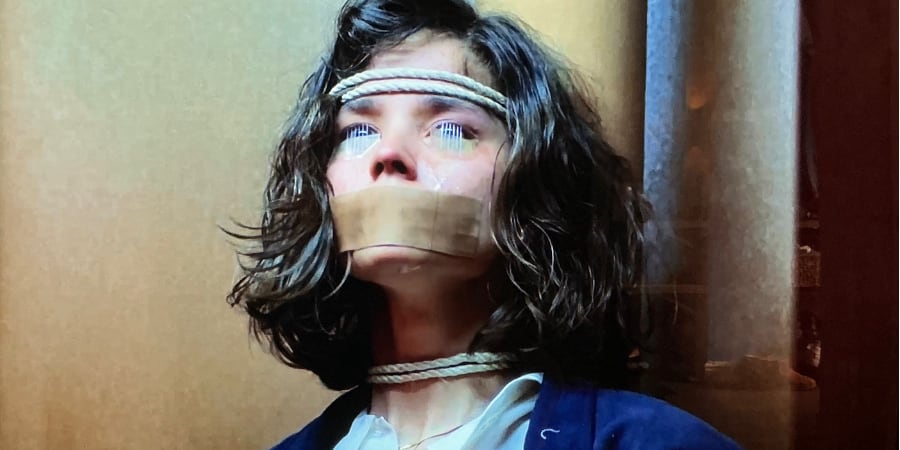
Opera is the last of what’s regarded as Argento’s unimpeachable run of giallo-horror-thrillers he made through the seventies and eighties. For me, there are hits and misses (Phenomena was not my bag), but Opera is one of his best.
Betty, understudy in a version of Verdi’s opera Lady Macbeth, makes a name for herself stepping into the lead role when the famous singer Mara Cecova is hit by a car. That night, a masked figure murders Betty’s boyfriend Stefano at his apartment, making her watch. Betty becomes suspicious of everyone, and as she is made to watch more killings, she must work out who to trust before it’s her turn to die.
The world of opera, with its costumes, mannequins, stage lighting and imposing architecture, is perfect for the heightened world of giallo’s black-gloved killers, secret passageways, uncertain allegiances and naked ambition. The soundtrack uses opera music, of course, but still has Argento’s trademark heavy metal. The deaths are violent and shown in explicit detail, and like Betty, we are made to watch.
Cristina Marsillach as Betty is perfect as the insecure, vulnerable, talented and resourceful Betty. There are plenty of playful cinematic touches on display, and using ravens from the opera’s avant-garde production as a central plot point is a supremely gothic touch.
July 28 2024, 11:09
Phenomena
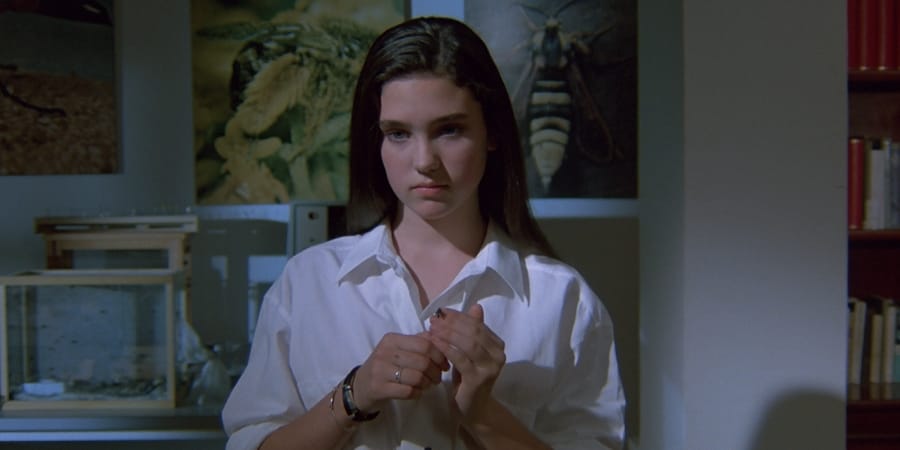
Like in Suspiria, a young woman arrives at a female-run school where students are being murdered by an unseen killer, but there are no witches in Zürich—instead we have a girl who has an unexpected telepathic connection with insects.
Jennifer Corvino, daughter of a famous actor, is sent to a Swiss boarding school for the summer. On her first night she sleepwalks and witnesses a student being murdered before being led by chimpanzee Inga to the house of her owner, forensic entomologist John McGregor. There are more murders, and Jennifer comes to realise she can use her growing psychic connection with insects to discover the bodies of victims, as well as protect herself from attackers.
Donald Pleasance plays the wheelchair-bound McGregor, who is trying to find out what happened to another student of his, Greta, who he suspects was also murdered. He has the chimpanzee trained as a nurse so he can live in his secluded home cum laboratory. Jennifer’s burgeoning power over insects is implied to be linked to her coming of age, and McGregor encourages her to use a Great Sarcophagus fly, whose larvae feed on dead bodies, to lead her to Greta.
It’s all completely mad, and the final fifteen minutes throws gore and weirdness at the story faster than makes any sense. People rave about this film, but I struggled with it. It’s a mash-up of everything that’s come before in his filmography—the first-person camerawork for a killer, an occasional heavy metal soundtrack, the magical powers of Suspiria, the whodunnit of his giallos, but the pacing is off, the acting is bland (until the ending), and the story borders on incoherent. And he’s said it’s one of his favourite creations. Hm!
July 24 2024, 14:28
Something new
It’s almost the end of July. What’s been happening? The X-rays have confirmed I have moderate-to-advanced hip arthritis, but the physio has discharged me because I’m doing well enough to be left to build strength alone. My son has a “proper job” in his field in Australia, so he’ll be living there for the foreseeable future. I’m trying not to dwell on that, but he’s living the life he wants which makes me happy. Something else that makes me happy is that I’m not going to lose my job in the current wave of redundancies afflicting universities in the UK. Thank fuck. And we’re hoping to complete the sale of Dad’s house at the end of August.
Selling the house has become the marker for the end of the slew of unasked for changes that have come from the first half of the year. We’ve lost too many of our elders. Summer helps in the transition.
On the creative front, I dug out a short story I wrote for my Masters application in 2014, and I’m reworking it to publish on Patreon for those subscribed to the paid tier. I want to be true to its original energy and intention, but I’m a much better writer now, and I’m having fresh ideas about it. It’s exciting. I understand why I haven’t been writing, but now that I am engaged in a project again I can see the cost of having to put my attention elsewhere. Writing a story fulfils a part of me that can’t be satisfied any other way.
Much of this fresh energy comes from buying an iPad with an Apple Pencil. (I gave my father my last iPad because he wouldn’t buy another when his broke. That’s a nice circle to close.) It’s helped me think again about how I organise myself, take notes, do research, capture my thoughts, everything. I will always use a physical notebook and pen, but the iPad is giving me a new space to work in, between digital and analogue. Something new.
July 12 2024, 21:45
Tenebre
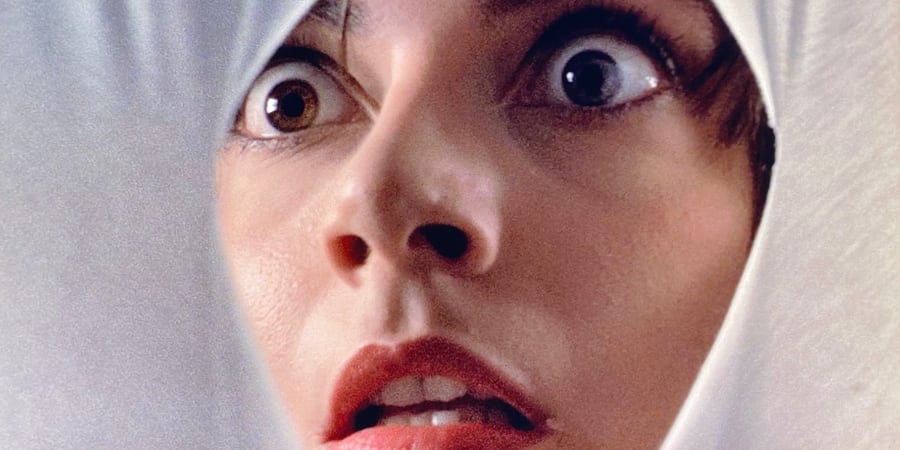
You see different things in a good piece of art as you get older. I wrote about Tenebre in October 2020 for the #31DaysofHorror challenge. I loved it then, and I love it now, but the protagonist is far less likeable than I remember, and the twists more surprising.
Back then, I wrote:
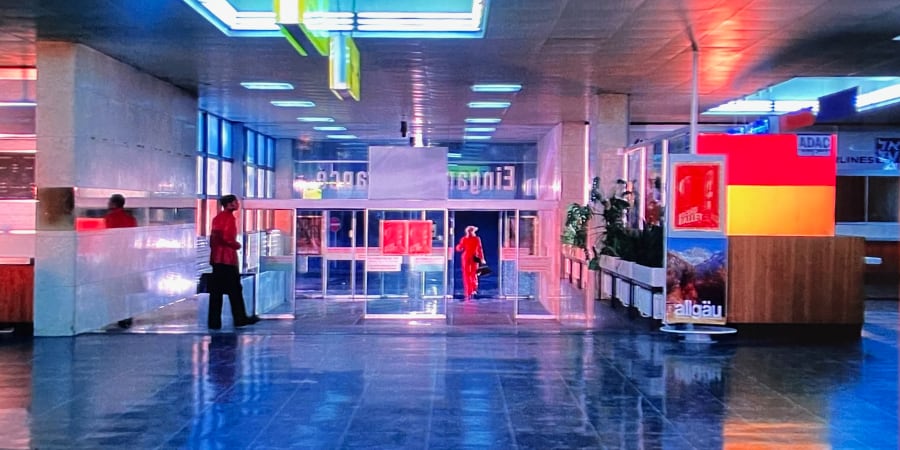
Tenebre is set in Rome, but we could be anywhere, because the story stays in hotel rooms, suburban streets and modernist buildings made of concrete and glass. There are artfully sculpted gardens of stone, water and trees. These locations lend themselves to the roving camera, and Argento likes to play the voyeuristic killer. The most famous scene has the camera drift slowly around the outside of a home, music blaring from a woman’s bedroom, focussing on the roof tiles, the walls, and the window slats, moving from room to room, as the killer takes two victims.
Thriller writer Peter Neal travels to Rome to market his latest book, Tenebrae (which means ‘darkness’), but he arrives to find a serial killer is mimicking in real life the murders in his book. The killer leaves notes under his hotel room door, and Neal gets drawn in to the killer’s game.
Argento knows films are inherently voyeuristic, and is aware of the criticism against him, and while the men die, the women do die in much more elaborate ways. He plays with our expectations, and has a protagonist who takes on the charges of misogyny directly. Giallo films usually have convoluted plots that lose me by the end, but this one makes sense. The set pieces are impressive, the story moves at a pace, the locations are fantastic, and the ending works — this is now one of my favourites.
I would add to this that Peter Neal isn’t interested in helping the police catch the killer at any point until he realises that it might make him look good as a crime writer. He’s another one of Argento’s male, egotistic, emotionally distant antiheroes, although some of the later plot twists make sense of that. There is also in the final scenes one of the all-time great reveals of the location of a killer.
July 10 2024, 21:40
Inferno
If Suspiria was a step away from the narrative rigours of a whodunnit, Inferno is a giant leap, with four (four!) protagonists in two cities — but it starts with a woman, Rose, being sold a rare occult book called The Three Mothers.
Rose wonders if the glamorous but dilapidated New York apartment block she lives in is one of three built for three powerful witches, the others being in Rome and Freiberg (location of Suspiria). She writes to her brother David, a musicology student in Rome, but by the time he arrives she has gone missing, and he sets out to find her.
Inferno looks gorgeous, and it has the signature Argento set pieces, but it’s a big departure from his previous films. The score is less coherent, the events are even more surreal, and the pace is slower, with much time spent following people wandering through baroque hallways. It’s wondrous and frustrating.
The buildings are the real stars of the film. They’re filled with arcane objects, uncanny happenings, collapsed basements, spooky acoustics and levels between levels. The ending is fun, but the beautiful characters are one-dimensional, and the story is ponderous compared with everything that’s come before.
July 07 2024, 10:35
Suspiria
Suspiria is a vivid, colourful dream where death stalks us, out of sight but ever-present. Characters die in complicated and fantastical ways to Goblin’s driving mix of Moog synths, bells, whispered vocals and a drum beat for the ages. And it’s a film filled with strong women. The men are all ineffectual side characters.
Suzy Bannion, an American dance student, arrives on a stormy night at the Tanz Academy in Freiberg, Germany. Initially turned away, she passes a woman fleeing the building who ends up elaborately and gruesomely murdered. Suzy’s attempts to be independent at the Academy don’t last long, and she is quickly sucked into the sinister baroque world of a coven of witches.
The Goblin soundtrack is lauded as one of the greatest of any horror film, and it injects itself aggressively into the story, not just complementing it but as a multiplier, lifting the experience to giddy heights. Argento wanted to do something radical after the murder mysteries he’d become known for. The human killers from previous films are replaced with supernatural ones, and Argento’s artistic ambitions are given full rein, using architecture, lighting, music, camera lenses — whatever he could find to fulfil his vision. It’s completely captivating.
The characters are enjoyably odd, but Alida Valli is sensational as the amusingly-named Miss Tanner, the strict dance instructor who drives the ballet students on, barking orders with sadistic glee. Valli was the luminous Anna Schmidt in The Third Man, and also Louise, the complicit assistant to Dr. Génessier, in Georges Franju’s Eyes Without a Face. It’s a fun reminder of the variety of roles actors can find themselves taking, for many different reasons, over long careers.