
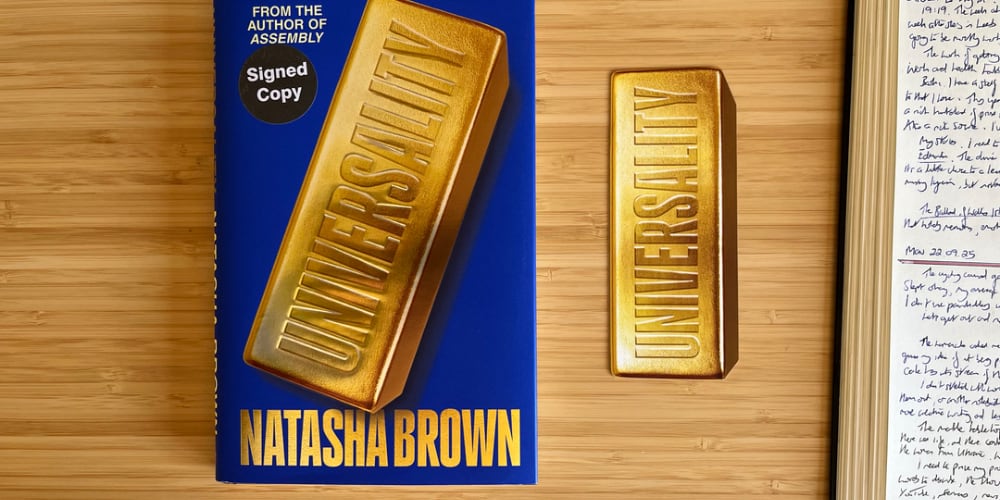
September 22 2025, 20:24
Universality
~30,000 words, featuring several characters at various levels of the media industry.
The novel is in four acts, each from different points of view. It opens with a long magazine article about a young man, Jake, who had disappeared after using a solid gold bar to knock out a squatter on a deserted Yorkshire farm. In the second act we meet author of the article, Hannah, at a dinner party she’s organised. Then we switch to much maligned banker Richard who owned the gold bar (and the empty farm the squatters were on), before we finally meet vitriolic newspaper columnist Lenny at a literary festival to promote her new book about "Woke Capitalism".
After the opening article, each successive section casts new light on what has come before. The tone of Hannah’s article is well struck—not too professional, but engaging and showing some personality. It’s a surprise to meet her at her dinner party and see how abject she feels as a struggling writer in the face of her richer middle class peers. Her old friends are awful, and old flame Martin, is particularly odious, using her to get information he needs for a prestigious interview.
The story comes at class in the British media industry from many directions. Hannah is a freelance writer, and has no connections, no rich parents, no money to fall back on, and to her credit takes a job as a shop assistant to pay the bills instead of leaving London altogether. Her article makes a brief splash, but she is left little better off in career terms afterwards. Her old boyfriend, Martin, is more vicious with his ambition, and has connections. Richard, the banker whose farm the squatters were on, is rich, but has a complicated relationship with family and money and is deeply unhappy. And anti-hero Lenny, the nihilistic provocateur, pulling the strings to get Hannah’s article published, knows how to play the media game, but is continually disrespected and underestimated because of her populist rhetoric.
Hannah’s piece appears in a magazine called Alazon, which is also a type of stock character in ancient Greek plays, an imposter who thinks themselves greater than they are. All of the characters in the story have that quality. Pegasus (!), the charismatic leader of the commune on the farm, uses the term universality to mean a society where everyone is equal. Lenny uses the term universality as similar to relatability; she wants to connect to the largest possible audience without being held to unnecessary and awkward details. Language is flexible. Language is powerful.
Lenny's caustic voice is one of the wonders of the book, and her finale, tearing apart the odious Martin, is a wonder to behold. She's spreading lies and sowing confusion, but it's hard not to cheer her on, because Martin’s slipperiness is somehow worse.
Previous: A Spy in the House of Love | Next: The Men