
October 25 2020, 08:00
Christine (1983)
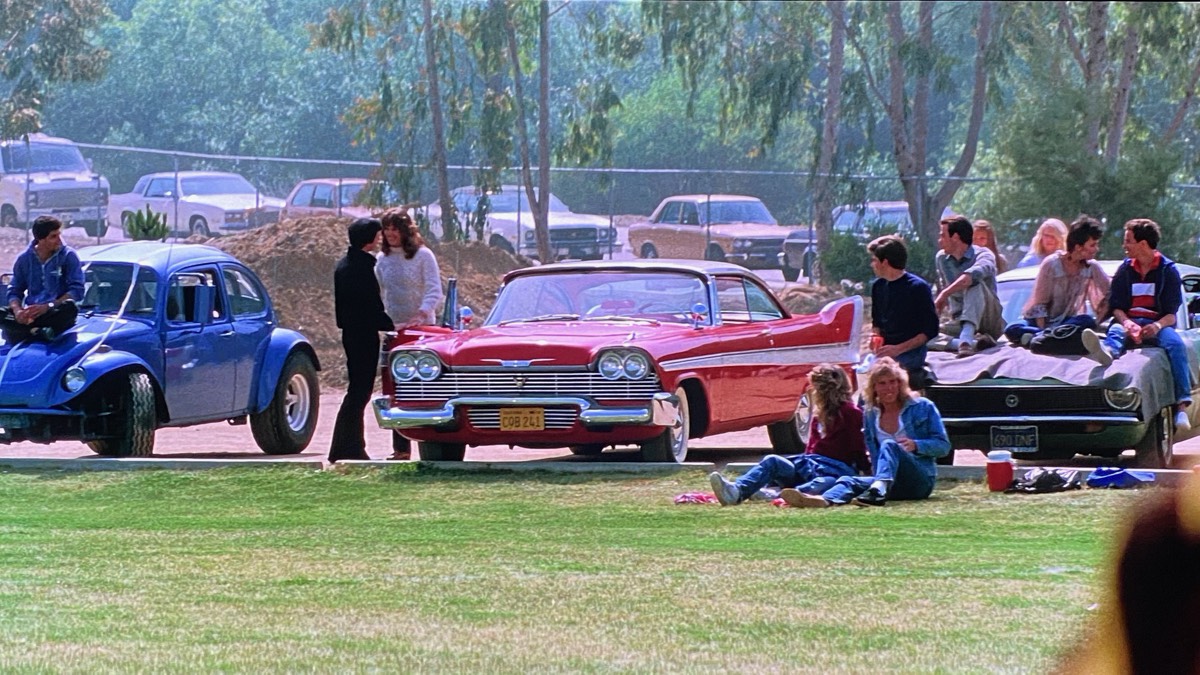
Stephen King is brilliant at weaving vivid teenage experiences into his novels. Christine was one of the formative books of my childhood. The film doesn’t have time to go as deep as the book into the love triangle of Arnie, his best friend Dennis, and new girl Leigh Cabot. This is a horror film first and foremost.
Awkward Arnie and popular high school quarterback Dennis are an odd couple. When Arnie impulsively buys Christine, a dilapidated red-and-white 1957 Plymouth Fury, tension between them mounts, and Arnie’s personality changes. Dennis is the popular one in school, so he is stunned when new girl Leigh chooses the new Arnie over him. But Christine is a jealous and vengeful mistress.
When bully Buddy Repperton gets his gang to trash Christine, and Arnie discovers the wreckage, he realises Christine can fix herself. When he says, ‘Show me’, and stands back to let the car do her thing, it is an intimate, almost sexual act. The car is always more important to him than the girl. The car brings out the worst in Arnie. Like Dr Jekyll and Mr Hyde, Arnie wrestles with his newfound illicit power. Christine channels his unconscious rage and wreaks havoc. It isn’t love. Possessiveness is a power game.
October 24 2020, 08:00
Prom Night (1980)
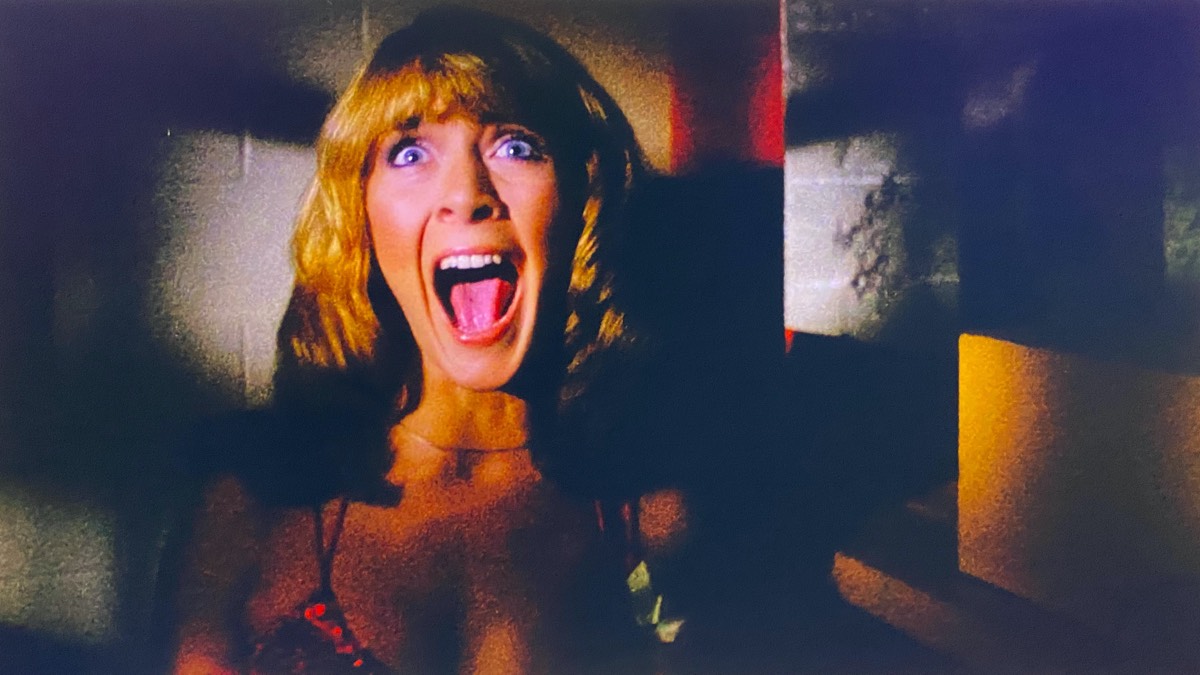
Like Scream’s Ghostface, the killer in Prom Night can be dodged and knocked over. This is not Michael Myers. There is a lot of disco. Jamie Lee Curtis is a fantastic dancer — this role for her comes straight after Halloween and The Fog, so it’s impossible not to compare it with Carpenter’s work, which is unfair. The students all come across as high school kids, and the performances and locations are realistic, but it looks cheap next to Halloween.
Curtis plays Kimberly Hammond, whose sister, Robin, we see killed six years earlier in a bullies’ game which goes horribly wrong. The group of eleven-year-olds — Wendy, Jude, Kelly and Nick — hide what they did, and a local man gets the blame. On their prom night, of course, the man escapes and returns to the scene of the crime.
There are shades of Carrie when bully group leader Wendy plots to ruin Kimberly’s prom, and much of the opening hour is teen drama, but there are some great moments — Kimberly and Nick in an extended dance sequence under the disco lights, the likeable Slick trying to escape the killer by driving his souped-up van in circles, and the awful Lou’s decapitation. The killer is hyperactive and cartoon-like, especially when wielding an axe, and the fighting near the end is unintentionally hilarious, but it does take an unexpectedly moving turn as the credits roll.
October 23 2020, 08:00
A Cure for Wellness (2017)
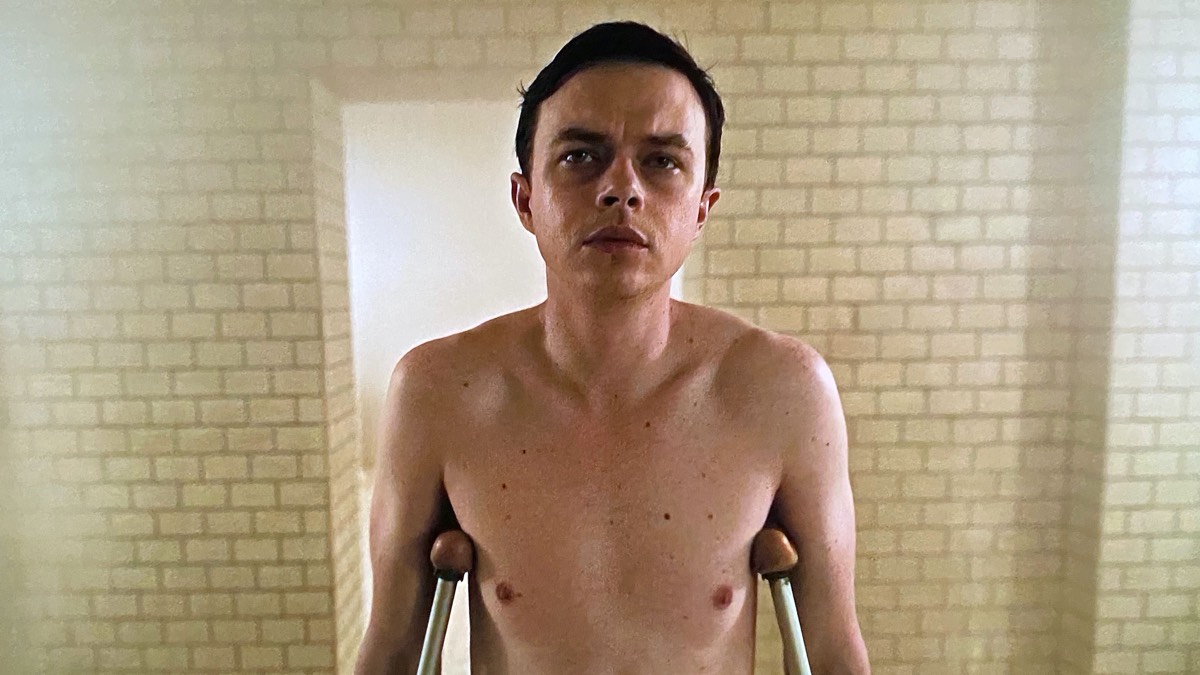
An ambitious young executive, Lockhart, is sent to a Swiss sanitorium to bring back his company’s rogue CEO, Morris Pembroke. The head of the spa, Dr. Heinreich Volmer, drips bad guy charm, but is also the voice of scientific reason. The patients at the spa are semi-retired high-flying executives, seemingly half-mad with wellness rhetoric, convinced they feel healthy, but never healthy enough to leave.
There are elements of Jacob’s Ladder, The Shining, Shutter Island and even Eyes Wide Shut. It’s an adult fairy tale, and Lockhart suffers at every turn. Like the amateur historian who helps him with his questions about the history of the area and is left a desiccated husk, Lockhart is good at puzzles. Before arriving at the spa, Lockhart visits his mother in her down-at-heel retirement home, and she gives him a ceramic ballerina she has painted. She says the ballerinas eyes are closed because she is dreaming. She also tells him he won’t come back from Switzerland. These two thoughts dominate the rest of the film, because once Lockhart starts drinking the water at the spa, we are given the puzzle of working out what is real and what is not.
The vampiric financial services industry, represented by Pembroke and Lockhart, is in conflict with the parasitic wellness industry, but the driver who takes the rich clientele to the spa does his job, like his father did, and that's enough for him. The rowdy teenagers in the village are poor and can only look up at the wealth on the mountain top. Nobody ever leaves the spa, and as Hannah, the mysterious young woman who drifts around the grounds, says — why would anyone want to?
Letterboxd: A Cure for Wellness (2017), dir. Gore Verbinski.
October 22 2020, 08:00
The Dead Center (2019)
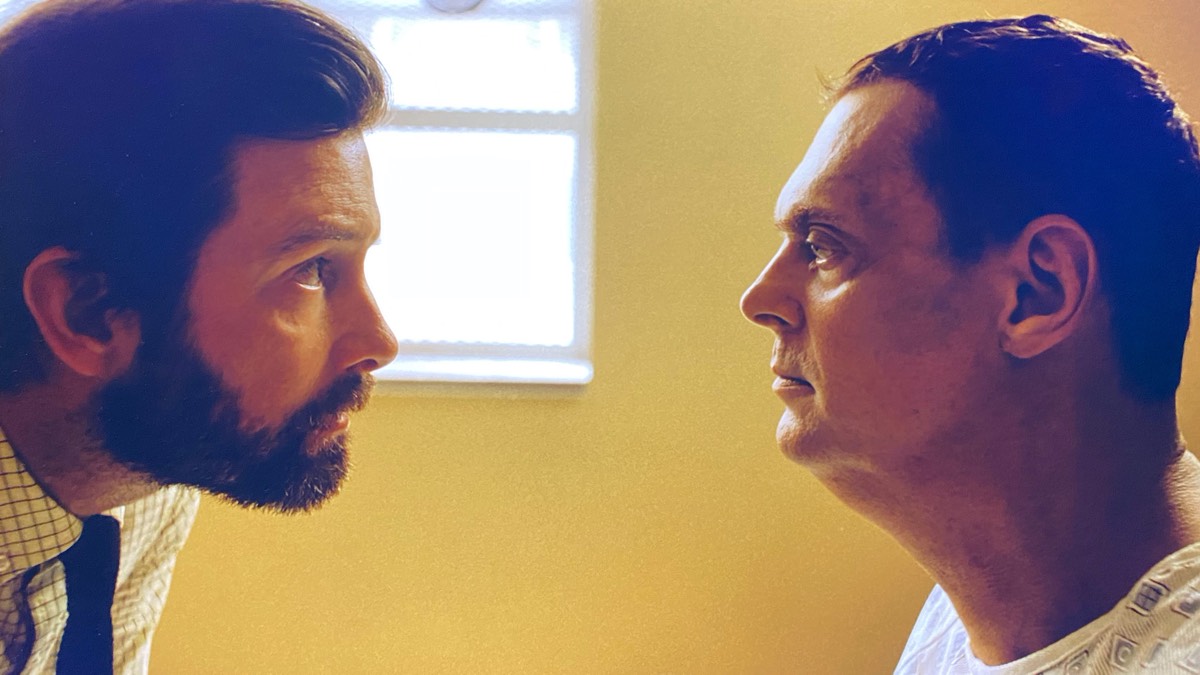
In a Nashville morgue, an unnamed man comes back to life and escapes. Sheriff Edward Graham investigates the missing body, but across town, psychiatrist Daniel Forrester checks the now unresponsive man into a ward at the psychiatric hospital. These two strands interweave, as the sheriff investigates the man’s background and life, and the psychiatrist tries to get the man to remember who he is.
I didn’t know anything about this going into it. With older films, when I’m jotting my thoughts down like this, I don’t worry too much about spoilers, but with newer films I’m more cagey. The psychiatric hospital is wonderfully realistic. Apparently, consultant psychiatrists helped ensure the routines, types of patients, and medical processes were accurate, and that comes across. Daniel is one of those potentially cliched trouble doctors who break the rules, but Shane Carruth is a good enough actor to make us believe in him.
It does have a hospital drama vibe in places, but this is a short, sharp film, less than ninety minutes long, and it zips along. By the final third we suspect what’s coming. Nothing is over-explained, which along with the smart camerawork, gives the film a nice feeling of dread, and it nails the dismount.
October 21 2020, 08:00
It Follows (2015)
The film opens with a wide shot of a leafy suburban street, and we look closely for whatever we think the director wants us to see. Like Jay, we are trained from the start to scan the horizon for trouble. Jay is innocent, a virgin, sensitive to nature, noticing insects and leaves on the trees. After sex with Hugh in his car, she talks about what might be different now, while studying the flowers growing through the concrete. Seconds later, Hugh has chloroformed her, and her childhood is suddenly over. After showing her the thing that will now come after her, he dumps her half-naked in the street and drives off.
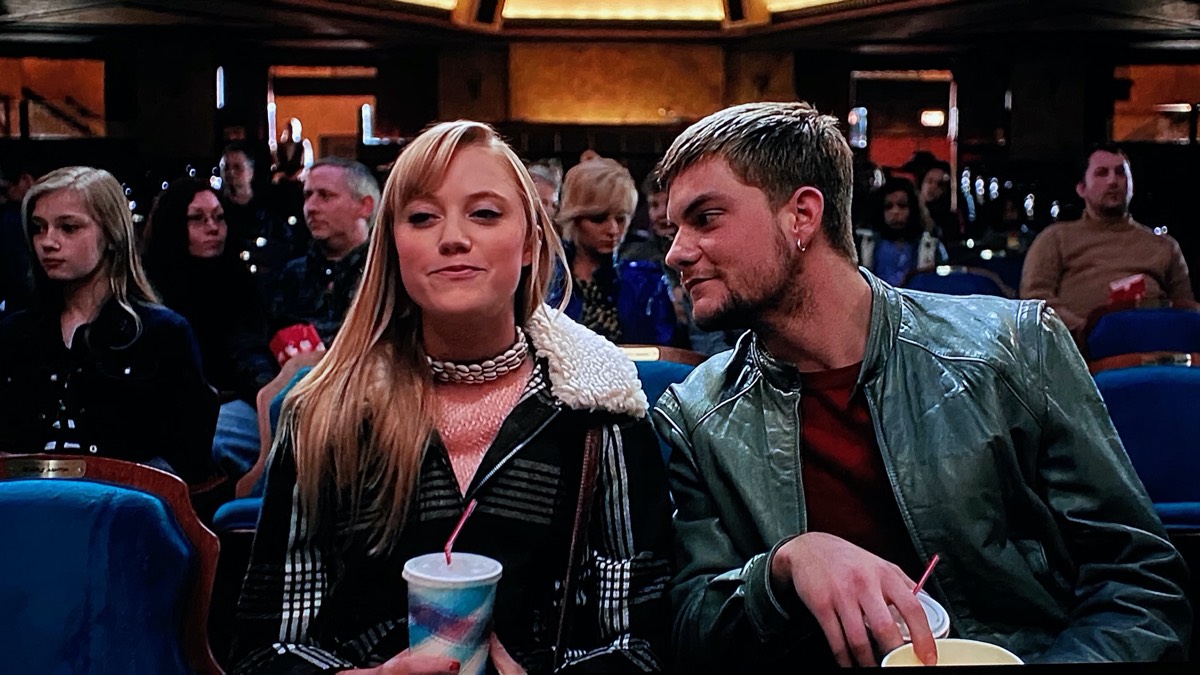
This is a deeply sad film. It’s an allegory for rape, and the emotional aftermath for the victim. At the cinema, Jay and Hugh play the ‘who would you swap places with’ game, but Hugh is trying to swap places with Jay, so it is revealing he chooses the little boy, because he doesn’t know yet about death. Hugh infects Jay with a sexually-transmitted curse in the shape of an endlessly approaching zombie. Jay’s sister, Kelly, and Kelly’s friends, Paul and Yara, try to help. All the young people, including the older, promiscuous Greg, are sweet and kind to each other. We never see Jay’s mother’s face, and her father only shows up as one of the thing’s many violent forms. The adults cannot help her.
Hugh’s assault traumatises Jay, and not only is she not sure what happened, nobody believes her account at first either. Jay finds herself in a different, frightening, more serious world. In a series of skillfully constructed set pieces, we follow Jay’s journey, from innocence, through trauma and support, to some kind of resolution. Passing the curse on buys you time, but doesn’t break the chain. Hugh has condemned her to a life of anxiety (isn’t that the definition of PTSD?) and now she can never know how far death is behind her.
October 20 2020, 08:00
The Beyond (1980)
Returning to Fulciland, The Beyond is more coherent than City of the Living Dead, but of course, it’s still driven by images. Like The Amityville Horror, there is a portal to hell in the basement, and people get mysteriously hurt while working in the house. Like Hellraiser a few years later, the dead return to claim the ones that escape from hell. It’s a film full of ideas, not all of which make narrative sense.
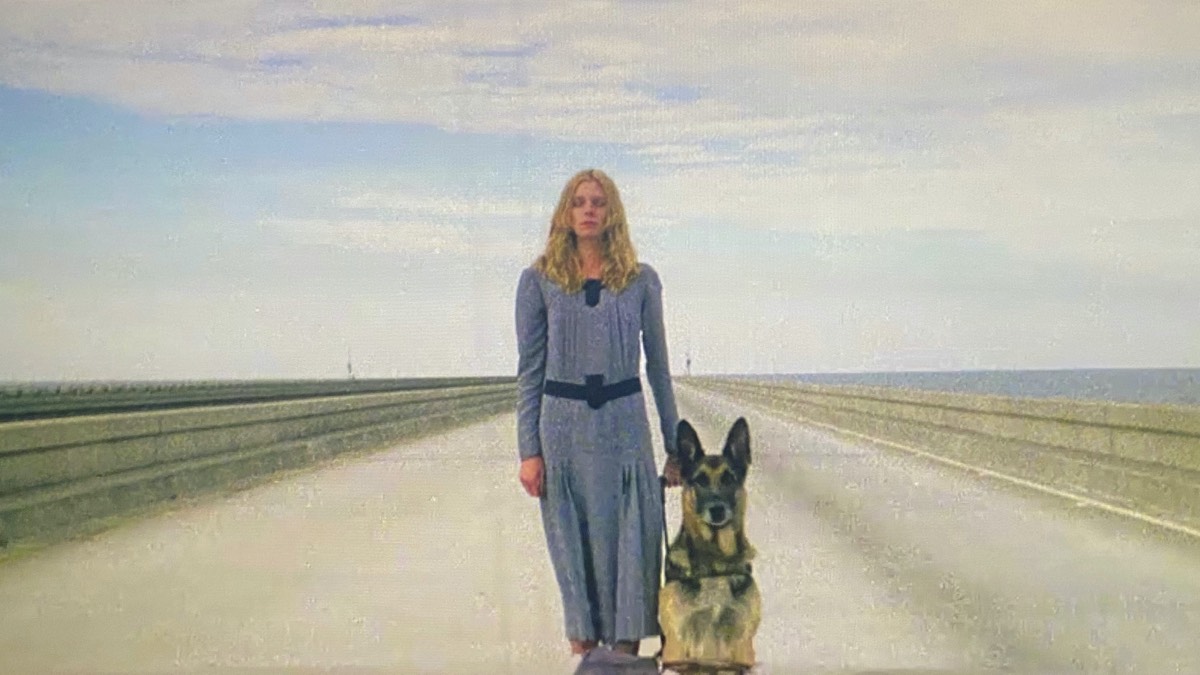
Liza Merrill inherits from her mother the wreck of the Seven Doors Hotel, Louisiana, and plans to renovate it. She doesn’t know that fifty-odd years earlier, a lynch-mob killed an artist, Schweick, who left a painting unfinished in his room. His death was an accidental sacrifice that partially opened one of the seven portals of hell, and her work on the house fully opens it, giving Schweick the chance to return. In her attempts to work out what is going on, she teams up with Dr John McCabe from the local hospital.
There is a lot going on — a blind woman sent from hell with a message, a man eaten alive by tarantulas, maps that change as characters look at them, a doctor who wants to measure the brain waves of corpses — it’s violent and gruesome and icky. You are not given much opportunity to care about the characters. Towards the end, Liza and John get caught in a space-time loop that leads them inexorably to the bleakest ending to a film that I can remember.
October 19 2020, 08:00
#Alive (2020)
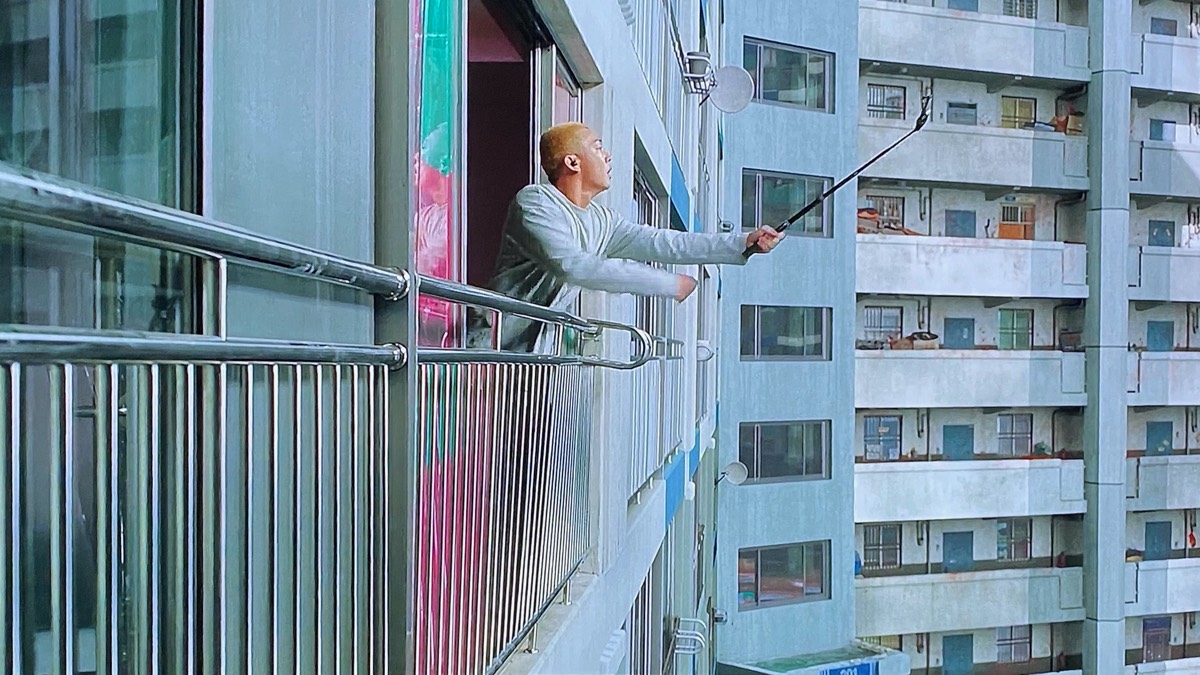
After Fulci’s barely moving undead, the running zombies of #Alive are a bit of a shock. Technology is an ally here, which is refreshing in a horror film, although at the start, Joon-woo seems to be in a semi-infantile state, still living with his parents, and spending most of his spare time playing video games. He lives on the third floor of an eight-storey apartment complex in Seoul. When a zombie virus hits his part of the city, his parents are out, and he barricades himself in the apartment. Alone, he resolves to survive, but having chosen to play his video game over buying food as his mother asked, he has no supplies.
It reminded me strongly of the French film, The Night Eats the World, which has a man holed up alone in a swanky Parisian apartment block after a zombie virus. There are several parallels with it, from how the zombies behave, to survival methods, to the arrival of another person at the mid-point. The apartment block corridors are effectively awful spaces for zombie chases. #Alive brings the extra ingredient of technology into the mix. While he has no mobile signal or internet connection, he can still pilot a drone, and it is the message he posts on social media just before the connections go down that gives him his best chance of survival.
The relationship he strikes up with Yoo-bin, who is holed up in the apartment opposite him, is sweet, and she is the brains in their partnership. It’s a coming-of-age story underneath the standard zombie story tropes. It doesn’t shy away from the desperation and despair Joon-woo experiences, but at heart it’s an action-romance for teenagers, and no worse for that.
October 18 2020, 08:00
The Mummy (1932)
The original Universal horror films are a bit of a blind spot for me. They weren’t on TV in our house, so I have no childhood affinity to them, and once my parents let me watch horror, I was straight into Jaws, The Car, Duel, Piranha — pacy, garish, seventies films. I didn’t go back beyond my father’s earliest favourites, which were films like Invasion of the Body Snatchers, Night of the Hunter, and Psycho.
Two years ago, I made an effort to watch Tod Browning’s Dracula and James Whale’s Frankenstein, but they were more like homework than a pleasure. However, that did mean that as soon as I heard Edward Van Sloan’s voice I saw in his Dr Muller both Van Helsing and Dr Waldman. In The Mummy, it is his belief in Egyptian magic and knowledge of ancient Egypt that keeps the colonial English heroes in the game.
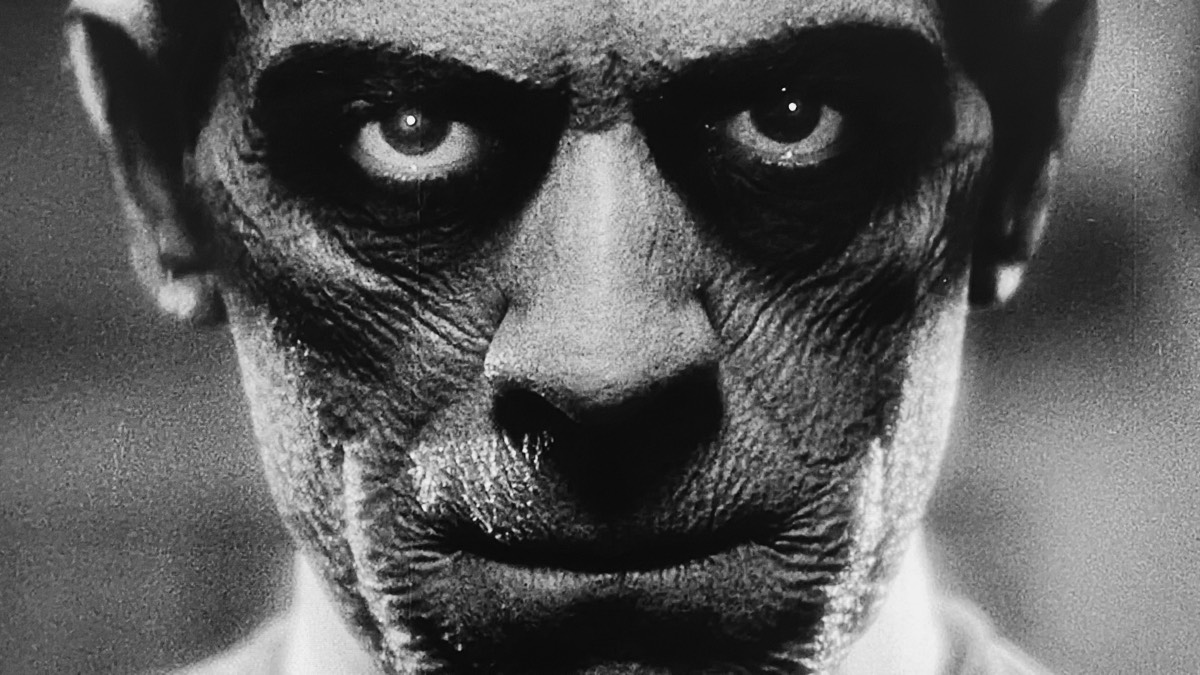
Imhotep has many magical powers, including mind control. Boris Karloff’s stare is a thing to behold. Imhotep tricks the British archaeologists into digging up the tomb of his great love, the princess Anck-su-namun, and ensuring that her remains are displayed in Cairo, not London. The air of arrogant British colonialism is thick, but in this, Imhotep outsmarts the archaeologists, who it seems will do anything in the name of science. Then he goes after Helen Grosvenor, a half-Egyptian British woman in Cairo, who he believes is his love reincarnated.
I suspect with practice, or guidance, I could get more out of films from this period. I’m glad I watched it, but it’s still more like homework.
October 17 2020, 08:00
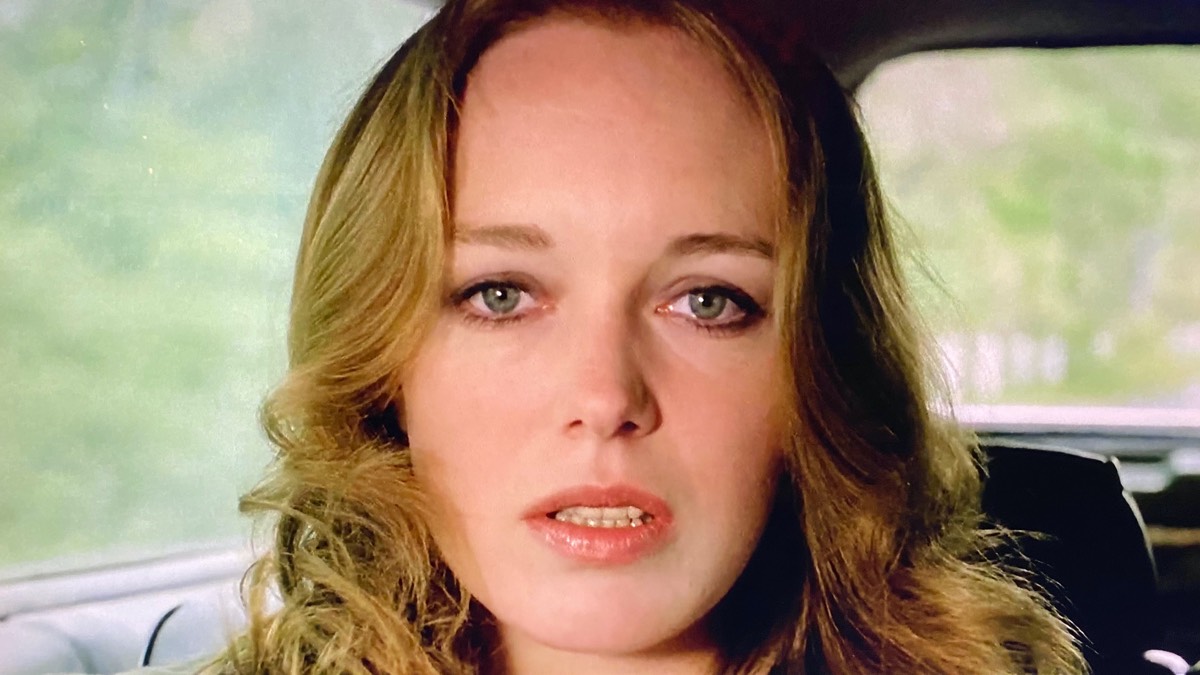
City of the Living Dead (1980)
Zombies really bothered me as a kid. Seeing the insides of the human body spill out was as pure a vision of horror as I could imagine. Guts should not be outside of your body, full stop. I only watched one zombie film, whose title I can’t remember, and the ten minutes I managed of it fucked me up for weeks.
In Dunwich, Massachusetts, a priest, Father Thomas, throws a noose over a tree in a graveyard and hangs himself. This somehow opens the gates of hell. In New York, Mary has a vision of the dead priest at a seance, and collapses as if dead, only to wake up half-buried in her coffin. She is saved by Peter, a reporter, and their investigations lead them to Dunwich, where the dead priest is killing its citizens in grisly ways.
Fulci thrives on disgust and revulsion, but things take their time to get going. Characters talk directly to the camera. Bodies come and go. A dead woman moves around an artists’ house. There are close up shots of eyes. Waves of maggots. Bleeding walls. A jealous father drills the head of a boy he finds with his daughter. The images sneak up on you, then smack you in the face.
Dunwich looks suitably pre-apocalyptic, with mist, strong winds, and empty streets. Much of the population are so pale and odd, they could already by dead. The soundtrack, sound effects and suburban streets reminded me of Michael Jackson’s Thriller — it had to have been an influence. In this strange place, the dynamic of Gerry and Sandra is interesting — he is a therapist who lets his wife wander into his sessions, and Sandra is his patient who he feels free to visit in the middle of the night when she’s frightened. She is an artist and paints strange horned creatures, and monster eyes. He has odd pictures on his office wall too, possibly her work. Does he have any other patients?!
As abject as these films might seem on scuzzy VHS cassettes and tiny television screens, they are never as bad when you go back to them. Fulci sacrifices character development and story for the power of the image. By the end I felt wrung out. Nihilism is exhausting.
Letterboxd: City of the Living Dead (1980), dir. Lucio Fulci.
October 16 2020, 08:00
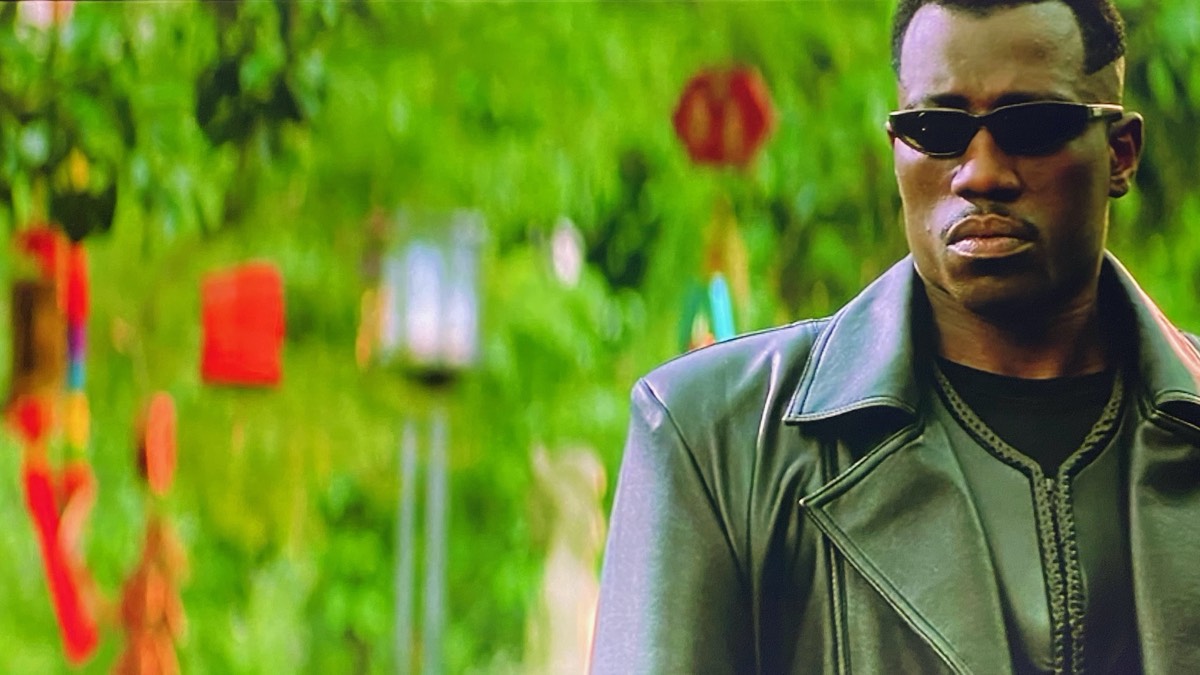
Blade (1998)
The opening sequence is brilliant. A woman lures a man to a party in an abattoir. It’s an aggressive crowd, and when the fire sprinklers come on, it’s not water but blood, and everyone around the man turns into a vampire. Blade arrives to kill as many vampires as he can — his raison d‘etre. It’s thrilling and weird. Vampires now own half of Manhattan. There is a vampire Bible, and a ritual to awaken a blood god. Which makes sense, right? Vampires would worship a blood god.
Blade is like a magical source of future movie ideas. The long black jacket and sunglasses, kung-fu fight sequences, being ‘the chosen one’, and even the black marble hallway fight scene can all be found in The Matrix twelve months later. The flow of blood through an elaborate ancient mechanism to bring an apocalypse appears in The Cabin in the Woods. And while Blade came first, his samurai-like lifestyle, especially the meditation joss sticks and little cushion, whilst laudible, is nowhere near as cool as Forest Whittaker in his pigeon loft in Ghost Dog. Just sayin’.
Blade is also the first of Marvel’s adult superhero films, and we are still seeing that thread unfurl. Wesley Snipes even tried to get a version of Black Panther made before he signed up for Blade. It’s a fun, if empty, blockbuster, with an amazing performance by Stephen Dorff as the baddest of the bad vampires, Deacon Frost. Blade is a hidden cultural phenomenon.