
December 28 2024, 19:57
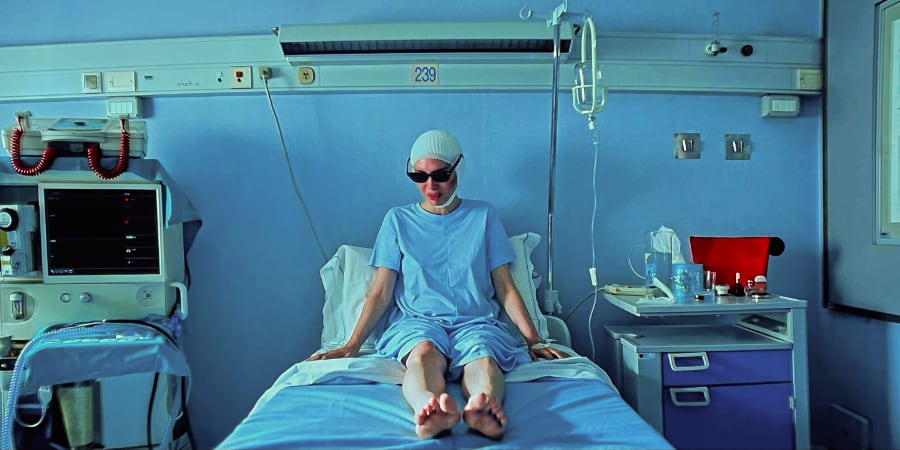
Dark Glasses
Diana, a sex worker, is chased by an unknown assailant, leading to a car accident that kills the parents of a young boy and leaves her blind. She slowly adapts to her new life and temporarily takes in the orphaned boy, but the killer returns to finish the job.
This was the final Dario Argento film in my 2024 challenge and an interesting contrast to what’s come before. Giallo was modern, but still had an otherworldly quality because of the flashbacks and Adrien Brody’s energy in his dual performance. Dracula was a straight-up homage to Hammer. Dark Glasses is a straight thriller that feels like it was made today, but includes classic Argento moves—the blind protagonist and child (as in Cat O’ Nine Tails), a random animal attack (see Inferno), a black-gloved killer, and a pounding soundtrack.
This is Argento reckoning with all the people he’s killed in his films, mostly female, and presenting a more empathic view of what it might be like to survive an attack by one of his murderers. Ilenia Pastorelli does an excellent job of playing a woman who goes through incredible trauma only to have it continue when she’s most vulnerable.
I can’t think of an Argento film before this one where we see an actor really act. That’s quite a statement, right? One of the joys of his earlier films are the lightness of the characters while terrible things happen. People show emotions, but his characters don’t go through an arc—they don’t change. The Stendhal Syndrome’s Detective Anna Manni is the closest I can think of, but Asia Argento was young and relatively inexperienced, and her transformation was from sane to insane. Diana’s world is portrayed sensitively and the horrors of her blindness not ignored.
That realism also makes the film less fun. The initial draw of Dario Argento was the wildness, the unexpected, the ideas, the return always to art, theatre, performance, architecture, and the charismatic faces, the variety of characters, the roving camera. Empathy seems to have replaced experimentation, but that can be no surprise in a director who is eighty-four years old. I wonder if he has another film in him?
December 26 2024, 20:11
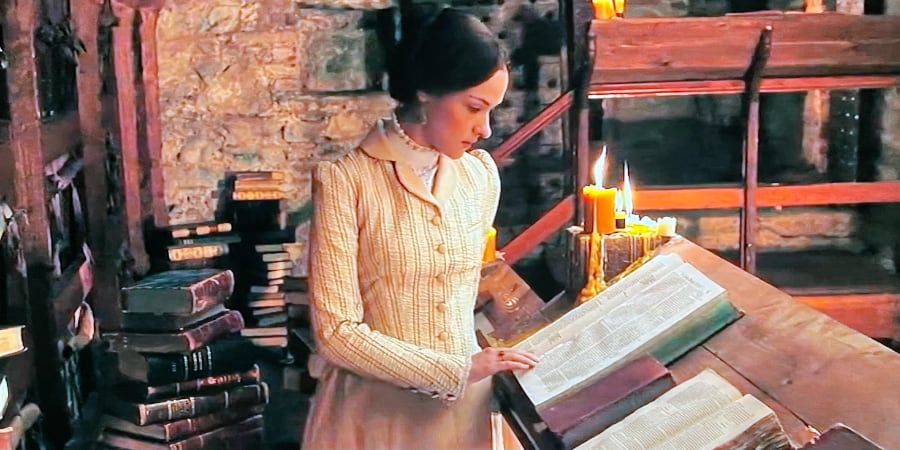
Argento’s Dracula
There’s a moment when Rutger Hauer’s Van Helsing arrives two-thirds in and my spirits lifted because perhaps the film could be saved, but the moment he started to say his lines, I knew it was actually a stake through my heart.
There are shades of Phenomena in the wildlife and insects being sometimes sentient, but here they are in league with the villain. This Count Dracula has lots of powers not given to the 1959 Hammer Dracula, and seems closer to the original novel. He can project an image of himself into others’ minds, has telekinesis, can transform into animals, and mesmerise people to do his will.
I wonder what changed between the rather good Mother of Tears in 2007, the troubled (and terrible) Giallo in 2009, and this monstrosity. It was made in 3D, which might explain the bad CGI. Perhaps they were the bits that would have come out of the screen. The scene where Dracula is a seven-foot preying mantis and ripping a man to pieces in a hallway wouldn’t look good in any format. I don’t know what happened. Was there no money? Did something go wrong behind the scenes? What’s the story behind this film?
December 24 2024, 11:32
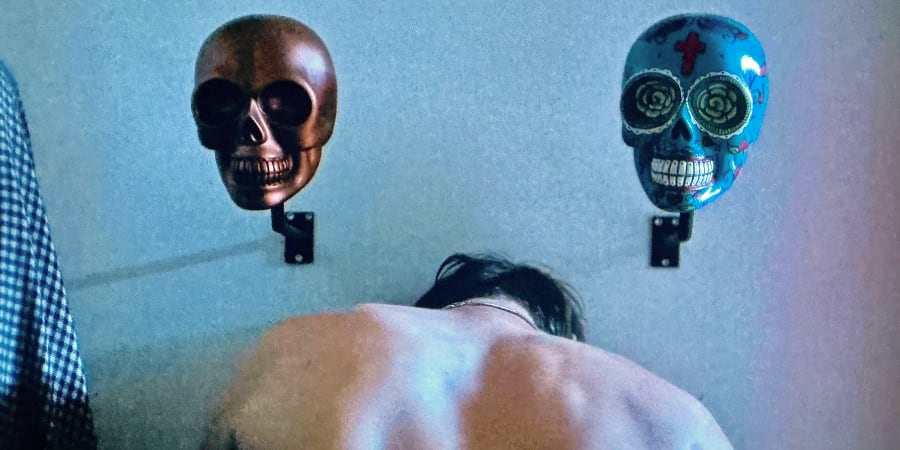
MadS
Romain tries a new drug from his dealer before going to a house party in the suburbs of a French city. On the way he picks up an injured woman covered in bandages who can’t speak and is in distress. From there things get progressively darker as he tries to work out if the drug is playing tricks on his mind or if there is an infectious plague sweeping across the city.
As an older guy, watching young people freak out and lose control of their minds and bodies is upsetting. The performances are naturalistic and the camera follows them closely, over their shoulders, in their faces, constantly moving and making it feel like a found footage film. It looks as if it was shot in one take, moving from house to house by foot, on bikes and in cars. Once you get used to the kinetic style it sweeps you along on its nightmarish current.
The four lead actors are all excellent. Romain’s girlfriend Julie has an extended breakdown in the toilet at a bar that shows how it might feel to see your body become something alien and how the voices of the infection might close in to make you do violent things. It’s disturbing, but also a creative and fun new take on a zombie-style apocalypse.
December 23 2024, 17:26
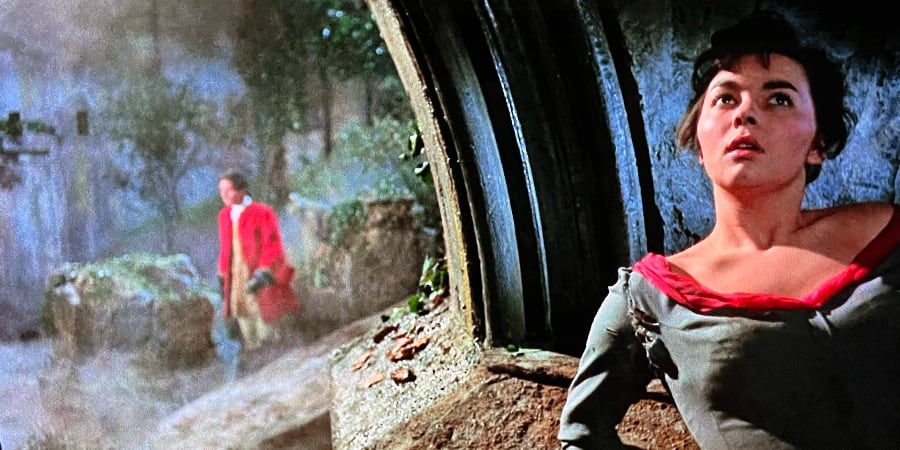
The Hound of the Baskervilles
Renowned detective Sherlock Holmes sends his friend and helper Doctor Watson to Dartmoor to protect Sir Henry Baskerville, new owner of Baskerville Hall, after his uncle dies in mysterious circumstances. There is a convict on the loose, the villagers are not friendly, and there might be a monstrous hound prowling the moors.
This was a dose of good cheer after watching Dario Argento’s Giallo. A Hammer Studios production, Peter Cushing, André Morell and Christoper Lee, as well as a supporting cast of luminaries, play off each other beautifully. Fisher made this not long after Dracula, and the sets and costumes are similarly lush.
The opening is surprisingly vicious. I couldn’t remember the original Conan Doyle story well enough to recognise changes to it, but I was surprised at the working class anger driving the core of the story. Everything British has class in the mix, and as clearly evil as the plot to kill Sir Henry is, the ruling classes (from Sir Henry to the local Bishop and even Holmes) have a contemptuous streak, and I couldn’t help being a little on the side of the ones who had been stolen from and were seeking revenge.
December 23 2024, 13:21
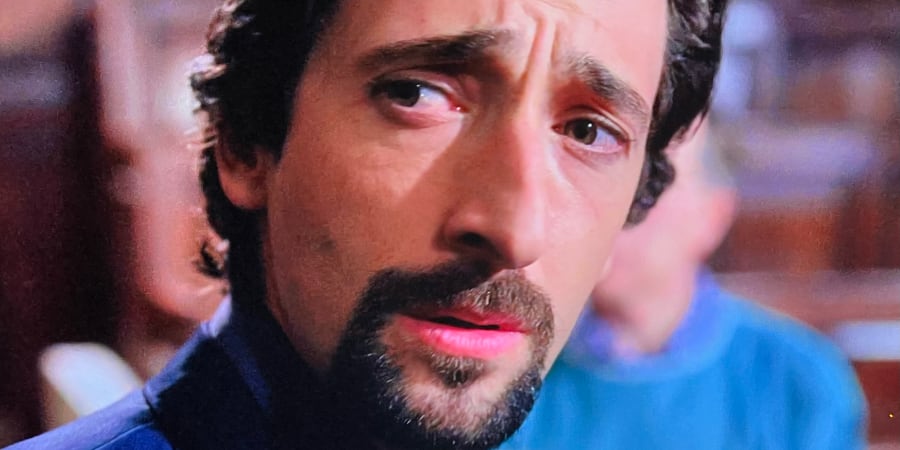
Giallo
Inspector Enzo Avolfi specialises in finding serial killers. In Turin, someone is cutting up and killing beautiful young women, and when model Celine fails to arrive to meet her sister, Linda, Avolfi has to help her search the city before Celine becomes another victim.
Could you have a more generic plot than that? Perhaps after finishing Mother of Tears Argento wanted something simpler to work with. Ironically, this isn’t a giallo, it’s closer to Silence of the Lambs or Seven in its story structure. We still get flashbacks to childhood that reveal motivation, but the inspector gets them far more than the killer, who has a deformed face and the rather obvious desire to deface beauty in others.
The script has nothing to it. There are several gratuitously ugly torture scenes whose only purpose seems to be to make sure we know how fucked up the killer is. Once we see him sucking on a baby’s dummy and masturbating to photos of cut up faces, it’s fair to say no more proof-of-fucked-up-ness is required. Put some story in there instead, screenwriters!
Adrien Brody played both the killer and the cop, and he also sued the producers of the film for not paying his full fee, blocking it from being released in the US. Argento has disavowed the film, saying he didn’t like the producer’s cut of it, but he also was saying at the time he felt blacklisted in Hollywood because it couldn’t get distribution. It’s a depressing state of affairs all around.
December 22 2024, 07:50
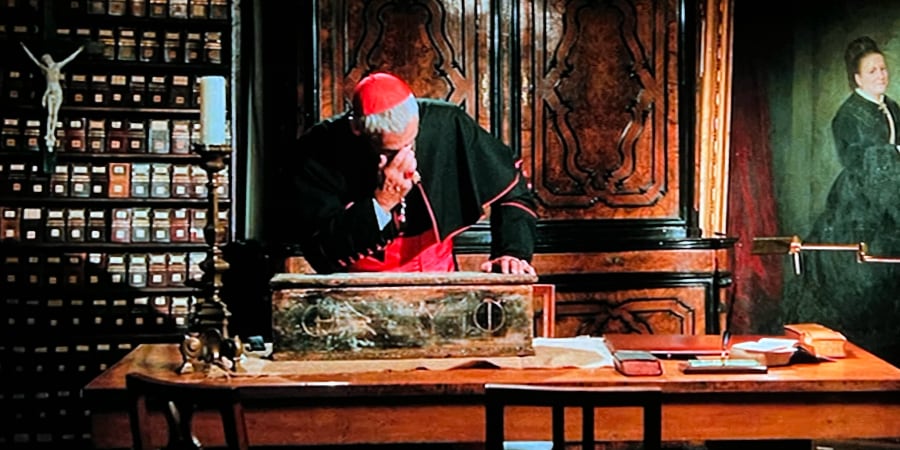
Mother of Tears
A grave containing a rune-covered box is discovered outside a churchyard in Rome. Art restoration student Sarah Landy helps her tutor open the box, which contains magical artifacts including a tunic that bestows great power to the still-alive medieval witch Mater Lachrymarum. Landy escapes an attack by demonic creatures and goes on the run as Rome falls into chaos, but Landy learns she is the daughter of a powerful witch and might be able to stop Mater Lachrymarum from bringing the second age of magic.
That’s a lot of plot. Also, the police are chasing Sarah, a gang of partying goth witches are roaming the city, Sarah’s friend and lover Michael loses his son to the Mater, an alchemist gets involved, and Sarah’s dead mother can talk to her from another realm. Dario Argento and Daria Nicolodi were inspired to write the “Three Mothers” films (Suspiria, Inferno, Mother of Tears) by Thomas de Quincey’s 1845 prose poetry collection, Suspiria de Profundis. That explains the involved and detailed lore that the characters discuss, which adds a layer of mystery and weight to the story, but also can be pretty confusing.
There’s a flavour of The Omen to the scenes Rome residents start doing terrible things. The brutality of the violence seems like an attempt to capture medieval tortures mixed with a vision of hell seen as the cruelties people will inflict on each other. The Mater likes to lick the tears from her tortured victims.
There are a few Argento flourishes with the camera, and towards the end there’s a subtle variation of the original Suspiria soundtrack by Goblin, which is fun. It’s a flawed film, but full of energy and life, and I respect a trilogy of films that are in the same universe with the same overarching story, but which are stylistically and in the pacing of things so different.
December 20 2024, 15:22
A true note
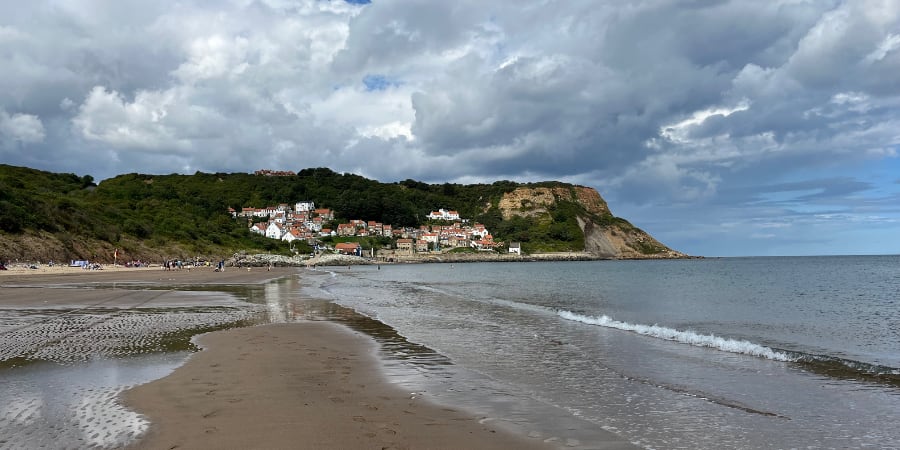
I called this website ‘Notes from the Peninsula’ with the intention of posting personal thoughts and mixing in reports from a character on a quixotic quest on the coast of an imagined peninsula. The latter hasn’t happened. Instead, I’ve continued to post mini reviews of horror films under the guise of my Dario Argento project and the made up social media challenge 31 Days of Black Xmas.
That’s partly because I don’t want to publish fiction in the same loosey-goosey way I post about my life and the films I’ve seen. I consider blog posts and Twitter Bluesky to be ephemeral. They are a way to process things. They will never get pulled into anything with an ISBN. Stories have more weight to them, at least in my head, because the publishing industry, competitions, submissions, all that, has always considered stories appearing on websites as being published (which is, of course, accurate), and so disqualifying from further attention, even if you threw it up on your website without much thought and nobody has read it.
I still like the idea of using a website as part of the reader’s story experience. It’d be there if people wanted more after finishing the ISBN’d works, it would be useful for marketing before and after publication, and it could even be part of the process of my writing as a whole. I believe Twitter gave The Complex its wings in 2019. Being a persona online is part of the game.
Vladimir Nabokov wrote the short novel Pnin in parallel with Lolita, which came out a year later. He wasn’t afraid of a little literary experimentation. Short stories can be playgrounds for voices, ideas, themes and stylistic choices, and so lay the groundwork for longer pieces. Ideas can pollinate each other. A theme can become more or less interesting over time. That aspect of my writing practice is currently weak.
I work in software, I started as a web designer, and I loved blogs when they took off, so it’s a natural extension for me to imagine a website, social media, blog posts, story fragments, short stories and novels as part of a creative ecosystem. That doesn’t mean it’ll work, it could very easily become a distraction from writing, but I haven’t given up on the idea yet.
December 16 2024, 20:41
Maniac Cop
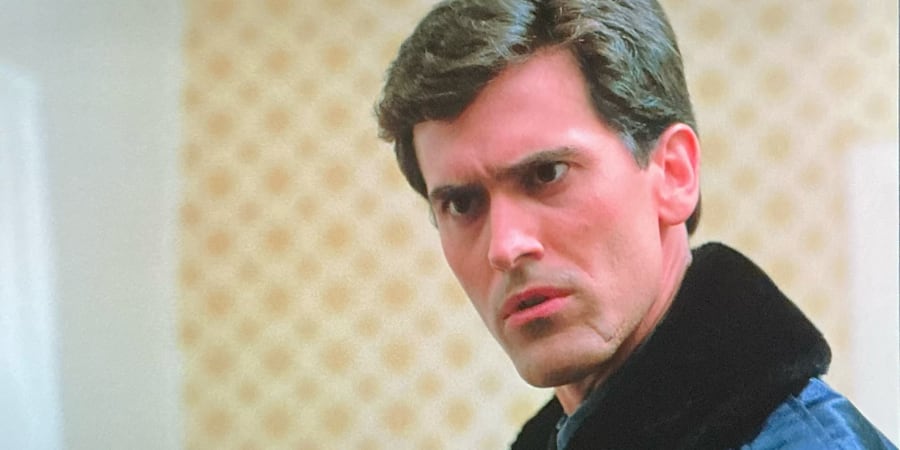
The VHS cover for Maniac Cop was iconic to video shop-haunting teens like me who were too young to rent it, not really interested in a New York police film anyway, but saw it in every horror section. I did not know Bruce Campbell was one of the stars, although it’s hard to know if Evil Dead 2, which came out in 1987, had taken off at this point, so he might just have needed a gig.
Tom Atkins plays Tom Atkins as detective Frank McCrae, hunting a mysterious police officer who’s killing innocent people on the streets of New York. He believes two-timing officer Jack Forrest (Bruce Campbell) has been set up for the murders and enlists the help of Forrest’s girlfriend, Teresa, also a cop, to hunt the real killer down. But is the killer alive or dead?
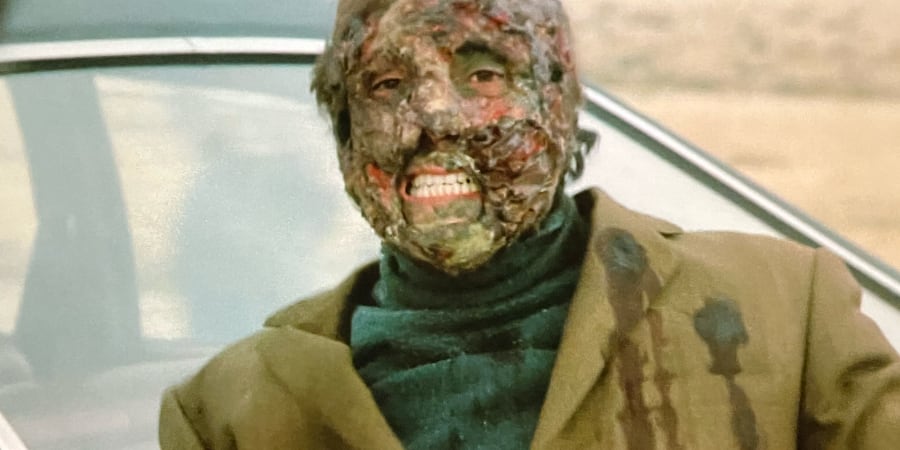
The script by Larry Cohen is awful, but it’s directed competently and the acting talent does a great job with what’s there. The maniac cop’s face is cheap and cheerful in HD—they wisely hide it until close to the end. The final car chase is impressive but, you know, none of it makes any sense. Somehow, I still had a good time.
December 16 2024, 07:11
Nightmare City
A radiation incident is reported in an anonymous Italian city moments before a military plane lands at the civilian airport. Mutant humans pour out and begin a city-wide massacre, killing indiscriminately, drinking victims blood, and infecting everyone who manages to survive.
The most surprising and entertaining part of this film is the frenzy with which the mutants go at innocent bystanders, using whatever implements are to hand, seemingly impervious to bullets, leaping and mauling—if you told me the mutants were from a musical or dance company, I would believe you. It’s fun!
The “radiation” spreads like the rage virus in Danny Boyle’s 28 Days Later. Lenzi’s cameras are constantly moving around the action, zooming and panning, and he loves to end a kill with a shot of a mutant wiping his mouth with satisfaction, or rolling his eyes as he looks for his next victim.
The standout scene is the mutant takeover of a TV station where dancers in aerobics outfits are murdered with ridiculous gusto, although there are several other set pieces just like it. The pace is relentless. When things do slow down, ideas are touted about why this is happening, and even in 1980 they knew mankind couldn’t be trusted with the increasing powers of technology.
At the beginning of the film, Jessica, the artist girlfriend of General Warren, unveils a bust she’s working on that makes him look like a mutant. People in the late seventies were frightened of nuclear power and nuclear war. Her work is a premonition of what is to come. Jessica’s studio is full of strange sculptures and paintings. Dario Argento would have approved.
December 15 2024, 13:04
In a Violent Nature
It’s rare that a film comes along in the horror space and asks questions about the form. Cabin in the Woods did it back in 2011, and this does it with the slasher genre, subverting its conventions in pointed and interesting ways. I knew too much in advance of seeing this for it to be a surprise—I can imagine this would have been even more impactful if I’d gone in blind.
A group of teens explore woods where a man, Johnny, was killed decades before, and find a locket hanging on a pipe in an abandoned hut. One of them takes the locket for his girlfriend, not realising it’s on Johnny’s grave. Johnny climbs out of the earth to methodically track the teens through the woods to get the locket back, picking them off in increasingly violent ways.
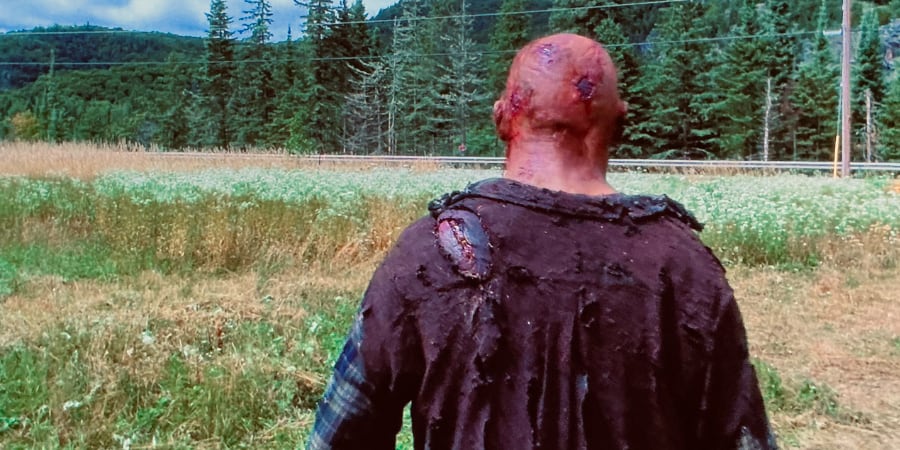
The camera tracks Johnny from behind for most of the film. It’s a video game point of view that goes back to the original Lara Croft. Nature is ever-present on the soundtrack, with bird calls, the crunch of grass underfoot, wind in the trees, the buzz of flies, but all Johnny is listening for are human voices and car engines. At the ranger station he looks at the displays and lifts a photograph. When he walks into a house and sees a similar locket, he remembers his father giving it to him as a symbol of love from his mother.
The only character of note amongst the teens is Kris, accidental holder of the locket, who sees Johnny’s bottomless pool of rage at the locket’s theft, and who wisely leaves it for him to collect. On the road, she’s picked up by a woman who tells a story about the random violence of bears, but that’s a misdirection—we’ve seen the killer is not random, has suffered terrible losses, and his fury doesn’t stop even in death.