
Blog
It feels like a small act of resistance to publish a blog these days. It’s a quiet place on the internet with a domain name I own, away from algorithms and the ever-updating news. This is a static website built with Eleventy, which keeps it secure and fast, but also means it’s not like Wordpress—there are no comments or likes on posts, which frankly is a relief.
December 08 2025, 22:07
The Shrouds
Director: David Cronenberg
Release year: 2024
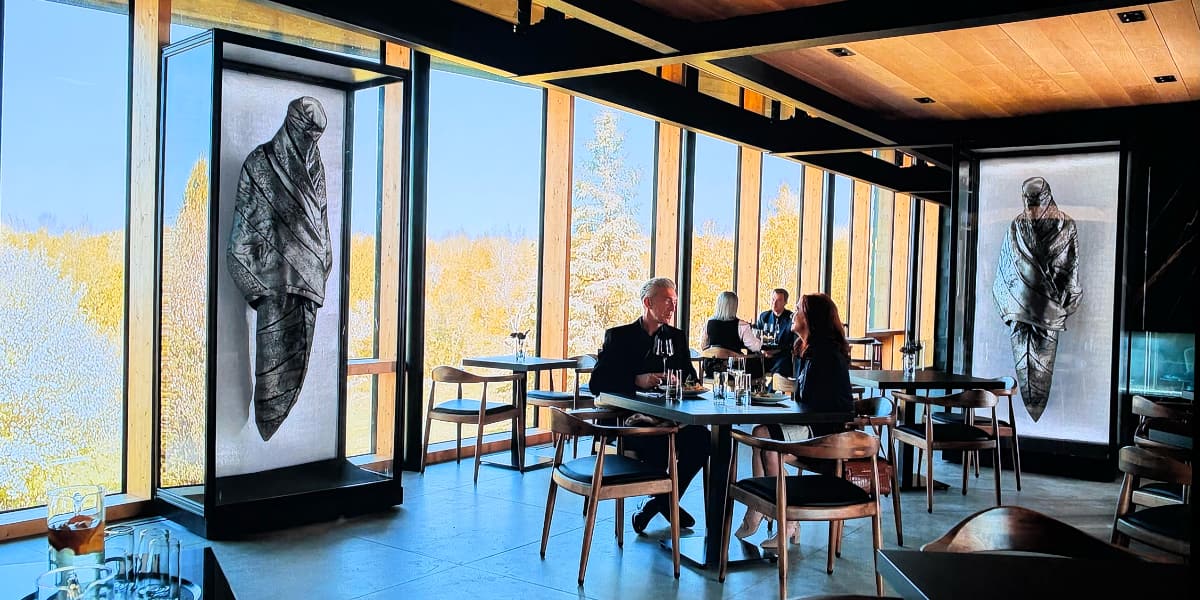
Karsh Relikh part-owns GraveTech, a company that wraps up dead bodies in a material that allows the living to view it in its grave. His wife, Becca, died of cancer, but five years on, through the technology, he notices mysterious growths on her decomposing body. Soon after, the graveyard is seriously damaged, the technology of the graves hacked, and Karsh’s business hangs in the balance.
David Cronenberg wrote this film after the death of his wife, Carolyn, in 2017, but has said there is no catharsis for him in his art. In grief, we suffer, but in The Shrouds there is also plenty of life, humour and sex. Karsh wants to keep his wife’s memory alive by observing her body in the ground as it decomposes. At one point, he tries on one of the shrouds to see what it might feel like for her, and we see him, alone, wrapped in material, looking (and feeling) ridiculous. It’s a fatally flawed enterprise.
To investigate the destruction at the cemetery, Karsh asks his brother-in-law, professional hacker Maury, for help. Maury is paranoid and the ex-husband of Becca’s sister, Terry, who is sexually aroused by conspiracy theories. Karsh is pulled into the strange inner workings of Maury and Terry’s broken marriage, and they send him on a rollercoaster ride of theories involving the Chinese government, Russian spies, Hungarian businessmen, and Icelandic eco-terrorists.
In his dreams, Karsh continues to see Becca in their bedroom, slowly deteriorating from her treatments, but still hungry for love and to be sexually desired. The awkward, absurd, terrible realities of watching someone you love die is captured in the deep oddness of how the people in this film interact. The dialogue feels unnatural and the performances are slightly stilted— the characters often say outrageous things to each other and barely bat an eyelid. Karsh often falls asleep, and in a way the whole film is like a dream, completely unlike real life, and at the same time expressing something true.
December 06 2025, 20:50
Cloud
Director: Kiyoshi Kurosawa
Release year: 2024
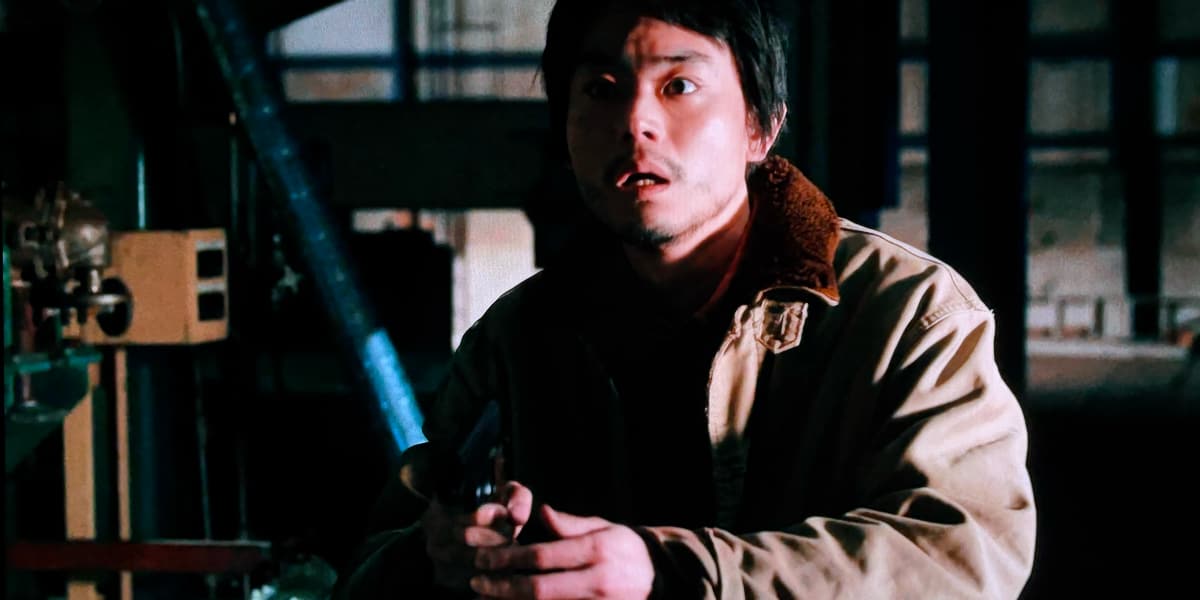
Ryōsuke Yoshii buys and sells things on the internet. He has a knack for sensing what’s valuable to the market, then buying cheap and coldly selling for enormous profits. He escapes Tokyo with girlfriend Akiko to find more space for his wares, cutting off his boss and other business associates to do it, but his insensitivity makes him enemies, and a group of them track him down for revenge.
The first half of the film shows Yoshii’s life as an online reseller, buying and selling on an auction website, collecting boxes of anonymous products, staring at a computer screen like he’s betting at machines in a casino. He’s always calculating the options to make money. It’s like in the film Wall Street, where the traders make money by destroying businesses and livelihoods. Yoshii doesn’t care if his goods are real or fake, safe or harmful, as long as they are sold quickly. He seems completely disassociated from the feelings of the people around him.
This unempathic, blank affect, along with a camera that, as in Kurosawa’s earlier films, Pulse and Cure, makes the empty spaces behind characters feel threatening, creates a deep sense of dread. Yushii’s ex-boss represents the straight road of business, and at the start of the film wants to take Yoshii under his wing, but in the film’s second half he shows up with a shotgun and a gang in tow. Things take a turn away from horror and more into a mixture of thriller and black comedy. This didn’t work as well for me.
Yoshii’s new assistant, Sano, emerges as a real-world gangland counterpoint to the motley group of kidnappers. Sano’s easy violence becomes a path for Yoshii to follow and they gradually pick off the gang in an abandoned warehouse. It’s like an awkward, slow video game. The comparison between online and real-world violence is clear, and by the end Yoshii realises his immoral actions have set him on the path to hell.
December 01 2025, 20:07
Demons
Director: Lamberto Bava
Release year: 1985
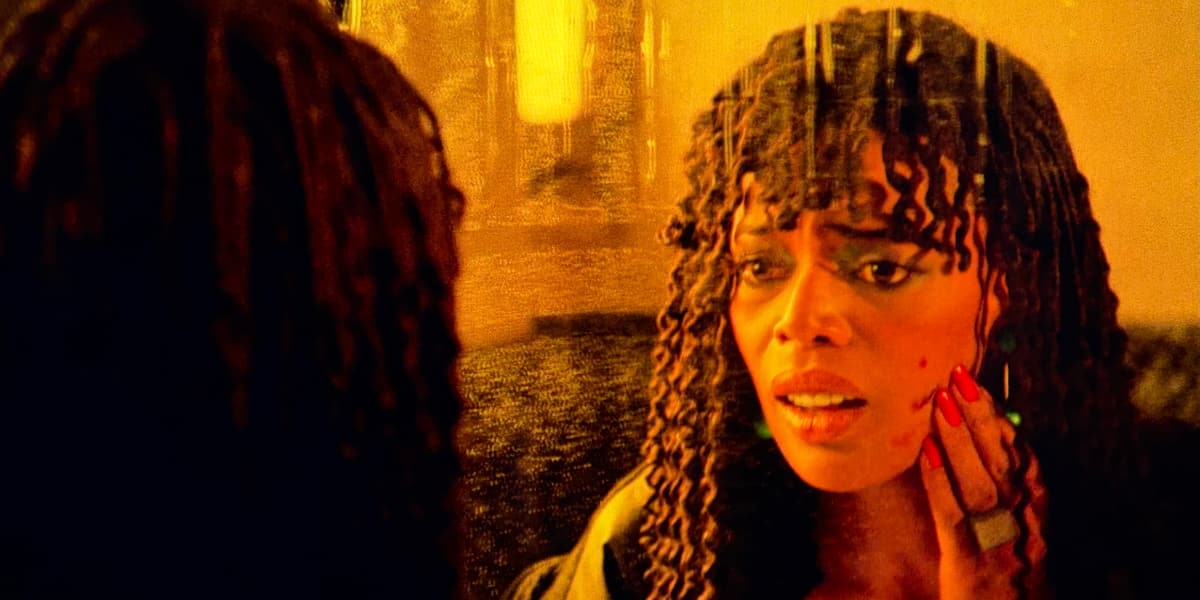
Music student Cheryl accepts tickets to a film event at an old cinema from a man in a demon mask. She takes her friend Hannah, and they hook up with two boys to watch the start of a horror movie. In it, two similarly dressed couples disturb the grave of Nostradamus and uncover a demon mask. Events in the film are mirrored in the cinema, leading to demons being released and running amok.
I found lots to love here. The people at the cinema are a fun mix of clichéd teens and more realistic adults that don’t act as you might expect. The demons are gloopy and scary, closer to running zombies than demons, converting humans with a slash of their talons. The venue is a fun mix of art deco and eighties trash decor, matched by a synth score and slew of fun eighties rock needles drops.
The dialogue is cheesy, and the acting is so-so, but you also get Billy Idol’s White Wedding kicking in while a man on a motorbike rides around the cinema stalls slaying chasing zombies with a samurai sword. The film within a film idea felt unexpectedly fresh, helped by the maximalist tone. It’s short, tightly edited, and ultimately a splash of gory joy that doesn’t ask much of the viewer except to meet it where it is.

November 07 2025, 15:29
November mood
I’m between a couple of unusual (for me) adventures and recovering from a cold. We flew to Lisbon for three nights with our daughter—she’s into marine conservation, and the Oceanário de Lisboa is the second-biggest aquarium in the world. It’s a beautiful city. I was worried about the hills, but doing the strength work all summer served me well. On the flight out I must have picked up a virus, because within hours of getting home my throat started to hurt. It wasn’t Covid, but I haven’t had a cold in over a year so I was comically grumpy about it.
Next week is the Abertoir Film Festival, a.k.a., THE INTERNATIONAL HORROR FESTIVAL OF WALES, in Aberystwyth. This will be my first time at a horror film festival, and my work-in-progress novel has one, so it’s both for pleasure and research. The mix of the old and the new is particularly exciting. They’re showing BRIDE OF FRANKENSTEIN, EYES WITHOUT A FACE, THE GHOST, a documentary on the making of Michael Mann’s THE KEEP, an in-person show with Garth Marenghi on the opening night, talks on the Gothic in video games, a pub quiz, famous faces from the seventies... I’m vibrating thinking about it.
Until leaving for Lisbon, all my creative projects were ticking along well. Writing, guitar, reading, strength. No stress, just doing a bit each day. The local swimming pool closed because a pump failed, so I haven’t swum since September. That’s a bit of a blow. I’m sure my muscles will remember what to do when the time comes.
That‘s where I’m at. No dramas. I’m trying to create a stronger connection with my unconscious flow. My Bluesky account feels pretty dry and dull. If I’m worried at all, it’s that I’m too busy in the shallows and not going deep enough. No dreams, either. Well, unconscious, I’m open to a dream if you’ve got one for me.
August 29 2025, 20:23
Summer’s end
I’ve started watching the Met Office YouTube channel, perhaps because I know autumn is coming and I want to prepare for it, or it could be because the more unpredictable weather represents my return to work, big new projects, my daughter starting A-levels, and a new phase in my life.
The summer has been a fascinating experiment in broadening my creative horizons. I don’t want to cede the ground I’ve won to more mundane 9-to-5 pressures. It might be unwise, it might not, but I’m going to try to continue with the writing, reading, guitar practice and swimming lessons in September. I’m not going to take on my usual film challenge in October, which I would be preparing for now. This is a concession.
Amie McNee’s book, We Need Your Art, was a valuable jolt of reason and a reminder that procrastination is fear beneath the surface, and while there have been many valid reasons not to prioritise writing over the last few years, none of them are in play now. She proposes restarting the habit of creating every day by setting the bar so low that it would be embarrassing not to accomplish it. For me, that’s 100 words a day, and I write more, but 100 words is my target. It’s working. I’ve gone back to the beginning of the novel and I’m making it into a functional first draft. In parallel, I’m reading novels (short ones, to keep me motivated) for the fun of it, but also to research structure and voice.
Writing regularly again is a big deal. It’s ironic that doing more diverse projects, not fewer, was the key to unlocking the writing. Guitar and piano use a different part of my brain. Understanding my biology to improve my hip pain is a practical science. Swimming is a physical skill. I think learning fresh skills reminded my of my abilities and potency. I’m a learner by nature. Always have been.
August 27 2025, 20:05
Matt and Mara
Director: Kazik Radwanski
Release year: 2024
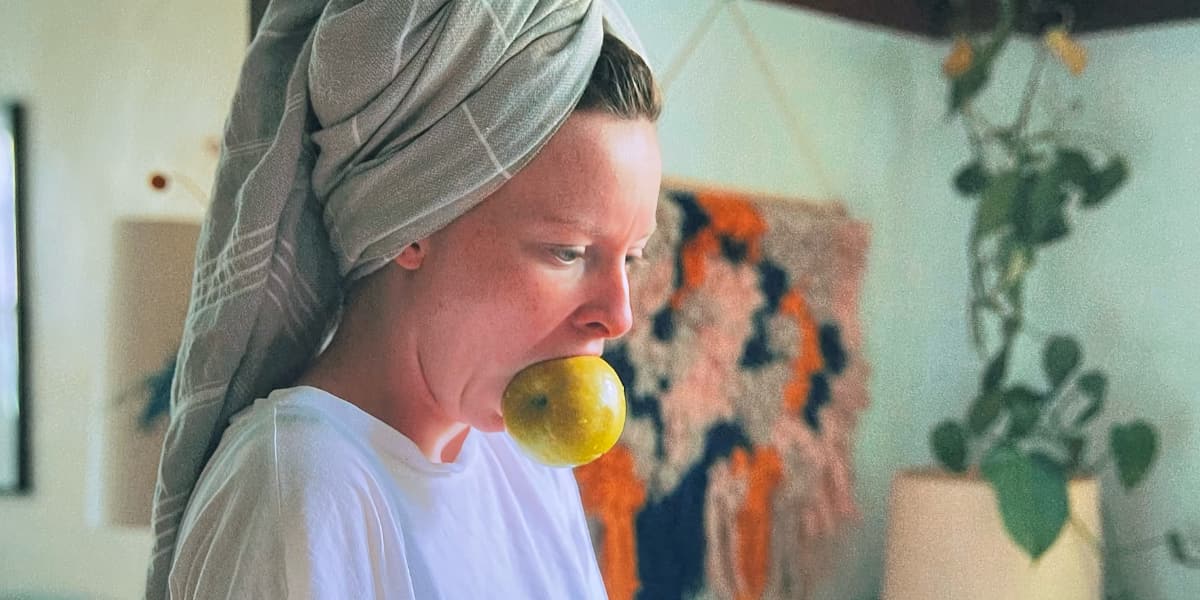
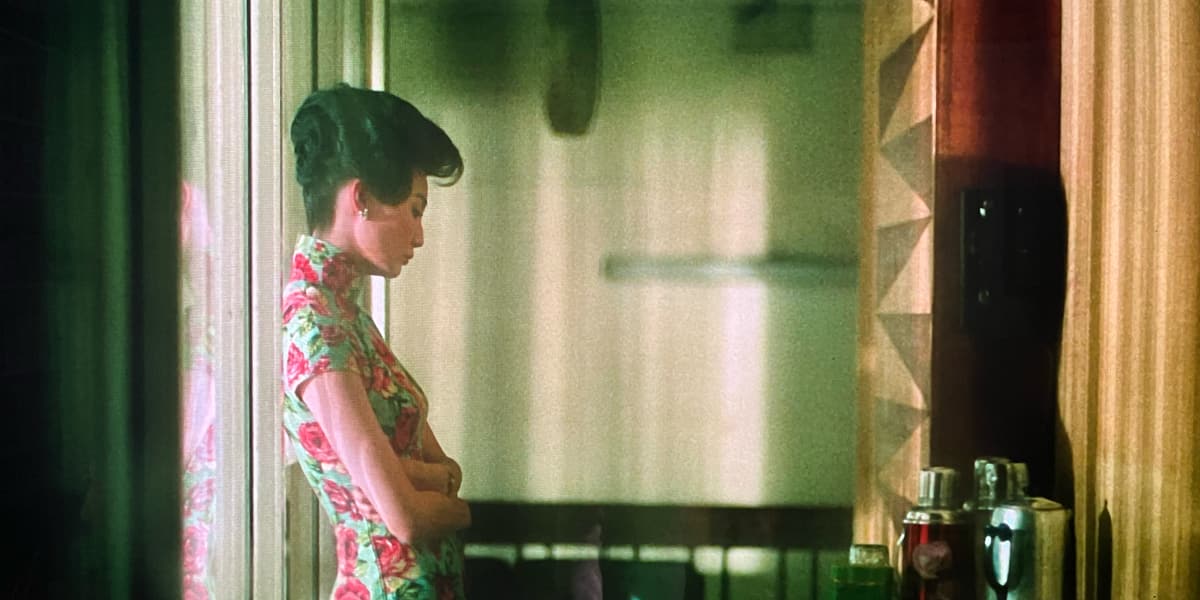
Mara, a married creative writing professor, is surprised when Matt, a very close friend from her past that she no longer hears from, shows up at one of her lectures. They pick up their relationship while Matt is in town, leading to Matt driving Mara to a literary conference where the nature of their relationship is called into question.
This is an interesting counterpoint to In the Mood for Love where the almost-lovers strike out on different paths. Here, Mara and Matt are coming back together. Mara is married with a child, and Matt is perpetually single. Mara clearly loves her musician husband, but she doesn’t like music, and Matt offers conversation about literature and a playfulness with language that she can’t get in her marriage.
Mara has an idea for a collection of poems about a woman unconsciously acting out desires she’s unaware of, but is struggling to begin. Matt seems to be a successful and known novelist who is deliberately controversial to attract his audience. He’s extroverted, brash, slightly obnoxious, whereas Mara is unsure, introvert, and shy. Their opposite energies seem to be the source of their joy in each other’s company, and Matt is a catalyst to Mara’s hidden desires.
The camera is always close to both characters’ faces which allows us to follow every movement of an eyebrow and each mouth twitch as they hang out with each other in routine parts of their day. It isn’t clear if they were lovers in the past, or why they drifted apart, but for a brief time we observe them come alive in each other's company.
August 25 2025, 18:38
In the Mood for Love
Director: Wong Kar-wai
Release year: 2000
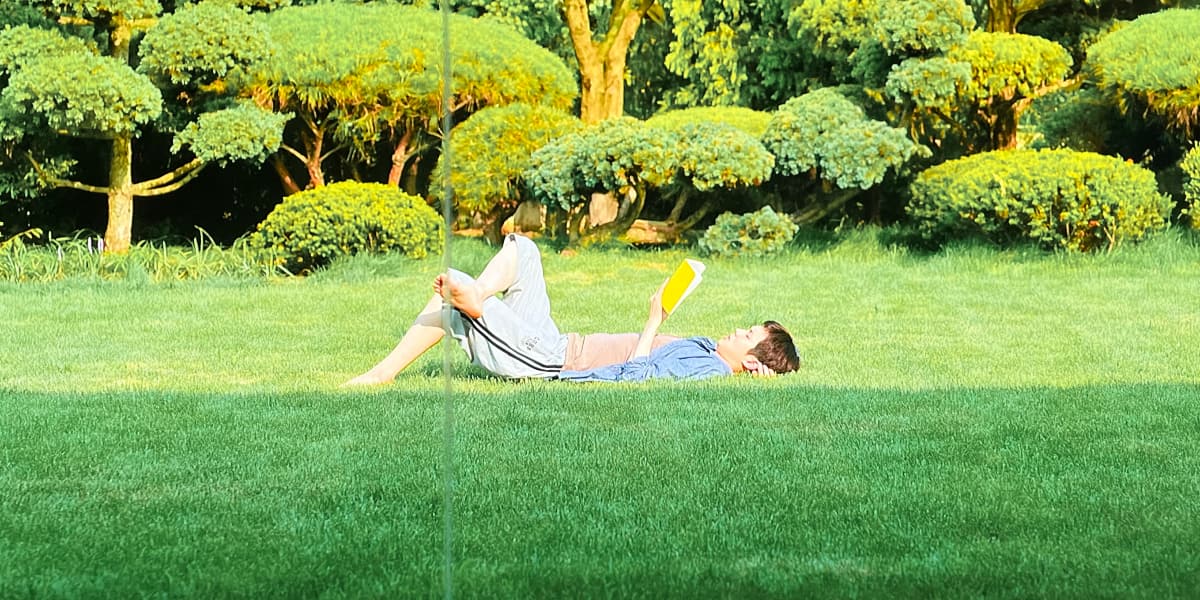
In 1962 Hong Kong, two working couples, the Chans and the Chows, move in to neighbouring apartments in a house run by Mrs Suen. Both Mr Chow and Mrs Chan suspect their spouses are having an affair, and they begin their own relationship to work out what they should do next.
The opening act plays out through short scenes that drift together as time passes. We hear the voices, and see the backs of the heads, of the treacherous partners, but the camera cares about the wronged duo, who are luminous in every frame. The film is only ninety minutes long, and not a shot is wasted, with many like pieces of art in their own right.
Sometimes the strings will kick in, everything slows down, and either Mr Chow or Mrs Chan will glance at the other, or sadly smoke a cigarette, and we feel their longing in our bones. It’s a film about the loneliness of marriages that aren’t working. Mr Chow encourages Mrs Chan to help him write his serial, and the pair start a fruitful creative partnership in a rented room that’s spiced with romantic love, but the housekeeper, Mrs Suen, tightens the clamp of social norms on the burgeoning couple.
It’s a devastating film in the best way. I saw this in a cinema off Leicester Square when I moved to London in 2000, but I was too young to understand the depth of feeling in what was being shown on screen. I didn’t remember the final scenes in Cambodia at all, and I didn’t know Maggie Cheung played the heroine until the opening credits, which was a lovely unexpected link back to Irma Vep. Both Cheung and Tony Leung are sensational. This is one of my favourite discoveries of the year so far.
August 24 2025, 17:56
Parasite
Director: Bong Joon Ho
Release year: 2019
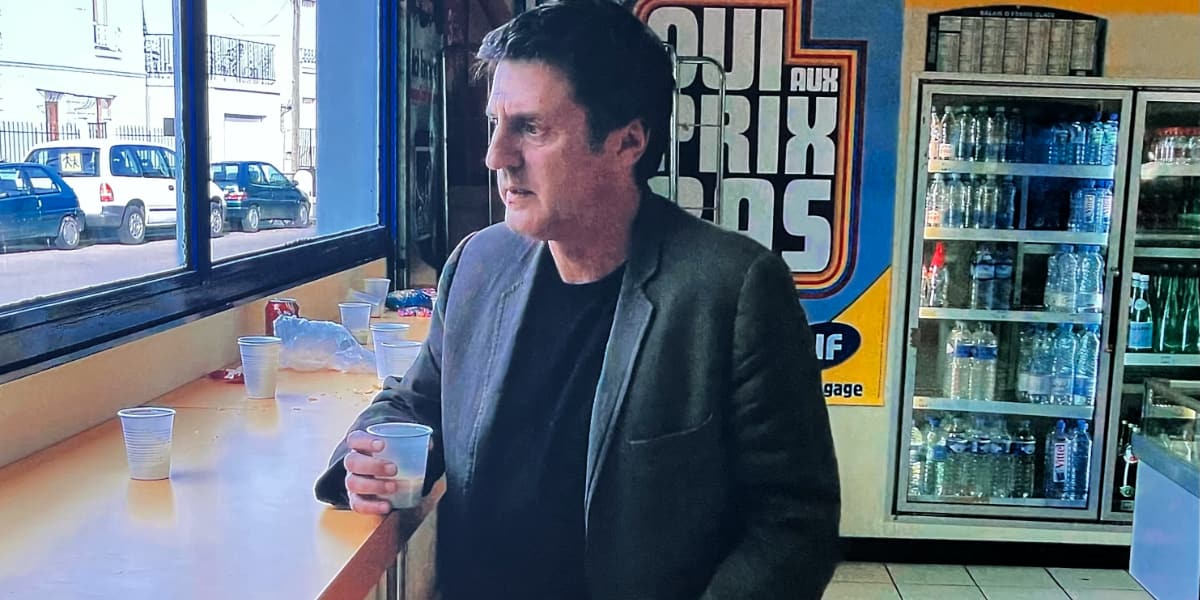
A family friend grants Ki-woo an opportunity to teach English to the daughter of a rich businessman, Mr Park. Ki-woo’s family is struggling to make ends meet, and they live in a basement flat in the poorest part of town. Once he’s secured the teaching job, Ki-woo and his family manipulate the Parks into hiring Ki-woo’s sister, father and mother, replacing all the existing staff. But the modernist house contains unexpected secrets, and their parasitic peace doesn’t last long.
I didn’t see this when it came out, and I can see why it won the main Oscars in 2020—it’s a masterpiece, and a rare hit film that takes a sledgehammer to the ideals of capitalism. The Park family live in a secluded house built by a famous architect in an exclusive part of Seoul high in the hills. When a storm sweeps through Seoul, the water flows downwards and floods the poor neighbourhoods with sewerage, and the rich don't even notice. Every relationship is transactional to the Park adults, although the younger children are shown as more innocent.
The Kim children are as corrupt as their parents, but no matter how hard they try, they can’t lift their family out of poverty. They are fighting a losing battle when they play by the rules. It’s hard not to cheer for them when they break rules to even the scales.
It all falls apart when they fail to show mercy to others in the same class as them. Once the workers stop helping each other, the rich win. The beautifully stark concrete house has a basement, and in the architect's paranoia, a basement far below that that’s more like a bunker. There are metaphors galore in this film. The wealth stone given to the Kims at the start of the story is one of the film’s best ironies.
August 17 2025, 09:53
Caché
Director: Michael Haneke
Release year: 2005
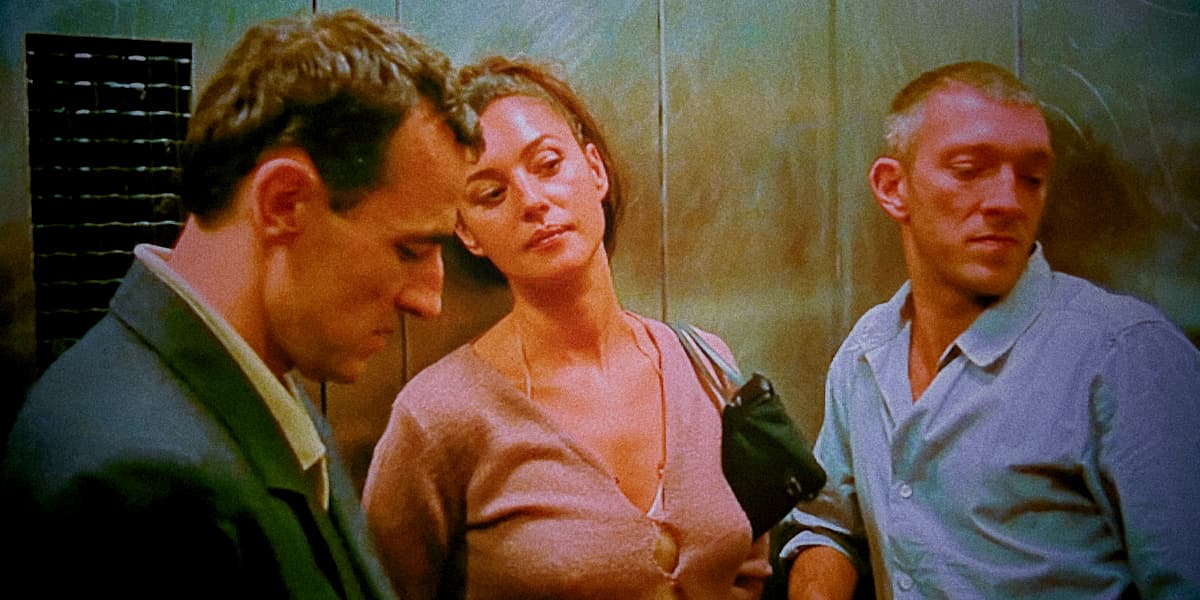
Another French classic from the early noughties that I’m only now getting around to. Georges and Anne, and their son, Pierrot, are living a comfortable middle class life in Paris when a VHS tape is left on their doorstep. The tape shows the outside of their house, with the family coming and going oblivious to the hidden camera. In the coming days, they receive more tapes, wrapped in violent child-like drawings, and Pierrot is sent one of the drawings in school. Increasingly freaked out, Georges suspects someone from his past, and tries to clear things up once and for all.
Haneke puts the bullish Georges in spaces where anyone else might feel threatened, and between the foreshadowing of the tapes’ content, Georges following the trail of clues, and the camera lingering over his shoulder and on possible antagonist faces, the suspense is palpable. The heart of the film emerges in Majid, who we learn was sent away to an orphanage when Majid’s Algerian parents, who worked on Georges’s parents’ estate, were killed in a 1961 massacre by the French National Police. Georges is convinced Majid wants revenge. Majid denies it, and we believe him, but unable to think of who else would send the tapes, Georges doubles down, eventually getting Majid and his son arrested.
Georges’s personal shame at his actions as a six-year-old is repressed so thoroughly that he cannot acknowledge the injustice he inflicted on Majid, and instead it makes him lash out and make things much worse. Haneke shows news footage in the background of many shots, and he seems to be saying Georges is a mirror of affluent French society, where the consequences of not acknowledging the horrors inflicted by their country’s power structures, especially on immigrants, leads to simmering resentments and social unrest.
We see a version of this in the UK now with Brexit, the scapegoating of immigrants, and Far Right groups rioting outside immigrant accommodation. Narratives of colonialism and British exceptionalism are still everywhere in right wing media, sickly nostalgic ideas kept alive by billionaires for profit.
Like Irréversible is famous for its violence, Caché (hidden, in English) is famous for the ambiguity of its ending. Certainly on first viewing, it isn’t clear who is making the tapes, and the final scene as the credits roll makes some suggestions, but the favourite take I read was that the hidden camera was God judging Georges for lack of empathy and remorse for his crimes. Psychologically, it could also be Georges’s own conscience, or unconscious, forcing him to face up to his past. Both work for me.
August 14 2025, 21:32
Irréversible
Director: Gaspar Noé
Release year: 2002
It’s been a couple of days since I watched this, but I needed time to let my thoughts percolate. Irréversible is infamous for the extended and brutally violent rape scene at its centre. The shock of it overwhelmed the critical thinking part of my brain, and it’s rare that I finish a film completely confused. Was it good, bad, clever, disgusting, homophobic, misogynistic, racist, or all of these things? What was Noé trying to achieve? I had to do some reading to help me work out what I thought.
I don’t think the plot of this movie can be spoiled. Noé’s trick is to play the scenes in reverse order, so we see the ending at the start. Its power comes from making the audience see the results of the choices made by the characters before knowing the reasons. The opening/finale is shown with a swirling camera that goes upside down, on its side, making us feel nauseous, while a rumbling drone constantly assaults our ears. We follow Marcus and Pierre into a version of hell. Marcus has lost his mind, but we don’t know why, and the violence he provokes is shocking. We are presented it all without context.
From here, we retreat through the evening. A couple, Alex and Marcus, go to a party with her ex-boyfriend Pierre. When Marcus takes cocaine and becomes aggressive, Alex leaves to go home, and in an underpass she is raped and beaten. Marcus wants revenge and sets out to find the rapist, finding the man in a gay sex club. Marcus gets into a fight, and in protecting Marcus from being raped, Pierre beats the man to death with a fire extinguisher. The police take them both away, but Alex’s rapist escapes justice.
Alex is an intelligent, independent woman, who bristles at Marcus’s view of her as somehow his property. She is surrounded by men who let her down through the evening. When she leaves the party, neither Marcus nor Pierre go with her. The police talk to Marcus and Pierre as if they are the victims of the crime. When Alex is taken to the hospital, instead of going in the ambulance, Marcus is tempted by local gangsters into seeking revenge, and Pierre goes with him. These are selfish decisions that leave Alex vulnerable and alone.
The further into the film we go, the closer we get to who Alex is, and the pace slows, there is more intimacy and tenderness, and the weight of what has happened to a woman with everything to live for hits home.