
Blog
It feels like a small act of resistance to publish a blog these days. It’s a quiet place on the internet with a domain name I own, away from algorithms and the ever-updating news. This is a static website built with Eleventy, which keeps it secure and fast, but also means it’s not like Wordpress—there are no comments or likes on posts, which frankly is a relief.
July 12 2019, 17:12
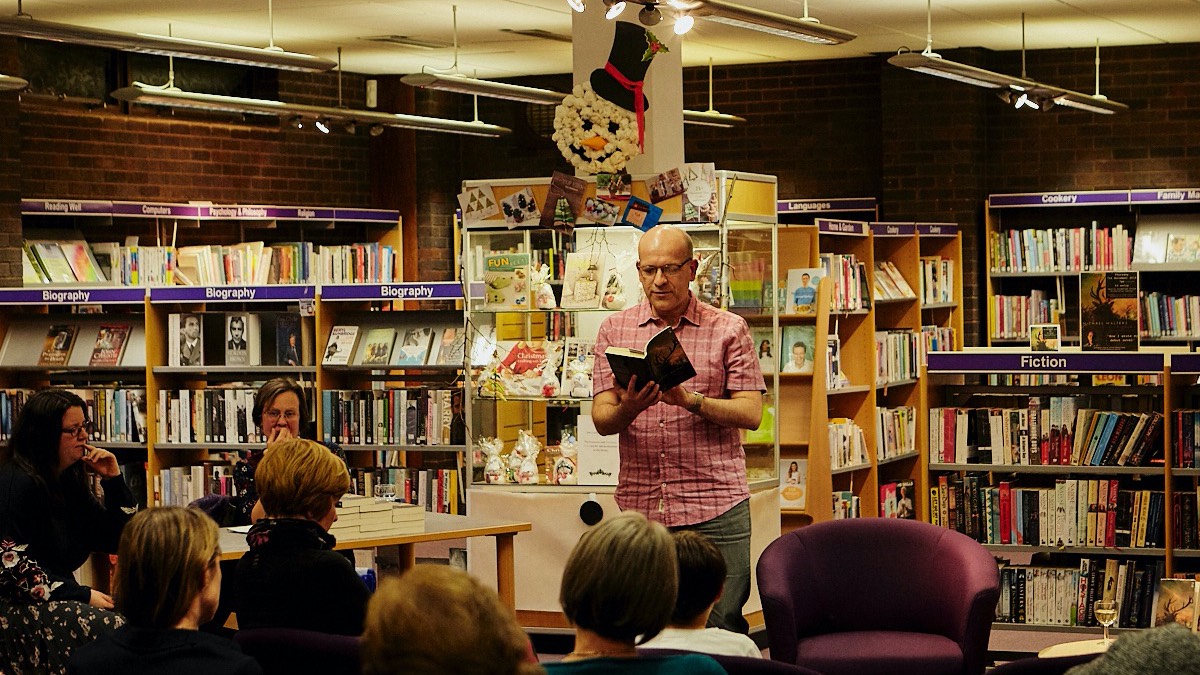
On writing ‘The Complex’
The first shoots of the ideas that would combine to become The Complex appeared way back in November 2012, when I was fascinated by Lars von Trier’s film, Antichrist. I hadn’t watched it, I was too scared of it, but I was reading interviews with Charlotte Gainsbourg about what it was like to work on the film, and I became fascinated with the idea of going into the woods, with actors, as a director, and getting them to do whatever I wanted. I was suffering with writer’s block at the time. To be able to write freely, without censure, in a cabin in the woods on my own internal film set, was an exciting idea. I was crushing the life out of myself with old feelings of shame and inadequacy. Gainsbourg in the interviews made film-making with extreme material feel playful. I wanted some of that.
I didn’t write the first words of the first draft of The Complex for another three years. By this point, in December 2015, I was in the middle of the second year of an MA in Creative Writing at Manchester Metropolitan University. I had been flailing around creatively, with two aborted attempts at a novel on my desktop, but now things were getting serious. For the first time, I had workshops in which I had to present work from my final dissertation, a novel, to a group of my peers and my tutor. I remember reading back through years of notebooks, pulling together strands of thoughts and little sketches, about a cabin in the woods. I also found notes I had made about the psychoanalyst Carl Jung, taken after my mother died in 2014. In working through my grief, I had written about his concept of a complex, in which a person is taken over by patterns of thoughts and feelings so that they act irrationally, with great energy.
I had even written in my notebook that The Complex was a perfect title for a novel. I had forgotten all this, even when starting to write two other novels, but now, when I needed it, the title reappeared. I think I fell into a complex to write the first half of the first draft of the book — after years of not being able to write a longer story, under the pressure of a workshop, with a tutor who I wanted to impress, the words started to come. Three voices — Stefan, Gabrielle and Leo.
It became clear that I needed to find a narrative mechanism that would let me write more fantastical, dream-like sequences, but staying grounded in the emerging location of the story. They appeared organically, as I wrote the draft. Stefan has the Virtual Reality headset. Gabrielle has Art’s drugs. And Leo has whatever is in the place itself.
And I wanted to explore relationships. These characters were parts of myself, and I could bounce them off each other, let them rip. A lot of the fun of writing The Complex came from imagining the scenes as if I were shooting a film. My father introduced me to genre stories very young. He loved mysteries, thrillers, fantasy, science-fiction and horror, in books, television and films. Growing up, our house was totally liberal in what I could read, mostly liberal in what I could watch on TV, but totalitarian in terms of having and expressing feelings. No wonder I had writer’s block. But that’s an entirely different blog post.
When the writing was going well, it felt like I was making a film for myself, perhaps for my father too. Dreams, fantasies and the imagination are all real in their affects. Through Gabrielle I could write about my grief at my mother dying, Stefan about optimism and hope, and Leo about desperation, longing and despair. It felt like important work to be doing — even if it might never be published.
Because the book took almost four years to write, by the end of it I was a different person, and I could look more clearly at the themes. There was grief, yes, but also the problems of intimacy, technology, sanity and reality, family, falling in love, betrayal, addiction, competitiveness, manipulative relationships, affairs, and memory. I’d covered a lot of ground, but organically, without a conscious agenda. The story is driven by the characters. In writing, the themes seemed to follow the characters interests, but if I am the characters, and they are aspects of myself, then I guess these were all my concerns and obsessions.
Anyway, my tutor on the MA was Nicholas Royle, who was also a commissioning editor at Salt. I feel lucky and grateful that it will be published and read. Now I have to write some new characters, in new locations, and find out how my obsessions have changed. It’s like writing myself into existence.
Since I’ve put it like that, I’d better crack on.
February 03 2019, 18:12
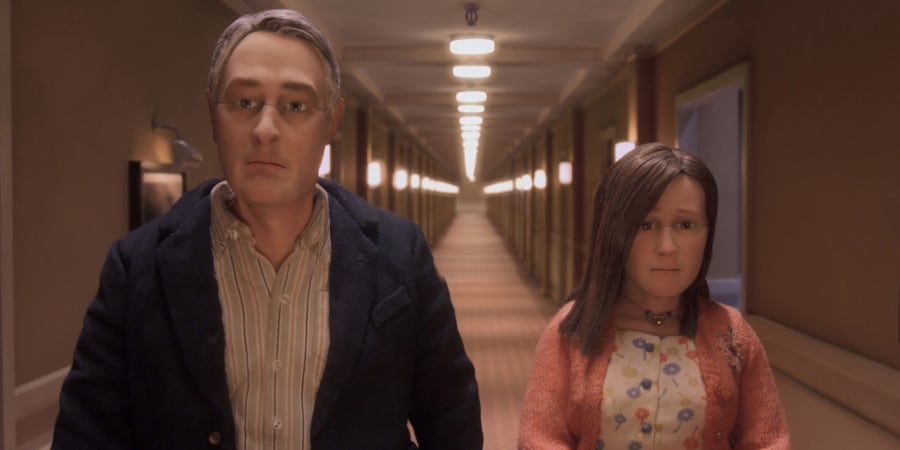
Anomalisa (2015)
Everyone looks the same to Michael Stone. He is in Cincinnati to give a talk at a conference and is staying at the Hotel Fregoli. After failing to make a connection with an ex-lover, he becomes fascinated by an antique Japanese sex toy. He seems unable to make a connection with anyone.
Then he hears a voice through his hotel door. Anonymous Lisa. Anomaly Lisa. Lisa’s voice and face are different, so Michael becomes enraptured by her. His interactions with Lisa in his hotel room are sweet, if a little manipulative. He is desperate for something real in his life, an authentic person who is not like everyone else, something that he hasn’t fucked up. The scene where they make love is beautiful. Animated intimacy surprised me, perhaps because it was more intimate and real than most sex scenes I’ve seen with real actors.
The nightmare he has that night reveals the horror of his situation. In the basement he meets the hotel manager who says he is in love with Michael, and that he can fuck anyone at the hotel but Lisa. Michael is falling in love with her and his unconscious is telling him he has to protect her, because he is going to ruin it, ruin her. He has brought her out of herself and her vulnerability terrifies him. The next morning her voice begins to change and she starts to become like all the others.
Michael has a breakdown on stage as he gives his talk — he is trapped in his own self-absorption, or perhaps a medical condition, we can’t know. He returns home and is faced with the same face wherever he goes. His family is no comfort. He doesn’t know how to connect with his wife or son. But Lisa is transformed by the experience and heads off into her life renewed. It’s a smart reversal in a film full of doubles. Multiples, in fact.
The hotel is a metaphor for Michael’s psyche, twisted and pulsing with his emotional experience. The story is told in three thirty-minute acts: arriving at the hotel, his night with Lisa, and the consequences. The dialogue is awkward and authentic, and it took me a while to realise all the faces and voices of periphery characters were the same. That was unnerving. It made me wonder if I had the same problem as Michael Stone. And the lines on the characters faces were freaky too. I didn’t know they were puppets, so it added to Michael’s paranoid, nightmarish view of the world. You only realise how ill he is at the very end.
It’s a terribly sad story for him, but an uplifting one for Anomalisa. Brilliant.
August 20 2018, 11:15
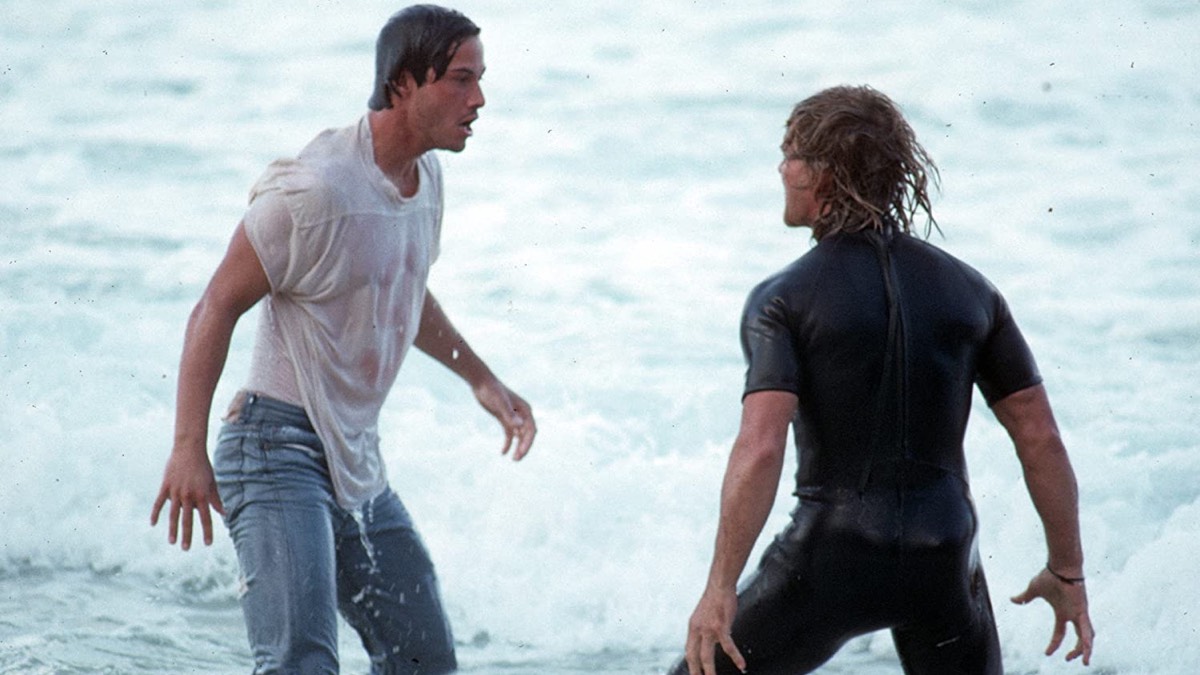
Point Break
It’s tricky to find films that my fifteen-year-old son will want to watch with his forty-something parents, but this seemed to sit in the sweet spot — surfing, armed robbers, a cocky young hero, skydiving, a love interest and lots of banter. I wanted to see how the film stood up twenty-five years after the only time I saw it, on it’s release. I remembered Patrick Swayze’s charisma and the adrenaline rush of the action sequences, but beyond that it was pretty vague. Intriguingly, it also had the highest rating on iTunes I had ever seen, 4.9/5 with 74 reviews. That impressed me.
Johnny Utah wants to make his mark at the FBI and take down a crew of surfer armed robbers. He is attracted to the crew's leader, Bhodi, who lets him in to his surfer gang and shows him the spiritual side of being a surfer. But Bhodi’s greed and Utah’s ambition put everyone in danger.
Utah becomes Bhodi, absorbing him, integrating his own shadow, in Jungian terms. We project what we unconsciously desire or fear and, if we do the work, we can claim those things in ourselves consciously, and take back our projections from the other person.
The film is fast-paced, the dialogue cheesily involving, and the main characters substantial enough. Bigelow's camera loves the ocean, making the surf and surfers seem as mystical as the characters believe they are. It’s all very light. My son was impressed. Now I have to convince him to watch Robocop.
August 19 2018, 09:15
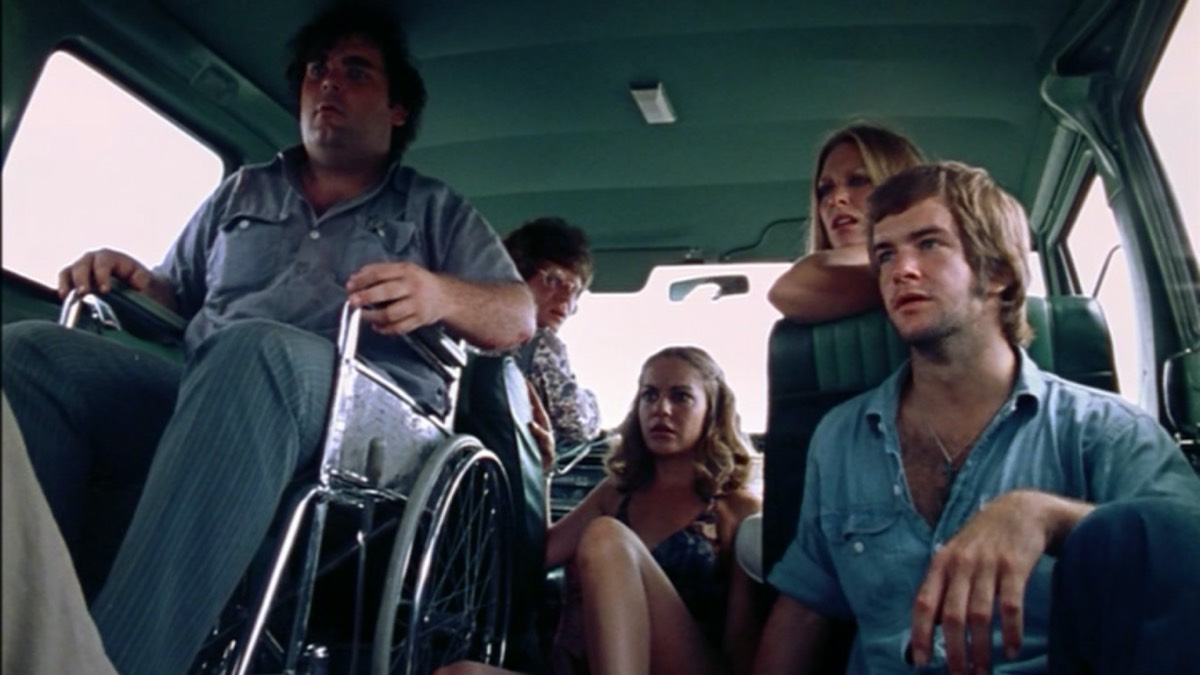
The Texas Chain Saw Massacre
Siblings Sally and Franklin come to a remote part of Texas to make sure their relatives remains haven’t been dug up from a local cemetery in a bizarre, gruesome local crime. But Franklin’s curiosity takes them to the slaughterhouse their grandfather used to own. They are warned not to go there, but in time-honoured tradition, they go anyway. That transgression sets the film in motion.
This is a film about meat. The young people are slaughtered like cattle in a world where meat is life and livelihood. Bones are plentiful in the rural setting, made into art works, mashed together into new creatures. There is beauty and horror in the lives of these people, who are like bacteria, or maggots, stripping life to the bone because it’s all they have. It’s a type of hell.
The film makes meat-eating seem like a transgression, a breaking of natural laws, with the characters hung on hooks, frozen, and butchered like animals. The film seems to say that it is none of our business what people do in their own homes, and if we are too nosy, it’s at our own risk. And all sentient life should be treated with respect. It's a pro-vegetarianism film.
So many horror tropes seem to constellate here. Young people are picked off one by one. A killer has a phallic, mechanical weapon. Rural communities are dangerous to outsiders who don't respect the old ways. There is a final girl.
But the thing that struck me most was the beautiful, dread-filled cinematography, the art design, and the overarching intelligence of the script and direction. Almost forty-five years after its release, when of course it was vilified and banned, it’s now clear it’s a masterpiece.
August 15 2018, 19:35
Exhibition (2013)
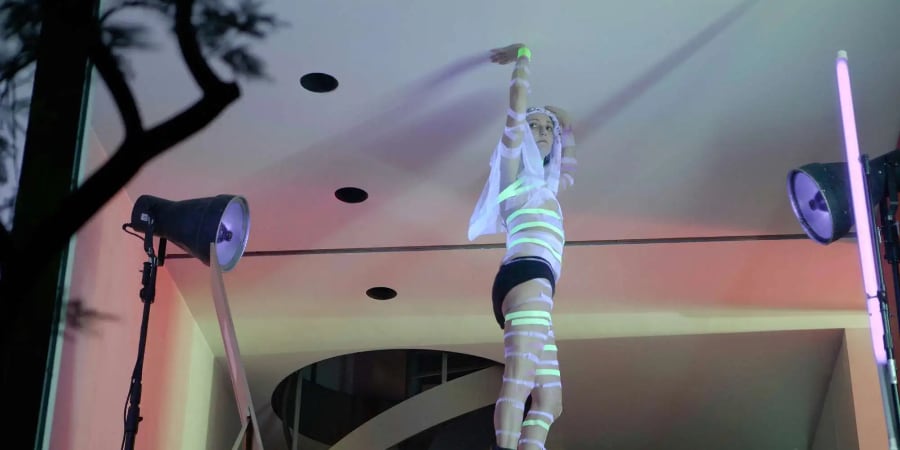
This one lingers in my mind. The married couple, D (Viv Albertine) and H (Liam Gillick) have created their own emotional ecosystem, balancing intimacy and distance, in a big modernist house somewhere in Central London. She is an artist, and he is an architect — both work at home, but in their own offices on different floors, talking to each other sporadically through an internal phone system. It’s an unusual setup that has worked for them for years, but comes under strain when they decide to move home.
Neither actor has acted before, which is remarkable to me, and makes sense given the naturalistic rendering of their relationship. They are completely believable as an averagely neurotic middle-aged couple. The house itself is the third character, representing the life they have created together. There are lots of beautifully framed shots of interiors and exteriors, the cinematographer making the most of the glass, concrete and minimalist shapes.
D hates going out and is afraid H will be hurt every time he steps outside. At the same time she lives a separate life in her office studio, performing for herself, using her reflection in the big glass windows, aware that she can also be partially seen through the carefully arranged blinds — if anyone was looking.
March 03 2018, 20:09
High Rise
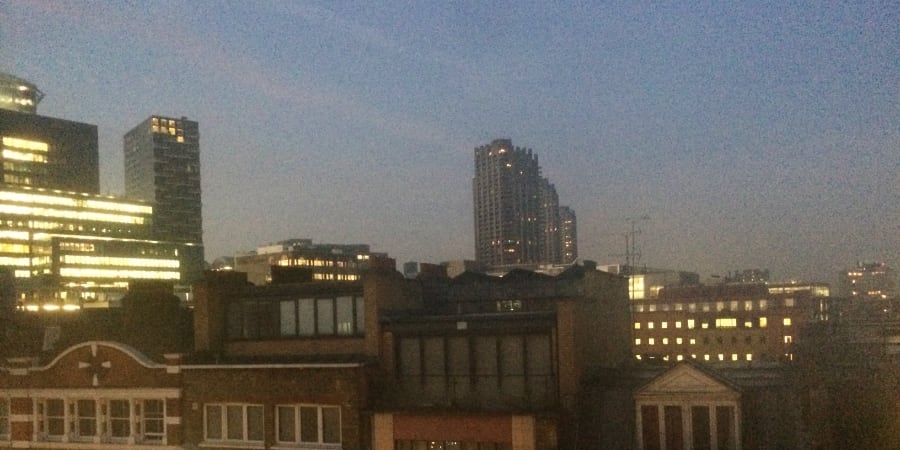
I read several Ballard books in the late nineties — my mid-twenties — starting with short stories, before being entranced by the original shiny silver paperback cover of Super-Cannes, and then going back to his earlier work. When I saw there was a film of High-Rise being made I believed I’d read it, but when I bought a copy, apart from the general sense in most of Ballard’s stories of things being on the edge of primal chaos, I didn’t recognise the story or characters at all. I’d read so many of his book shop blurbs they had all blurred together. In my twenties I didn’t read with much real attention either so it was quite possible I had read it and just forgotten everything about it.
Robert Laing is a newly divorced medical academic who moves onto the 25th floor of a high-rise block hoping for a life of comfortable anonymity. Richard Wilder lives on the 2nd floor and makes television documentaries. Anthony Royal is the building’s architect and lives in the penthouse. These three characters are rotated by Ballard to tell the story of the building, which is seen as a mixture of designed technology and living organism. It’s a social experiment designed by Royal and embraced by every resident at every level. Where Laing is a social chameleon who wants to make a safe place for himself in the building, Wilder wants to conquer it and confront its maker.
If the high-rise is a living thing, a psyche, and Ballard its ultimate creator, the three protagonists could be different aspects of Ballard’s creative personality. Each man tries to make the building serve them in their own ways but it’s the women who ultimately make the place theirs. The prose mixes an omniscient point-of-view with that of the character Ballard is following in each chapter. It is only at the end, in the final confrontation between Royal and Wilder, that he moves between both characters point-of-view in the same chapter. The author’s omniscience could easily be the building’s point-of-view, but at the same time I found it a little irritating how characters revealed chunks of backstory in their thoughts. Having said that, the descriptions are brilliant and unnerving. Ballard is very aware of the spaces his characters inhabit and finds endless ways to show the collapse and degradation of their initially modern and comfortable environment.
I was nervous about watching the film. The book was so particular and the opinions I had read were mixed, but more than that, I didn’t want to subject myself to two hours of disgust and misery. Perhaps from this starting place I was always going to enjoy the film more than I expected but that is to do the film an injustice. It is an excellent story in its own right.
Directed by Ben Wheatley and adapted by his long-term screenwriting and editing partner Amy Jump the protagonist of the film is definitely Laing. Wilder and Royal are still important characters but Laing is given far more agency and the narrative is quite different. It feels like the book is honoured though, and I suspect that is because while Jump makes the story more dramatic and brings different characters to the fore, in particular the female ones, Wheatley’s direction creates the equivalent of Ballard’s prose style in the visuals and soundtrack. It’s an impressive feat.
As stimulating as the last two weeks have been for me in the world of High-Rise whatever I read next needs to be a palate cleanser. A nice rom-com perhaps. No roasted dogs.
January 01 2018, 11:11
I like being at home
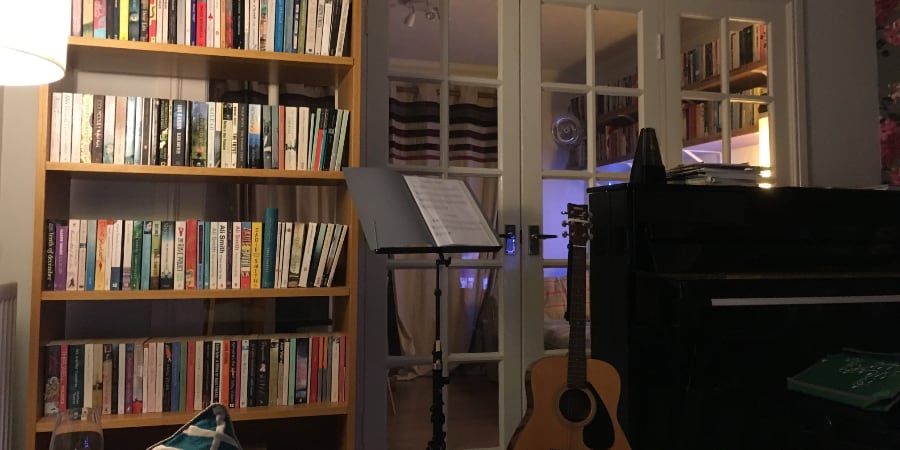
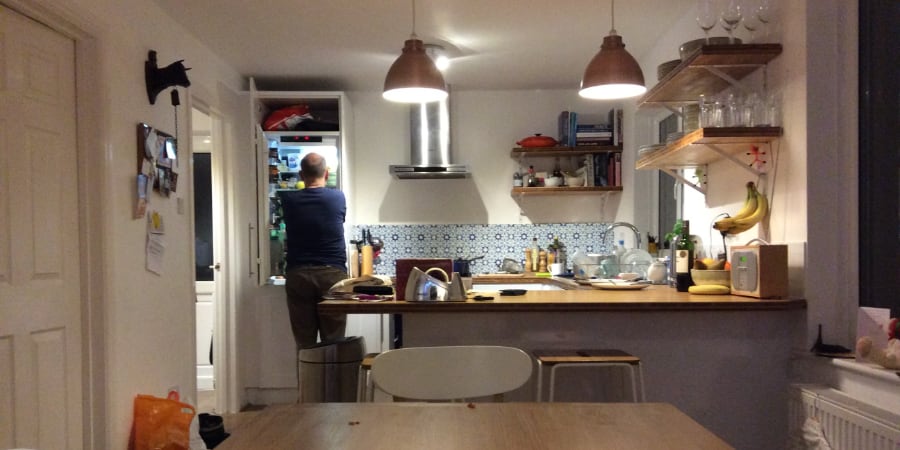
Woke up late. My son is in Sydney for three weeks and when I walk past his bedroom the quiet inside makes me sad. I'm trying to be more mindful as I go about my low-key morning. Last night I watched the first half of Let the Right One In before my wife and daughter got home from a New Year's Eve party. This morning I read the first third of Written on the Body, mostly while sitting at the kitchen counter with a cup of coffee. I like being at home. It's been a busy Christmas.
I took a break and listened to Wolf Alice on the expensive headphones I bought years ago and never used. Music sounds amazing through them, but they are heavy, make my ears hot and the cable has a squeak when I move my head. On a whim, and because the cable was long enough, I did some stretching while listening to the last track on Visions of a Life. My body felt tight and neglected. I wondered if I could do yoga while listening to Queens of the Stone Age. I felt stone-aged. I wanted visions for my life.
On the chopping board I have left a swede and yesterday's leftover braised red cabbage. There is only frozen turkey to have with it, and that's, well, frozen. It's the intention I like. I am going to cook the swede and make it delicious. I have to work on my meal planning though. I wish I had a pork chop or a steak. C’est la vie.

December 31 2017, 16:25
Red cabbage
After being away for a few days with my father, I came back to a fridge of random uncooked vegetables — red cabbage, beetroot, sprouts, carrots, swede and broccoli. With another load of veg arriving in a few days time, I looked up in Nigel Slater's Tender how to cook red cabbage. It was a beautiful vegetable to chop, the purple and white patterns blissed me out. I fried the chopped cabbage in a couple of teaspoons of olive oil, seasoned it, added balsamic vinegar, put the lid on the pan and left it for fifteen minutes.
It was mid-afternoon. I ate some of the cabbage wrapped in a slice of bread. It felt like a treat. Red cabbage. Simple pleasures.
December 30 2017, 21:15
Written on the Body, Let the Right One In
Week 1. I'm going to try to read a novel and watch a film each week in 2018. In time, I'll work out what I'm doing with it. We'll see if it sticks. I love the idea.
Written on the Body, Jeanette Winterson (1992).
Let the Right One In. Dir. Tomas Alfredson, 2008.
I tried to use these in my practice week and failed utterly, because Christmas. I've been up and down the country, making food for people, visiting people, people, people, people. There has been no time or space.
But I'm home now, and I want to create that time and space. It's important. I might be biting off too much, but let's give it a go.
December 29 2017, 18:50
Habits
My mind is circling the same wishes for the New Year that it circles every year, to do with health and writing. Each year I make some progress, never enough to make the desire for change to go away, but usually enough in the face of unconscious defences, personal circumstances and events to make me feel some pride.
It’s dispiriting that my health is still bothering me to the extent it does. I made great strides in my writing through completing the MA, but without the structure of seminars and deadlines I’m floundering a little.
I don’t think resolutions work particularly well, but I like the symbolism of a new year to mark changes. Perhaps this year I could resolve to pay more attention to the habits I have that frustrate me and keep tweaking them until they take me where I want to go. Then it is not to do with symbolic dates at all and becomes something I do without thinking whether I should. A habit, in fact. The habit of working on my habits.