December 17 2022, 14:36
Chaotic reading
It’s a cold day, and this morning there was a thin crust of snow on the ground. The car park was empty, and the lines were hidden, so I chose a spot near the meter and hoped I’d parked in a space. Recently, there’s a man in the coffee shop who sits with a Bible open on his table and says hello to everyone who comes in. I used to sit in that seat, but he started coming a month or two ago, and he gets there even earlier than me, so now I go further back, out of range of his conversation. He’s a talker, not a listener. A person who wants to write, or sit quietly, has to retreat to the warmer rear of the shop, which is a benefit in winter.
I’m making the best of it. Today he was reading lines from his Bible, then pointing up at the ceiling and saying something, presumably to God, then reading another line, and so on. I was impressed by his engagement with the material; envious, in fact. If he were reading Frankenstein, as I currently am, or some other work of literature, he would most likely be an excellent café companion, and watching him I would guess he was an actor performing lines. His biblical fervour makes him toxic. Actually, it’s not the Bible, of course, it’s the fervour. Nobody wants to be fervour-ed at seven-thirty in the morning, not in a coffee shop anyway.
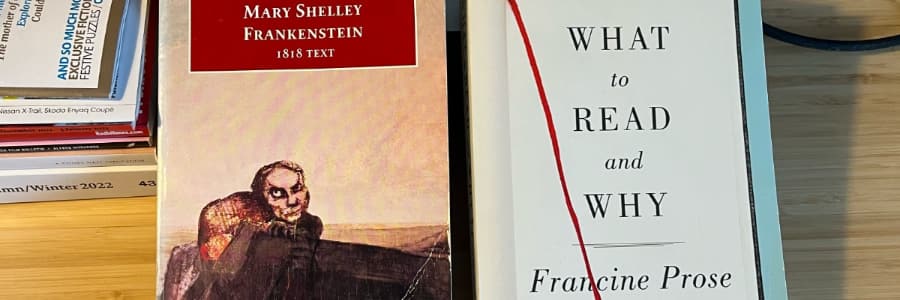
But back to the envy. His engagement with the text in front of him was inspiring. This is an ongoing issue for me, as any long-term reader of this blog will know (and short-term, and, well, any term really). In another attempt to get myself reading ‘good books’, I pinned a tweet on Dec 5: ‘Currently reading: Frankenstein; or, The Modern Prometheus, by Mary Shelley.’ I’ve given up on Goodreads as a motivator. The problem is intrinsic, so giving myself extrinsic goals like fifty-two books in a year is just self-flagellation at this point. Twelve days later, I am on page 32.
Life is busy. I am not reading. Then I came across Elisabeth Filips, who runs a YouTube channel whose most viewed video is You’re Not Lazy: How to Live a Chaotically Organised Life. I’ve been around the block several times with self-help, but she had a new take that I really liked. I recommend exploring her work, but the video that got me really excited was about giving yourself permission to read multiple books at once.
This isn’t natural behaviour for me. I like rules. I’ve always picked a book and stuck with it. It might take weeks—months—before I realise I just need to walk away. Give it up. Oh, the psychodrama. The lack of fun. Well, no more. I’m enjoying Frankenstein. The block is the busy-ness of the time of year. But in the New Year I want to embrace reading as the pleasure it should be. A more chaotic pleasure.
December 15 2022, 13:25
Digest
Currently reading: Frankenstein; or, The Modern Prometheus, by Mary Shelley. In my dreams I deny nothing (I just have to dig a bit). I am my dreams. Never too early to feel wistful. Lit.
Work is tricky and tiring, so tonight I retreat (with a flourish) to my book-lined gently-lit study like some sort of gentleman. In my Tuesday finery.
Running the year into the ground. On the mat. Ready for a break. Summon the elves. Is there any feeling better than a hot shower after exercise? No. The answer is no. Prickly and worn down. Me and the tree are off to a Christmas party. I’m glad I don’t really drink anymore. I was in and out of the Christmas party in three hours. Met some lovely people, felt the buzz of it, and was home for 10:30. This tired feeling is from a car alarm waking the whole house at 4am. No, it’s true! Can’t. Exhausted my social muscle. I think I have a crush on the Christmas tree. Stepping outside of my familiar circles. I am the pick-up and drop off point.
Kicking frozen leaves. The town has taken a strange turn. Mystical stalls in the marketplace, pleasingly dark window decorations, and our coffee shop preacher reading scripture aloud. I put my earbuds in. Thank the gods for Harry Styles. Here’s to a change in the channel. Coffee at home. Lights in the fog. Being harassed by an overly perky to do list app. Yeah, I can do this, but do I really want to? I’d rather be (what?). I cannot believe how into Harry Styles’s latest album I am. On the surface it’s not for me and yet it absolutely speaks to me. It’s an adolescent feeling. I tend to see the pure hearts.
I’m worried I was too vocal in a meeting, and that’s how I know I probably did a good job. The long slow shedding of who I thought I was. Accelerating towards the schism, however it manifests. Starting 2023 today. I’m ready.
December 14 2022, 22:05
Website updates
I’ve made some tweaks to the styles and layout of this website. I’m thinking about the future.
November 06 2022, 19:10
The future of my online shizz
I don’t know what to do for the best with my social media. Twitter is all I have. Zuckerberg is worse than Musk in many ways, so I’m not going to those places. Mastodon is not a replacement for anything, it’s a unique flavour of online community that will take effort from everyone who goes there.
Blogs are the obvious answer, but who will have the taste for that these days? It’s effort. Twitter removed the work of posting and consuming, a bit like fast food, and now we’re all a bit flabby and useless, technologically speaking.
Perhaps Twitter got people online who would never have blogged. The numbers suggest that’s true. But the global social experiment is being stress-tested by a panicking billionaire man-child in hock to illiberal, possibly evil-intentioned, investors.
I refuse to join in the panic with my own Twitter account, but then I’ve never wanted news or big-P politics on my feed. It started as a place to be anonymous and play around, then it became somewhere I could present myself as a writer, and now it’s also where I mingle with peers and friends. Until I see my experience change, I’m staying put, spreading my version of the world to all who’ll listen while I can, and sticking with those who stay true to their creative visions.
But I’m also going to diversify — more writing on my blog, more writing on Patreon, and well, let’s see what happens next. Substack has an RSS reader built in now. The Open Web is a powerful thing. Somebody will build something new. Or maybe something will be repurposed?
And my own writing practice? This could be exactly what it needs. I’m excited. I’ve cursed Twitter as much as I’ve appreciated it. The choice of leaving may soon be taken out of my hands. If it burns down, the writing goes on, conversations will still happen, and we’re not going to lose each other. It’s just a fucking website.
November 01 2022, 20:11
Image of a wave
In my notebook this morning I was thinking about how tempting screens are. Just having one near me makes me want to look. Today it was a wall of water, either a tall wave viewed from a ship at sea, or a tsunami from shore, I couldn’t tell. It was mesmerising. I was mesmerised by a photo of a painting of a wave on my laptop screen, but the overwhelming fear and awe it created in me was real.
The image brought a feeling of awe out of me. That’s what’s addictive about screens. Images, and words, can summon feelings to the surface, and sometimes that brings a feeling of release, but often it’s disappointment, and so I scroll to the next one, and the next, looking for the connection with myself I’ve somehow lost.
October 31 2022, 19:30
The most important thing to do is
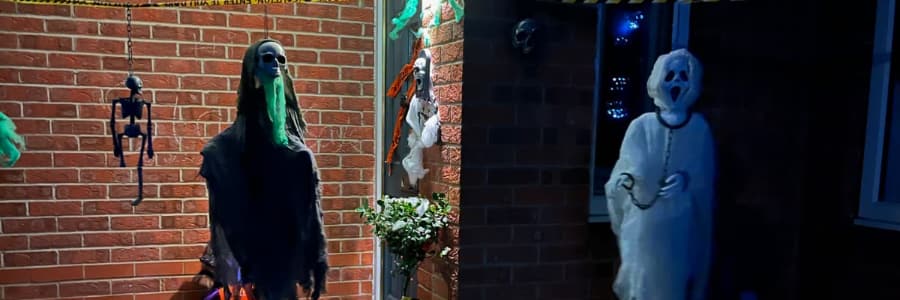
I went for a walk and the streets were quiet. It’s Halloween and dark outside, but it was too early even for the youngest children to be out. My daughter had friends around for a spooky-themed tea, and now they’ve gone out to ask for treats. The door knocking has begun.
Yesterday a sentence came to mind while I was writing in my notebook. I was in the sweet spot where each sentence starts effortlessly after the one before. I wrote, “The most important thing to do is”, and I expected the final word to be writing, but instead I heard a voice in my head say “disconnect”. It stopped me in my tracks. So I wrote:
The most important thing to do is (disconnect) write.
The idea of disconnecting filled me with relief. It reminded me of something I’d posted on Twitter:
In psychoanalytic psychotherapy you have to accept uncertainty, live with it, and eventually perhaps enjoy it. You also need to access intuition and be willing to follow wherever it leads. It’s pain that becomes joy, if you can stick with it. (Stick with it.)
At the time, it was an encouragement to someone online I had in mind, but it was also a call to action for me. I’ve cobbled together a creative process from my therapy experience, but I often forget to embrace the uncertainty of life, and I pile pressure on myself to finish things. The truth is, I’m afraid I will die before I finish the next story, and the anxiety is paralysing. Or perhaps I think I’ll die when I finish the story. While a story is still being written it is neither good nor bad. Nobody can judge it, it’s out of sight. I’m safe.
There’s another knock at the door, but there’s nobody there, and our empty milk bottles are gone. I had treats, but it looks like somebody chose to play a trick. Or did I forget to put the milk bottles out? And is that laughter in the bushes?
I want to enjoy uncertainty. I want to follow my intuition wherever it leads. I want the pain to become joy. I want to stick with it. I want to disconnect. I want to write.
October 30 2022, 21:27
Microblogging
I tweet way too much. Longer form pieces go here or on Patreon. Recording the podcast was fun, but not structured enough to stay interesting. I still write in my notebook every day, but recently that’s been less creative writing and more organising the job move. It’s been an amazing year for my software career, but it’s driven my writing practice into a ditch. However, I am still rolling that boulder of a novel up the mountain.
Musk’s takeover of Twitter has shaken me up. There are alternatives that do different things — Substack is particularly interesting, and seeing George Saunders on there is inspiring. I don’t know enough about how it works yet. Perhaps it’s a better fit for writers than Patreon.
My dopamine-chasing years on Twitter are coming to an end. I’ve created a microblog that cross-posts to Twitter, so I at least have control of everything I put on there if it goes up in flames. I like the idea of somehow adding it here. We should all own what we publish, whether we think of ourselves as writers or not. Leaving Twitter will be hard, though, and I might not leave completely. It’s still too important as a connector of people. There’s nothing else like it.
Everything still goes on Twitter, but on the microblog first, and maybe in time there only. No likes, no retweets, no analytics, no follower count. I might get a proper URL, and maybe smoosh it into this website, but over time.
Or maybe I’ll stay on Twitter. Let's see what that fucker Musk does next.
July 23 2022, 06:00
Kardomah
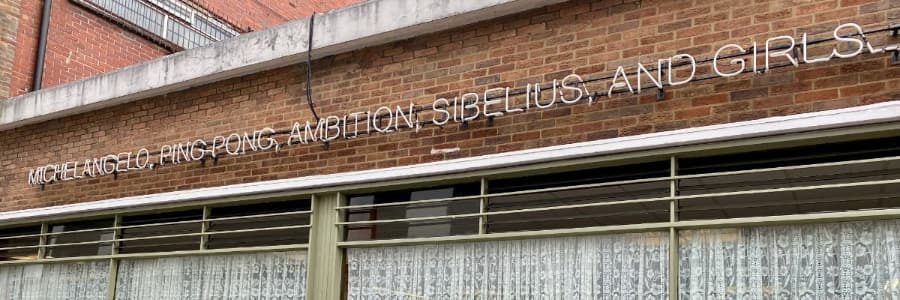
When I visit my father, I always love to walk around Swansea and get an early morning coffee. We used to come as a family on Saturday mornings when I was growing up, so with my existing coffee and writing habit it’s a double comfort. It also gets me out of the house, which is frozen in amber and not somewhere I want to hang around while my dad gets up. This time I walked past the Kardomah, a Swansea landmark famous for its links with Dylan Thomas and his ’Kardomah Gang’, a group of intellectuals who met there in the 1930s. I wish the neon in the photograph was lit. It’s a lovely list.
The summer seems to be accelerating beneath my feet. Being in Port Talbot always puts me in a reflective mood. I brought with me James Hollis’s amazing book, Finding Meaning in the Second Half of Life, as well as the rather more prosaic Essentialism, by Greg McKeown. I’ve read both before, but they jumped into my hands from the bookshelf as I was packing. Hollis’s masterwork is a Jungian take on how to engage with yourself to live a meaningful life. That ‘yourself’ is the key to the book—the psyche, the soul, the unconscious, however you label it, it’s the part of us that knows what we need to heal,flourish and grow, but as adults we’re often conditioned to ignore.
Right now, I’m questioning my excitement over my new job in September, and my guilt at not wanting to write. It should be the other way around. I’ve always put writing first and felt guilty at not being as into my day job. There is some sort of correction going on, which is interesting and a bit scary. Anyway, the book is a reminder of what’s at play under the surface, and perhaps I can use what I learn in my writing.
Essentialism is much lighter fayre, a reminder to say no to most things and yes to very few. Where Hollis advocates conversations with the psyche, in whatever way we can, to find the things we truly want to do, McKeown is saying to go all in on one thing instead of diffusing energy into many things. That’s the same advice, but without the depth. I can see now why I brought them.
I’m sick of beating myself up over not writing. It’s exhausting and ridiculous. What is meaningful and essential to me this summer is to be healthier, be fully present with my family, do a good job of moving jobs, enjoy our first family holiday abroad, and keep my literary life ticking over. These are my current priorities. Perhaps I need to switch some of them around, and perhaps I don’t, but this is where I am.
June 17 2022, 06:56
Trust your enthusiasms
It’s been a highly unusual period for me since pausing the podcast. After fourteen years in my day job, I am finally leaving. My new role is still coding, but instead of being in Higher Education I'm going to be a consultant with a subsidiary of a global corporation. The PRIVATE SECTOR. It's taken a lot of effort to make the change–I hadn’t had a job interview in a long time. I’m amazed at what I’ve done. It’s exciting.
I’m also writing in the mornings. The novel continues to come into focus, and I wonder if that's because I’m taking charge of my career too. I’ve been guilty in the past of compartmentalising the energies in my life, but it’s all one energy source, and I wonder how much I’ve been holding my writing back by letting myself stay in one job too long. I’ve always been afraid that a new job would distract from writing, but if you’re not writing anyway...
I haven’t had time to think about the podcast and what I might do with it next. Someone tweeted the other day that podcasts are easy because you just talk, you don’t have to write, and maybe it was an avoidance move, but I definitely learned a lot.
I’m going to continue to trust my enthusiasms. I hope your creativity is in full flow too.