
August 18 2025, 20:11
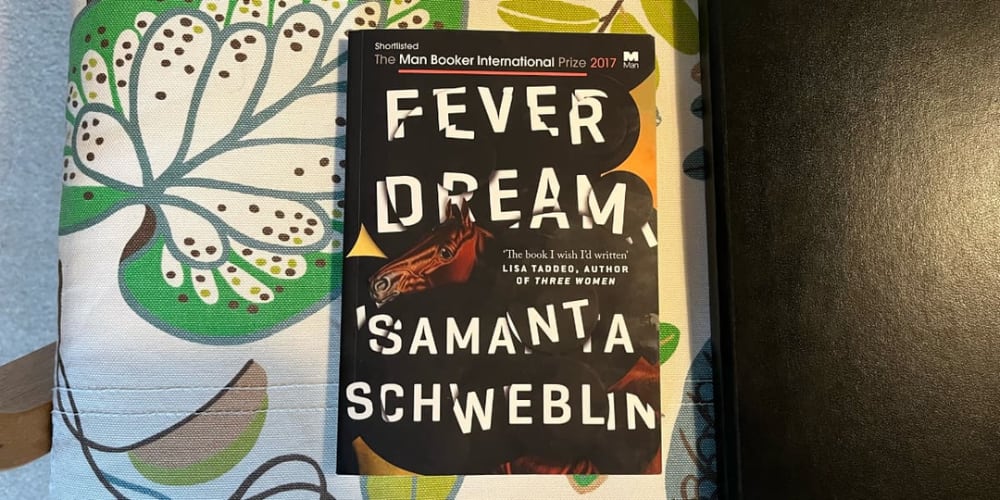
Fever Dream
~ 25,000 words. First person, Amanda, in conversation with another, David.
An even shorter book than Fatale, Fever Dream is a conversation between Amanda, a mother on holiday in a rural part of Argentina with her young daughter, Nina, and David, troubled son of their neighbour, Carla. In the opening, they talk about worms in the body, and we realise Amanda is in hospital and that David is peppering her with very direct questions about how she got there. He says that her memories are important to everyone, but doesn’t elaborate, and so we are launched into a recounting of a harrowing couple of days in the lives of the four characters, with David leading Amanda on in a disturbingly knowing way.
Amanda is dying, and the fate of her daughter is uncertain. We don’t know if David is real or in her mind. David’s urgency, Amanda’s anxiety about her daughter’s wellbeing, and the ambiguous details that she recalls all add to a remarkably effective sense of increasing dread. I read this in an afternoon on my February writing retreat. It was in the library, the cover was intriguing, it was appealingly short, and I had a couple of hours—I am not exaggerating when I say that I could not stop reading it. I had to know what happened next, even as it ruined my afternoon because it was so intense.
I wanted to read it again to understand how it had that effect on me. There are no chapters. The pace is quick. The descriptions are lyrical but short. The mystery deepens on every page. Amanda and Nina are lovely characters in the wrong place at the wrong time. David’s nature is mysterious, and you don’t know if he is good or evil. You want to know what happens to them all.
And there’s a central question that David keeps asking (“We have to find the exact moment the worms come into being.”). He also wants Amanda to realise “the important thing”. When you put all these elements together, it’s highly addictive. It’s one of the best books I’ve read in a long time, but the ending makes you work for answers to those questions. It shows how much you can do with very few words. The ambiguous ending is infuriatingly apt,