
February 13 2026, 21:47
Carmilla
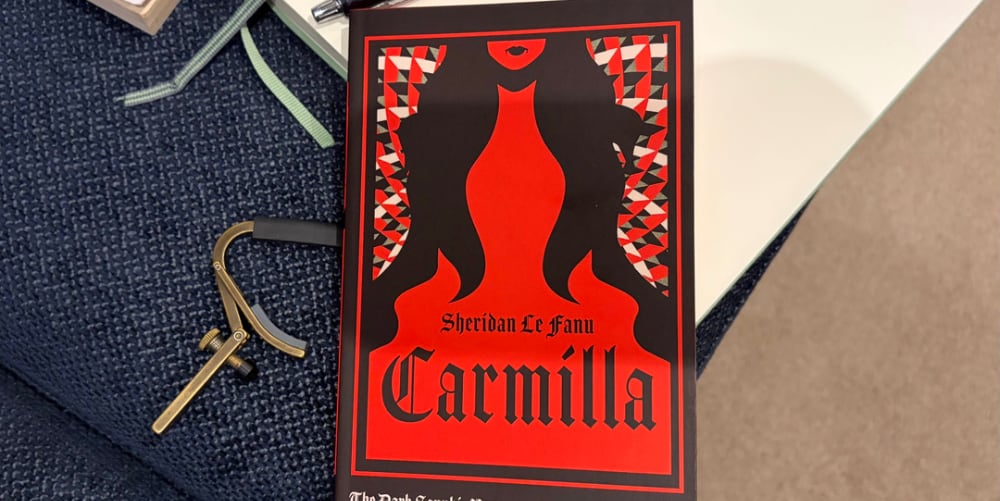
The book has a beautiful, striking cover with a red fore-edge, so in the bookshop I was already intrigued, but then I read the blurb claiming this vampire story pre-dated Dracula by twenty-six years, and I was sold. It’s short, originally serialised in a magazine, around 35,000 words. It’s written as a first person account by a woman named Laura which is found by a doctor with a colleague’s note attached. Her symptoms are thought to be supernatural.
Laura and her widower father live with their servants in a remote castle deep in a forest. One day a carriage passes with a mother and daughter aboard. Laura is lonely, and the mother asks if her daughter, Carmilla, can stay with them for a few months while she performs a vitally important errand. Laura and Carmilla strike up a strong bond, but villagers in the surrounding areas begin to die from a new disease, and soon Laura is suffering from a more drawn out version of a similar malaise.
It has fairy tale elements to it. In fact, it’s pretty Gothic. They live in a castle, everything feels ominous, and emotions are heightened. Laura is torn between love and disgust over Carmilla’s intense feelings for her. The lesbian vampires that emerge in the sixties Hammer films could have their roots here. Laura doesn’t seem to be sexually attracted to Carmilla, but the intimacy is used by Carmilla to create her vampiric bond.
Laura has a dream as a child of a creature in her room that bites her breast, and when Carmilla arrives Laura recognises her from the dream. Towards the end of the story we discover the vampire family’s home is in the same forest, so the ever-young Carmilla probably preyed on Laura twelve years before, although that isn’t explicitly said. Like F.W. Murnau's film Nosferatu (1922), the vampires in Carmilla spread death quickly and widely, like bubonic plague. A devilish creature indeed.
Previous: Drive | Next: HORRORSTÖR